

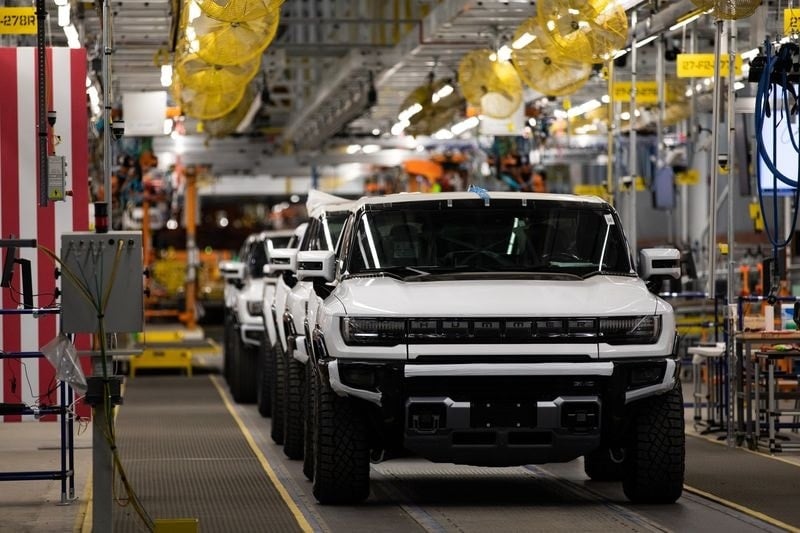
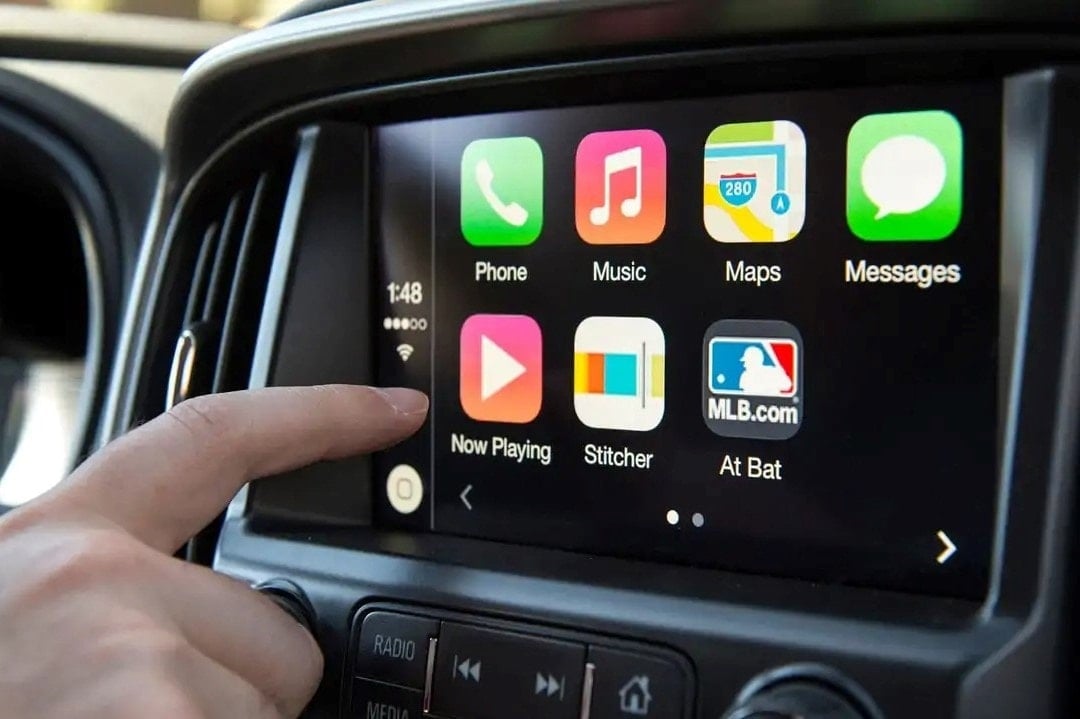
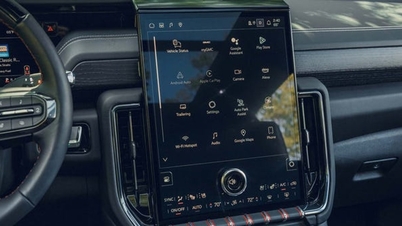
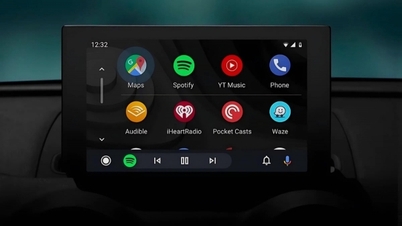
General Motors has confirmed plans to end support for Apple CarPlay and Android Auto on all upcoming models, having already removed these two platforms from its electric vehicle lineup starting in 2023. According to InsideEVs, a few rare electric vehicle models in the US, such as the Cadillac Lyriq and GMC Hummer EV, still support the connectivity, while GM's gasoline vehicles currently maintain CarPlay/Android Auto support.
CEO Mary Barra said GM is shifting its focus to deeply integrated infotainment systems, aiming to reduce the need to switch back and forth between the phone interface and the car's native interface – which has been criticized as disjointed and potentially distracting. The company is moving towards a centralized computing architecture and a "software-defined" vehicle.
The new interface architecture is based on Android Automotive.
New GM models will use an infotainment system developed on the Android Automotive platform, allowing for the running of stock Android applications. This gives the manufacturer greater control over data flow and optimized integration with in-car hardware and services.
However, users will need to log in separately for each application. Sterling Anderson, GM's Head of Product, said the company is working on simplifying the login process, but has not yet released details. The list of compatible applications is confirmed to expand over time.
GM's reasons for removing CarPlay and Android Auto.
Mary Barra argues that switching back and forth between the CarPlay/Android Auto interface and the car's native interface is "very difficult" and "not at all seamless." In some cases, this operation can be distracting. Therefore, once GM's electric vehicles reached the necessary level of development, the company extended similar changes to its upcoming gasoline models.
User experience: seamless or app ecosystem?
The new approach reduces reliance on smartphones, but in return, the in-car app store needs to be sufficiently diverse. For iPhone users, some familiar apps may not yet be available on Google's platform; GM is committed to expanding the list over time. The current bottleneck is the login process for each app, which the company is working to optimize.
In markets outside the US, GM's electric vehicles still retain CarPlay/Android Auto. This shows that the manufacturer adjusts to each market and stage of product development, rather than implementing it all at once.
Summary of the support roadmap
| Vehicle Group/Market | Support status | Note |
|---|---|---|
| GM electric cars in the US | Some models still support it. | The Cadillac Lyriq and GMC Hummer EV both feature CarPlay/Android Auto. |
| GM electric cars outside the US | Continue to provide support | CarPlay and Android Auto are still available. |
| Current GM gasoline vehicles | Currently supporting | The two connectivity options will remain on gasoline-powered vehicles in the near future. |
| GM vehicles are coming soon. | Not supported | Switch to deeply integrated Android Automotive. |
| The vehicle is in motion. | Constant | If you have CarPlay/Android Auto installed, the feature will be retained. |
Impact on existing users and new customers
A GM spokesperson confirmed that existing models will not have their features changed. If your vehicle supports CarPlay or Android Auto, these connections will continue to work. For customers purchasing gasoline vehicles in the near future, CarPlay/Android Auto will still be available; however, for the new models coming soon, users will switch to the Android Automotive-based system.
For customers who are deeply attached to the iPhone ecosystem, the limitations on native apps could be a point of consideration. GM stated that the app catalog will be expanded over time, and they are also researching ways to simplify login processes to reduce user friction.
Strategic positioning and industry context
The removal of CarPlay/Android Auto aligns with the roadmap for a centralized computing platform and software-defined vehicle trends. This approach allows manufacturers to control the end-to-end experience, synchronize updates, and optimize system performance. However, in the short term, users may need to adapt to an expanding app ecosystem.
Conclude
- Strengths: Deep integration, promising a more seamless experience and aligning with software-defined vehicle orientation; commitment to expanding application over time.
- Limitations: Lack of CarPlay/Android Auto on new vehicles; individual app login process; potential for missing some of iPhone users' favorite apps in the initial phase.
- Recommendation: Customers currently owning GM vehicles with CarPlay/Android Auto can continue to use them with confidence; new GM vehicle buyers should carefully check the list of applications and login procedures to assess suitability for their needs.
According to InsideEVs and discussions with GM executives including CEO Mary Barra and Chief Product Officer Sterling Anderson.
Source: https://baonghean.vn/general-motors-loai-bo-carplay-va-android-auto-tren-xe-moi-10309265.html


![[Photo] Closing Ceremony of the 10th Session of the 15th National Assembly](/_next/image?url=https%3A%2F%2Fvphoto.vietnam.vn%2Fthumb%2F1200x675%2Fvietnam%2Fresource%2FIMAGE%2F2025%2F12%2F11%2F1765448959967_image-1437-jpg.webp&w=3840&q=75)
![[Photo] Prime Minister Pham Minh Chinh holds a phone call with the CEO of Russia's Rosatom Corporation.](/_next/image?url=https%3A%2F%2Fvphoto.vietnam.vn%2Fthumb%2F1200x675%2Fvietnam%2Fresource%2FIMAGE%2F2025%2F12%2F11%2F1765464552365_dsc-5295-jpg.webp&w=3840&q=75)












































![[OFFICIAL] MISA GROUP ANNOUNCES ITS PIONEERING BRAND POSITIONING IN BUILDING AGENTIC AI FOR BUSINESSES, HOUSEHOLDS, AND THE GOVERNMENT](https://vphoto.vietnam.vn/thumb/402x226/vietnam/resource/IMAGE/2025/12/11/1765444754256_agentic-ai_postfb-scaled.png)








































Comment (0)