

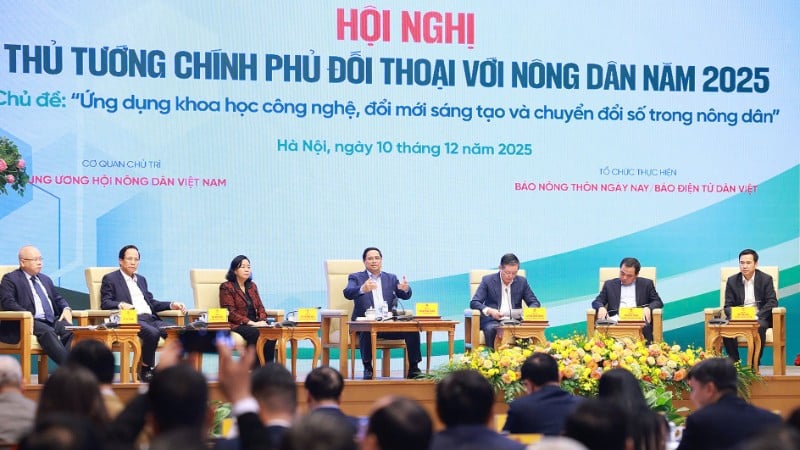
Along with their confidence and enthusiasm, the farmers also submitted to the Government and the Prime Minister five major, practical recommendations stemming from their daily production and life experiences.
First and foremost, there is a desire to promote the transfer of technology and genuine digital transformation to every field and every farm. Farmers propose shortening the gap between research and production, building a close coordination mechanism between research institutes and universities with the agricultural extension system, the Farmers' Association, and cooperatives; while also strengthening digital skills training for farmers, especially in content creation, livestreaming, and e-commerce management; and promptly establishing innovation clubs, digital agricultural extension stations, and digitized raw material areas.
Secondly, regarding financial resources and tangible incentives, farmers earnestly propose the establishment of a specialized credit fund (possibly through the Farmers' Association) specifically for high-tech, organic, circular, and low-emission agriculture ; expanding tax incentives, providing long-term interest rate support, and increasing unsecured loan limits for high-tech projects; and simultaneously supporting deep processing for cooperatives and micro-enterprises, as well as building a large-scale logistics system and a dedicated e-commerce platform for Vietnamese agricultural products.
Thirdly, regarding food safety and input management, farmers proposed strict control over agricultural input prices, severe penalties for counterfeit, imitation, and substandard goods; urgent implementation of the Central Farmers' Association's project on disseminating information and guiding safe and hygienic food production; and the development of a national digital data platform to serve traceability, carbon emission control, and value chain governance.
Fourth, regarding rural infrastructure and risk management, the people proposed investing heavily in high-speed internet infrastructure in remote areas, border regions, and islands; improving the flood and landslide warning system and mechanisms to support production recovery after natural disasters; and developing a robust agricultural insurance market with simplified procedures, reasonable fees, and ensuring harmonious benefits for all parties.
Finally, regarding land, planning, and branding, farmers hope for the complete removal of bottlenecks in land consolidation and concentration for large-scale production; the promotion of sustainable specialized farming area planning and the building of national brands for each key agricultural product; and the study of an "agricultural industrial park" model to attract young workers and high-quality resources back to rural areas.
These recommendations not only reflect the concerns but also the great aspirations of the peasant class in the journey of bringing science and technology and digital transformation truly to the fields, contributing to building a modern, sustainable, and prosperous agriculture.
Voices from the fields - anxieties and aspirations
From the rice paddies of the Mekong Delta to the hillside farms of the Northwest, from high-tech farms and collaborations with major international partners to simple stilt houses in the highlands, thousands of opinions have converged on the Government Headquarters with a common aspiration: to bring science and technology and digital transformation directly to the fields and into the hands of farmers.
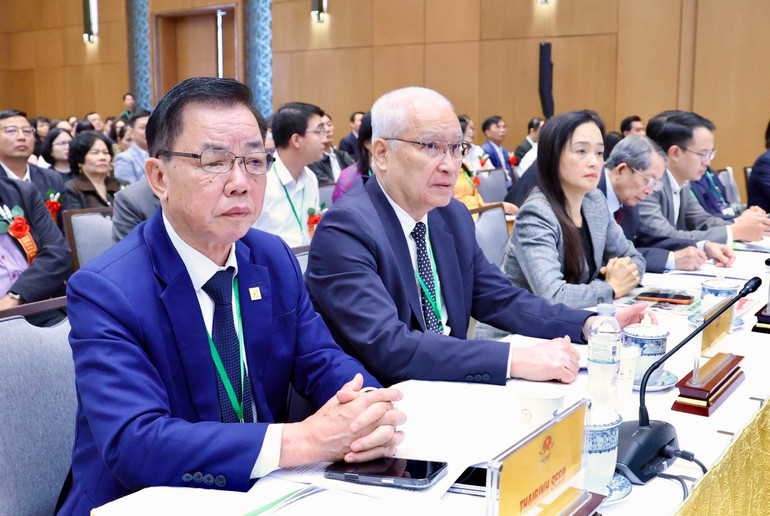
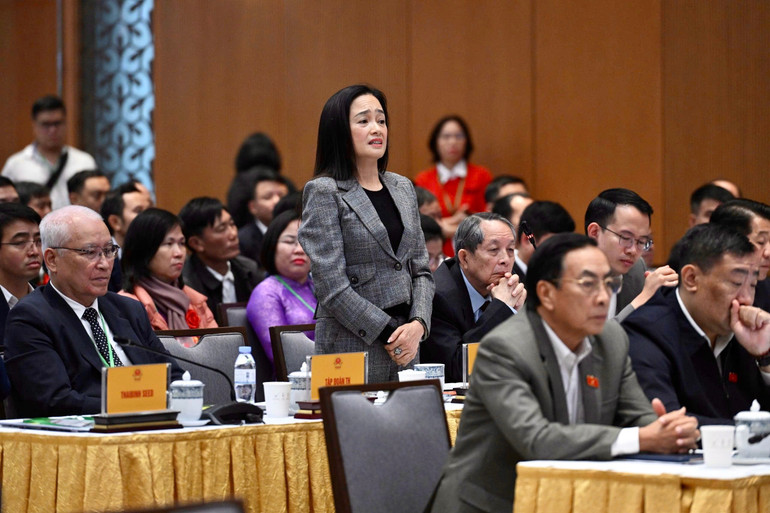
Ms. Nguyen Thi Tra My, General Director of PAN Group, shared: PAN Group leads Vietnam's agriculture and fisheries sector, with nearly 14,000 employees and close ties to tens of thousands of farmers. We affirm that green capital is not cheap capital, but we have successfully connected with many domestic and international credit institutions to obtain preferential interest rates, while also opening up stable export markets for rice and cashew nuts. In the 1 million hectare rice project, PAN invested 50 billion VND in building the VinaRice factory. After nearly a year of implementing Resolution 57, we highly appreciate the Government's decisive actions, especially the 2% support package. We would like to propose three points:
Digital transformation for farmers is simple: Good seeds - the right fertilizers and pesticides - high-priced output. PAN is ready to supply quality seeds and purchase rice for export at 1,100-1,200 VND/kg. We hope the Government will connect the public and private sectors so that businesses can share laboratories and research institutes to jointly create salt-tolerant and drought-resistant rice varieties. There is an urgent need to train human resources for the soil and soil nutrition sector to avoid the risk of decline. We hope that ministries, sectors, and businesses will go abroad to promote and elevate the brand of Vietnamese agricultural products.
PAN is committed to working alongside the Government and farmers to build a sustainable and modern agricultural sector.
Ms. Pham Thi Ly, a scientist and farmer in 2024, expressed her concern: "Even successful research results remain in a display case." She proposed a mechanism for close coordination between research institutes, the agricultural extension system, and the Farmers' Association to ensure that technology quickly reaches producers.
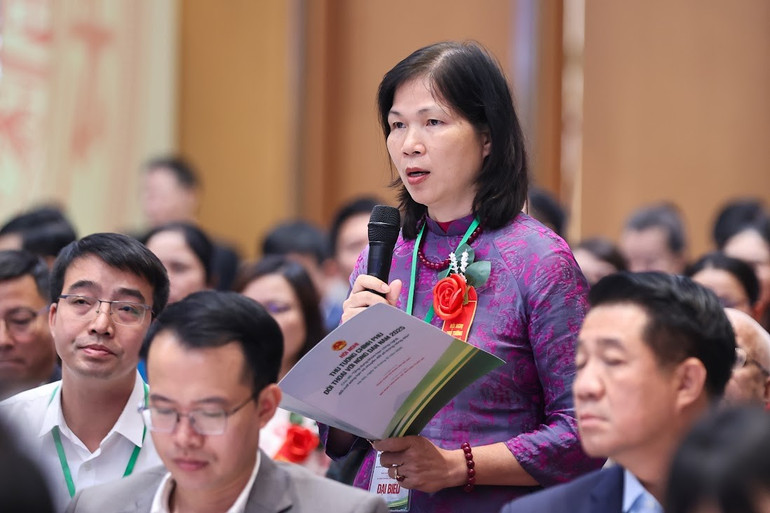
Ms. Vuong Thi Thuong, Director of Toan Thuong Agricultural Products Cooperative (Lang Son), shared: "In the highlands, livestreaming requires climbing high hills to get a signal, and the high taxes and fees drive up product prices, making it difficult to compete." She hopes for the early provision of digital skills training, stable internet infrastructure, and a dedicated e-commerce platform for agricultural products.
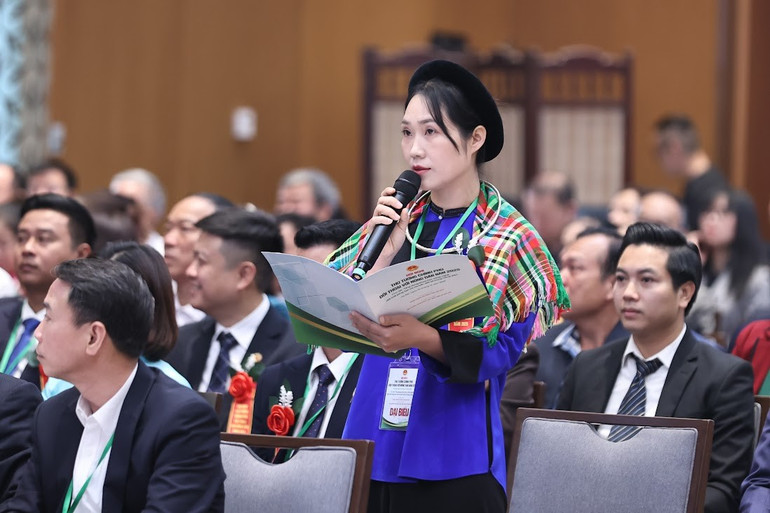
Mr. Pham Duc Trong (Hanoi) proposed building a "high-tech agricultural village" model as a demonstration site, where scientists, businesses, cooperatives, and farmers can work together.
Mr. Le Tuan Anh (Lai Chau) earnestly stated: "It is necessary to include criteria for promoting regional linkages in the evaluation of local officials and to have policies that genuinely bring standardized agricultural products into supermarkets."
Ms. Nguyen Thi Tram (Bac Ninh) suggested establishing a specialized credit fund through the Farmers' Association, immediately implementing the Food Safety Project, and researching the "agricultural industrial park" model to attract young people back to their hometowns.
Mr. Nguyen Van Minh (BAF Vietnam) presented six specific mechanisms for replicating the smart, closed-loop, multi-story pig farming model – a land-saving approach that reduces labor and ensures biosafety.
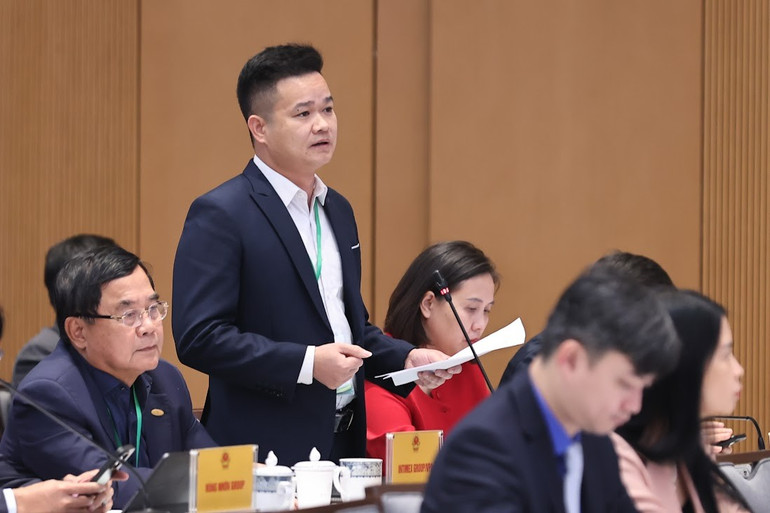
Mr. Vu Manh Hung (Hung Nhon Group) affirmed that joint ventures with De Heus, Big Dutchman, and Bel Ga are essential to "compete with the giants." He proposed optimizing land policies, public-private partnerships, and simplifying procedures for foreign experts.
Mr. Do Ha Nam (Intimex) recalled the remarkable achievements of 40 years of Doi Moi (Renovation) thanks to the "land to the tiller" principle and market mechanisms, but warned of the risk of losing markets due to pesticide residue and the potential surplus of 4 million tons of rice from the Winter-Spring crop. He proposed high-level negotiations with the Philippines, allowing large enterprises to purchase and stockpile rice temporarily, while also strongly expanding into West Asia and Africa.
Ministries and agencies are working together decisively.
In response to these pressing recommendations, leaders of ministries and agencies expressed strong agreement and committed to taking decisive action.
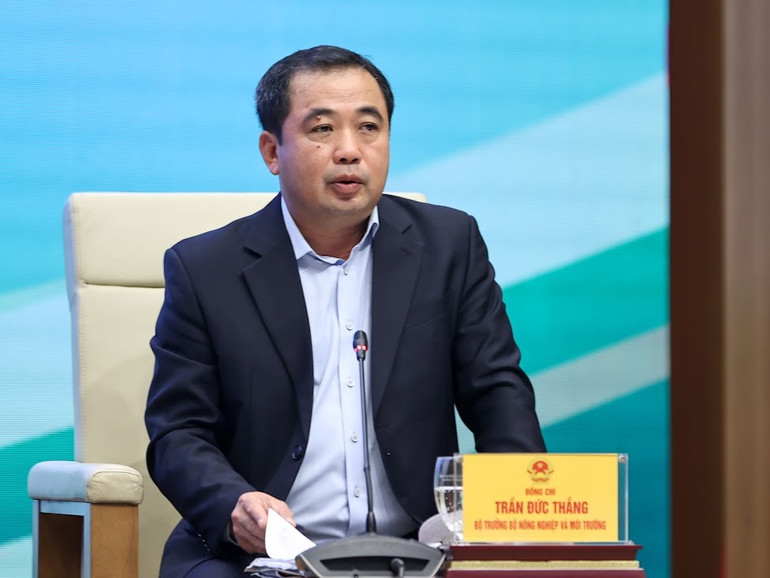
Mr. Tran Duc Thang, Minister of Agriculture and Environment, affirmed: From January 1, 2026, food safety will be strictly enforced for all domestic and imported products, domestic raw material areas will be developed, and preparations will be made to conquer the Japanese market when the project to cultivate 1 million hectares of high-quality rice is implemented from 2025-2026.
Mr. Do Thanh Trung, Deputy Minister of Finance, emphasized the continued maximum exemption and reduction of taxes and fees, coordination with Amazon to establish a logistics center in Vietnam, and requested localities to strictly implement support for cooperatives.
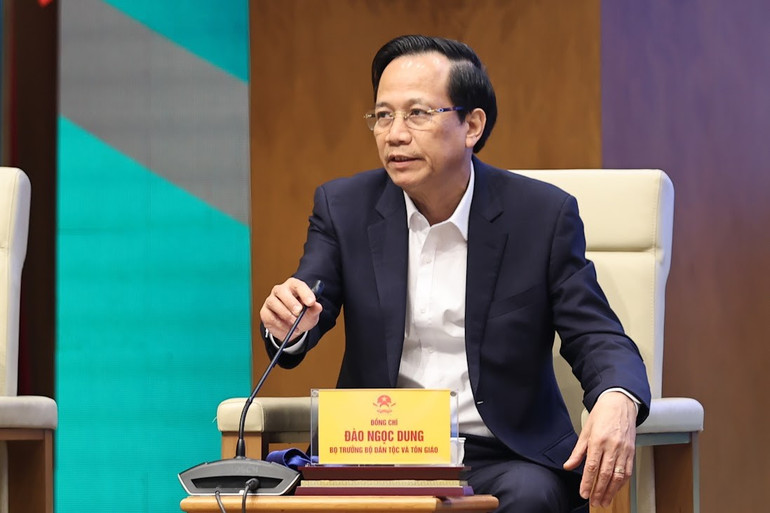
Minister of Ethnic Minorities and Religion Dao Ngoc Dung stated that the upcoming Vocational Education Law will strongly shift towards dual training programs in Germany and Japan (KOSEN), with training costs calculated before tax, and special priority given to agriculture and mountainous regions.
Deputy Governor of the State Bank of Vietnam, Nguyen Ngoc Canh, reported that outstanding agricultural and rural credit reached nearly 4 trillion VND, and the preferential interest rate program of 185 trillion VND had disbursed 157 trillion VND.
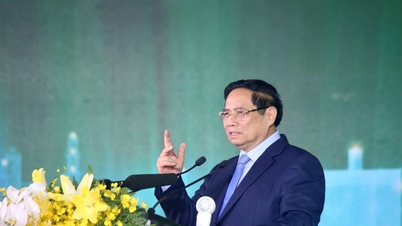
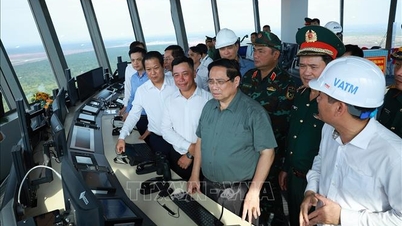
Prime Minister Pham Minh Chinh: Science and technology must reach every single plot of land.
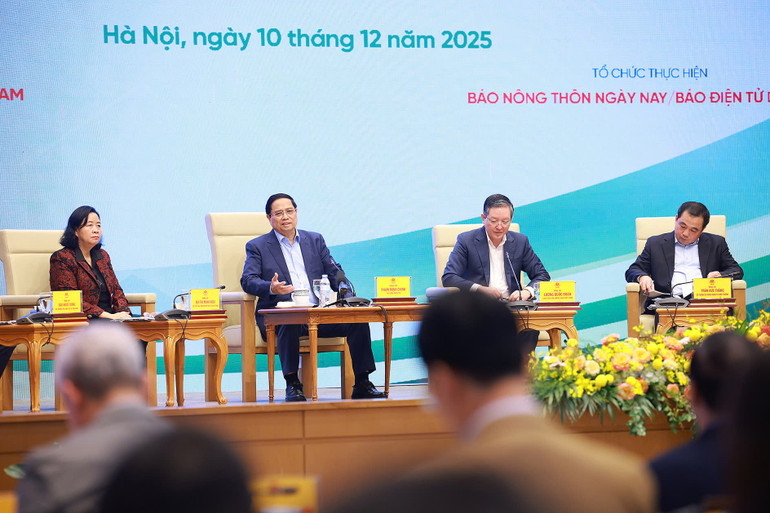
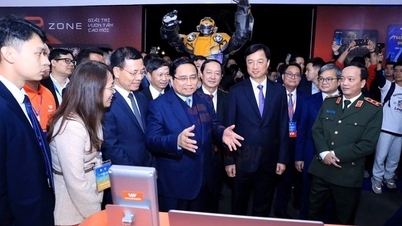
At the conference, Prime Minister Pham Minh Chinh affirmed that science and technology, innovation, and digital transformation are strategic choices to achieve the goal of exporting $100 billion worth of agricultural products. The head of government called on the entire system to implement the "3 accompanying initiatives" and entrusted farmers with "5 specific requirements," while also decisively directing eight key tasks, most notably: a strong shift towards green and circular agriculture, ordering technology based on practical experience, declaring war on unsafe food, developing the private sector and new-style cooperatives, and promoting social security with the spirit of "6 clear principles, 3 public disclosures, and 3 oversights."
"Only when science and technology and digital transformation truly reach every field, every farm, and every cooperative will Vietnamese agriculture truly take off," the Prime Minister emphasized.
The conference has concluded, but the seeds of aspiration have been sown across the fields of Vietnam. From the simple sentiments of the people, from the insightful policies of the Prime Minister, from the strong commitments of ministries and sectors – all are breathing the same air: to elevate Vietnamese agriculture to a world-class level, to build livable rural areas, and to create a civilized and prosperous farming class. This is the great aspiration of the nation in the new era.
Source: https://nhandan.vn/gieo-mam-khat-vong-tren-canh-dong-viet-post929288.html



![[Image] Vietnam's colorful journey of innovation](/_next/image?url=https%3A%2F%2Fvphoto.vietnam.vn%2Fthumb%2F1200x675%2Fvietnam%2Fresource%2FIMAGE%2F2025%2F12%2F14%2F1765703036409_image-1.jpeg&w=3840&q=75)








![[Image] Vietnam's colorful journey of innovation](https://vphoto.vietnam.vn/thumb/402x226/vietnam/resource/IMAGE/2025/12/14/1765703036409_image-1.jpeg)






















































Comment (0)