

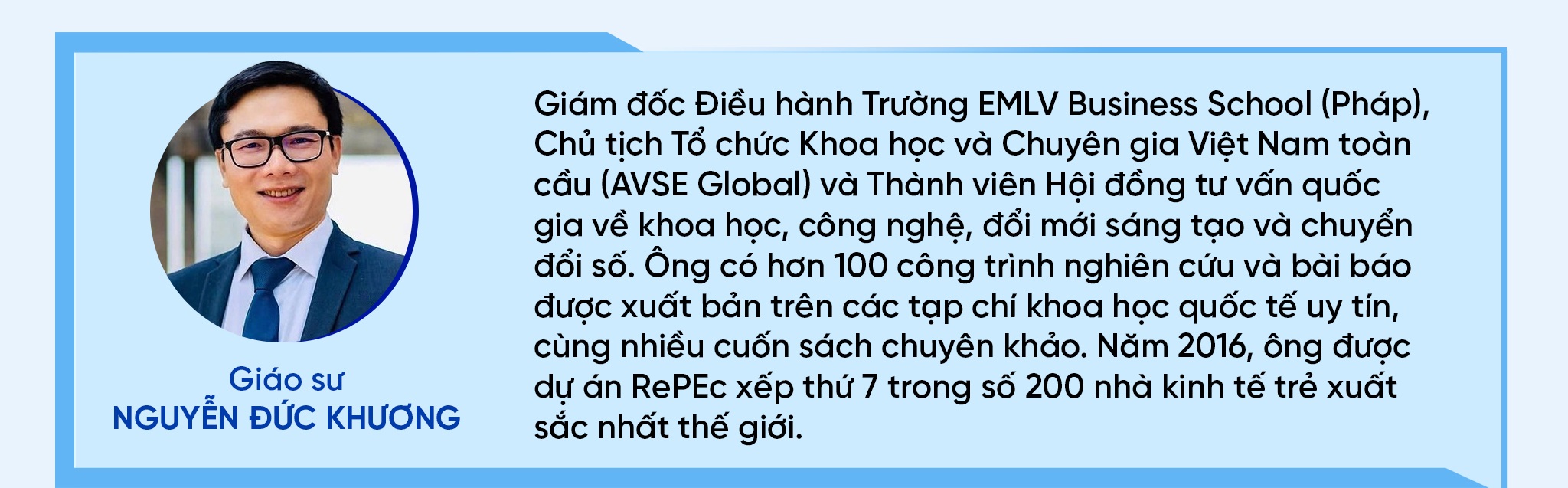
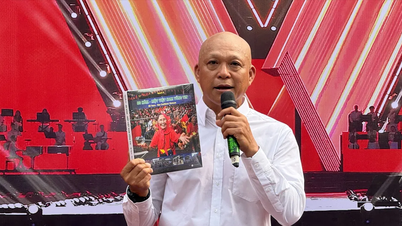
On the occasion of the 80th anniversary of National Day, Professor Nguyen Duc Khuong shared with Dan Tri newspaper his perspectives on the country's development journey, the role of Vietnamese intellectuals, and sent a message to the younger generation to continue writing the glorious history of the nation.
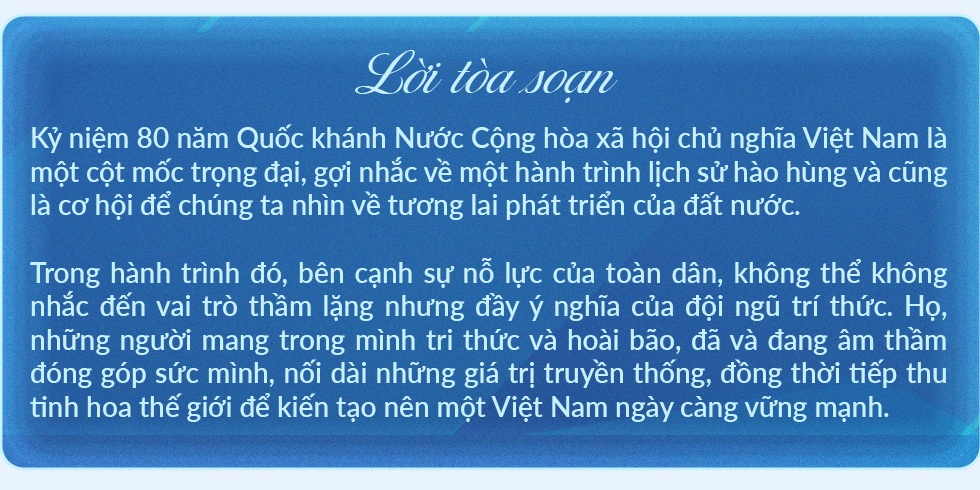
A reporter from Dan Tri newspaper had a conversation with Professor Nguyen Duc Khuong, listening to his insightful perspectives on the country's development. He emphasized that patriotism is not something abstract, but is expressed through concrete actions, from doing the smallest good deeds to contributing to overall development.
His stories not only inspire but also convey meaningful messages to the younger generation, who will follow in his footsteps and write glorious chapters in the nation's history.

Professor Nguyen Duc Khuong, on the occasion of the 80th anniversary of National Day, a very important historical milestone for our nation, could you share your strongest emotions when looking back on the long journey our country has taken? What image comes to mind first right now?
- This is a very meaningful question and evokes many emotions in me. When I think about the 80 years of our country, my greatest emotion is pride. It's pride in a Vietnam that has overcome many challenges and difficulties since the early days of independence to become a modern, friendly, and peace- loving nation.
Today, Vietnam is highly regarded by the world for its partnerships in all areas, from politics , economics, social affairs, and national security and defense.
I think this is a point that needs to be emphasized. The respect we have today is not accidental. It is the result of a long and arduous journey.
Imagine that, from the very first days of independence until now, we have faced numerous difficulties, barriers, and obstacles in diplomacy , politics, and economics. During those times, many countries did not fully understand the vision, actions, and aspirations of Vietnam and its people.
But throughout that journey, we have always had a strong aspiration. The aspiration to rise up, the aspiration for independence, freedom, and a path of development to build a civilized, stable, and prosperous society for all. That is the ideal of our nation.
All we desire is a stable peace to foster development and build prosperity. Every citizen can contribute to that prosperity and help make Vietnam the respected country it enjoys today from international partners.
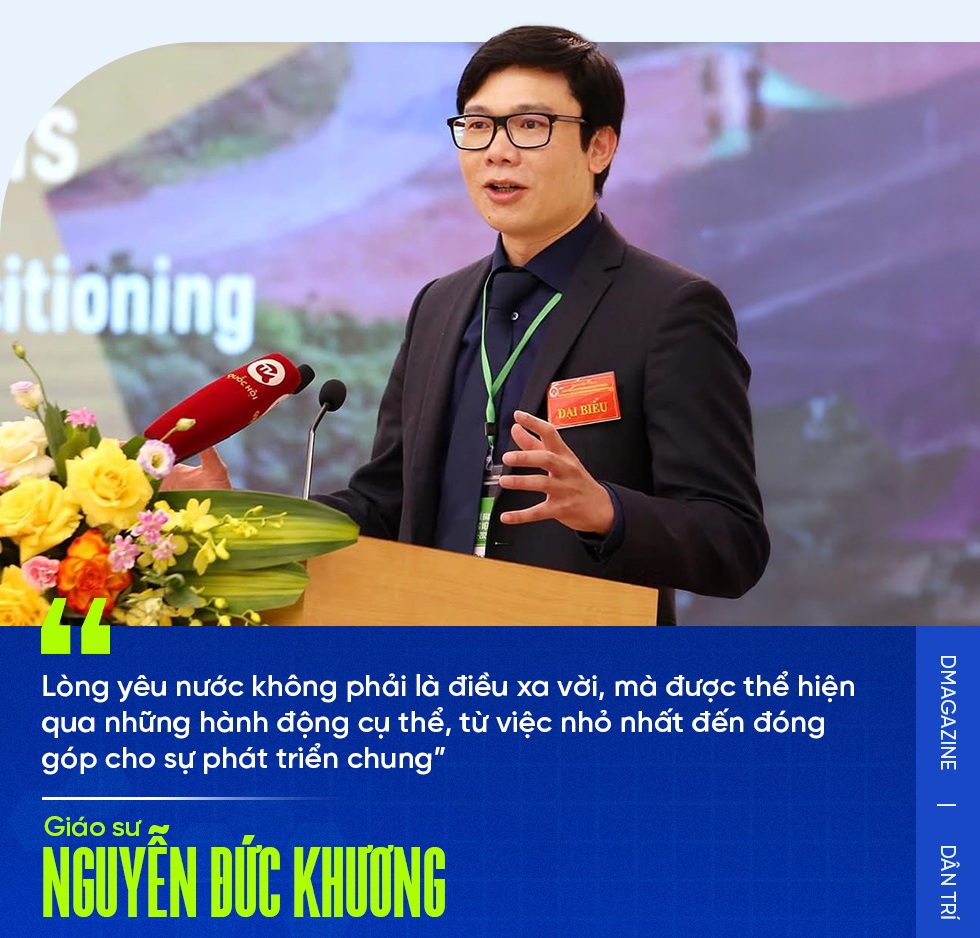
How did his childhood memories in Vietnam shape the Professor's personality and his later aspirations for research and contribution?
- I can say that I was born at a time when the country had achieved peace, after decades of resistance against the French and the Americans. Although we later experienced a border war, my earliest memories of the war come only from my father's stories.
My father was a soldier at the time, directly participating in the 1979 border war to defend the country's borders. Those stories are truly sacred, and they are my first memories of patriotism.
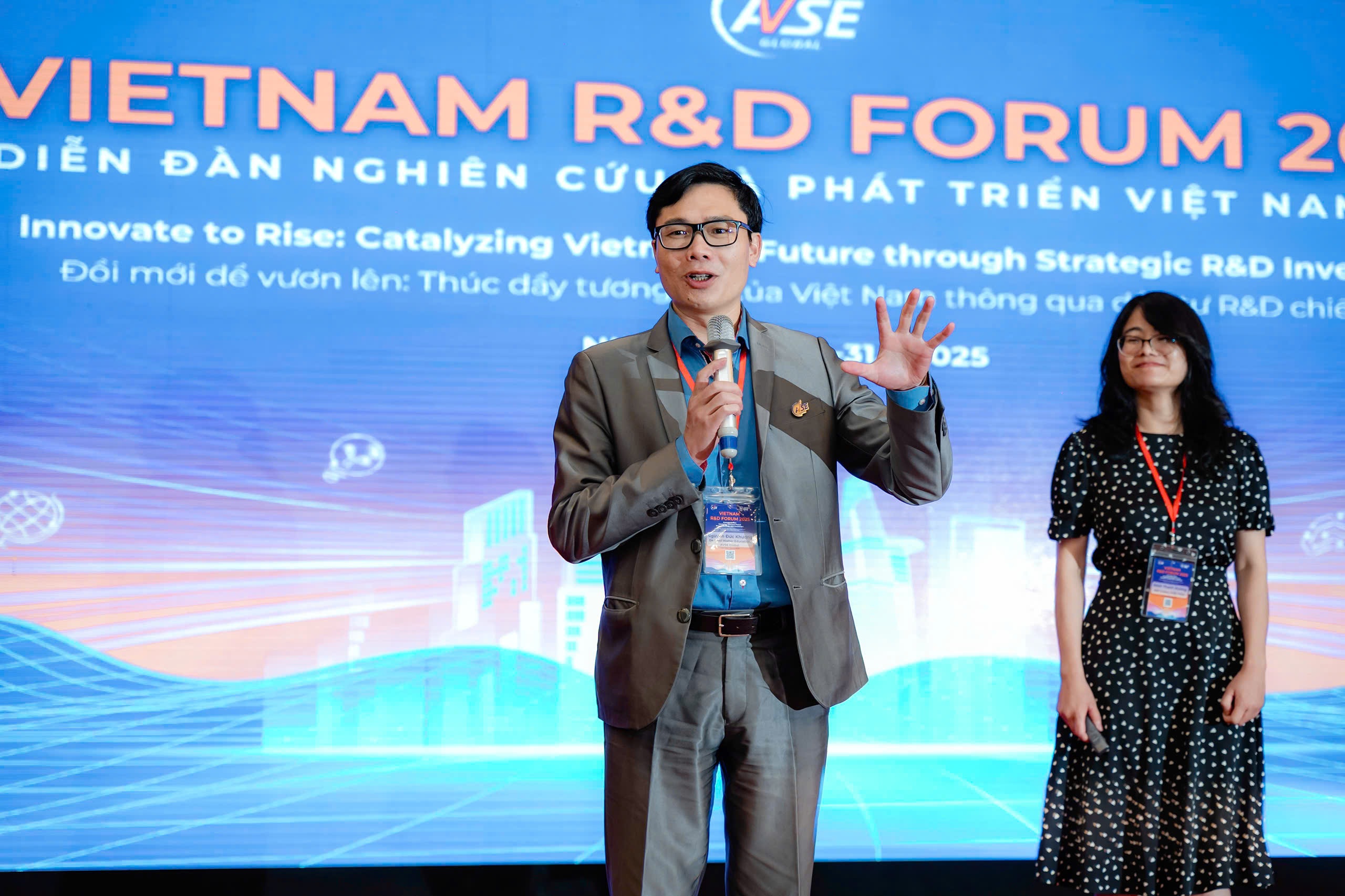
Growing up, my childhood was spent in a time when, despite the country's difficulties, there was peace. The border war lasted until the early 1990s, and I didn't have to live through a period of brutal warfare, without bombs, bullets, or displacement.
Looking back now, I realize it was a very special childhood. My childhood was filled with the laughter of children in the fields, with work alongside friends building schools and cleaning up the neighborhood. It was lovely, gentle, and wonderful, because I didn't have to worry much since the country was at peace.
Later, when studying history, I gradually realized that to achieve this peace, the nation had gone through an extremely difficult period. Through youth union activities, I felt the determination of previous generations. They did everything in their power to ensure that the younger generation could have that independence and peace.
I told myself that the time would come when I would have to participate in work that served the development of the country, contributing to the development of my village, my organization, and my workplace.
At that time, I didn't have many specific ideas about what I would do in the future, but my biggest desire was to go to university, explore the world, and find ways to contribute more to my country.
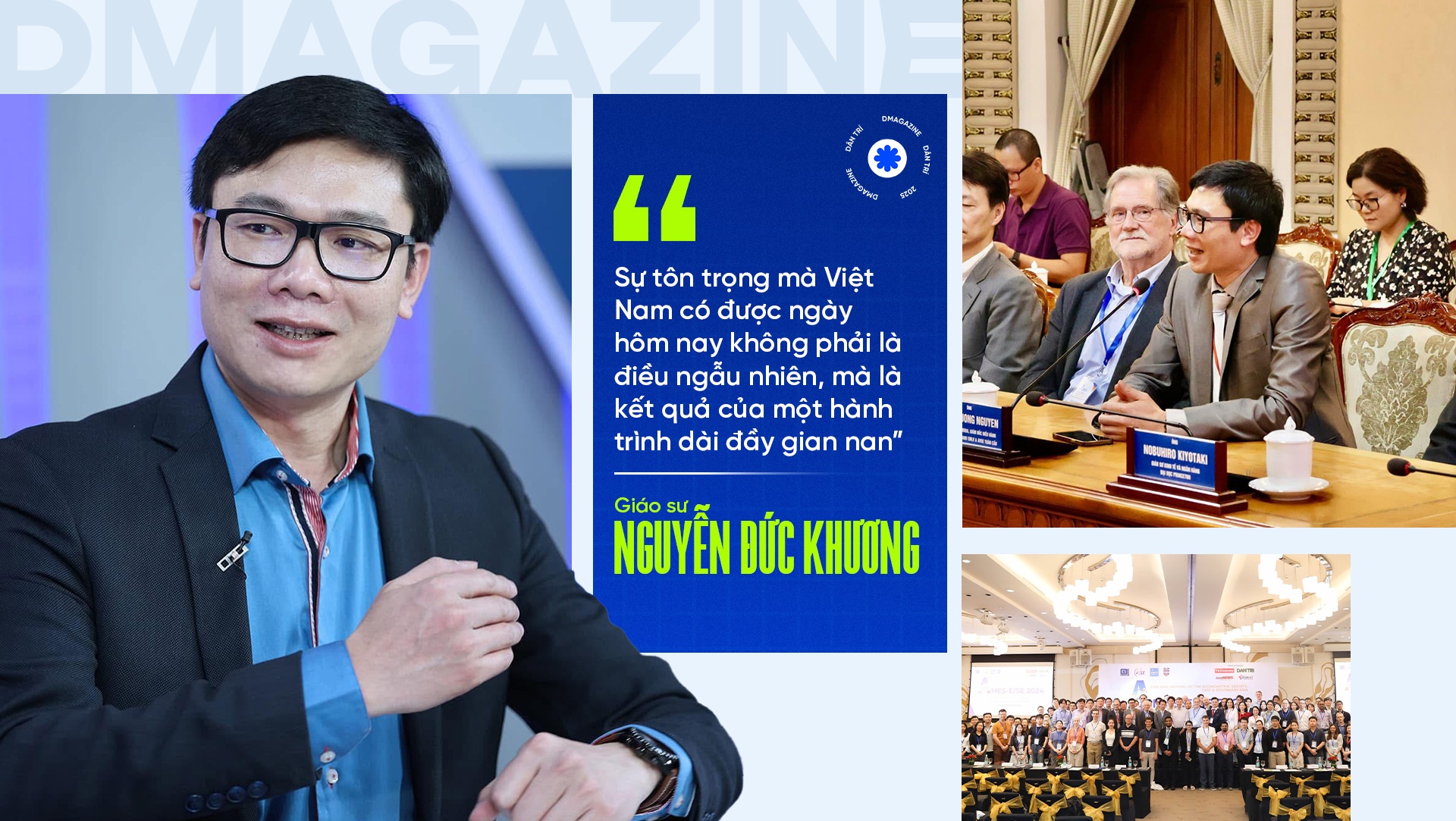
What circumstances led Professor to France and his choice to pursue finance, a field with a vital impact on a nation's prosperity?
- It was truly a coincidence. It's fair to say that, at that time, very few young people knew exactly what they wanted and what they would do. This was partly due to a lack of information, and partly because the connection and sharing between regions and with the world was limited.
Initially, when taking the university entrance exam, I decided I wanted to become a petroleum engineer and could have studied at the University of Mining and Geology. But then, I had what could be considered a rather "naive" thought at the age of 17-18.
I think that if I excel in petroleum engineering, I'll have two options: either work at Vietnam's leading research institutes, or go to Vung Tau to work in oil exploration. Both options seem somewhat limited in terms of mobility and access to the world.
Meanwhile, I also intended to apply to the University of Commerce to learn about the economy and how businesses operate. I took the exam and was among the top scorers. The university offered me a scholarship from the French-speaking group, giving me the opportunity to study in France.
The change happened in just two days. On the first day, I packed my suitcase and went to the bus station to enroll at the University of Mining and Geology. But as the bus was about to arrive, I changed my mind and decided to go back. The next day, I enrolled at the University of Commerce. That decision led me to France and I have been connected to this country for 25 years since graduating from university in Vietnam.

Upon arriving in France, what moments of "enlightenment" did the professor experience that led him to realize his mission was not only personal development but also a commitment to contributing to the development of Vietnam?
- When I went to France, I was truly bewildered. I think the biggest shock wasn't the cultural one, because France and Vietnam share a fairly similar cultural landscape. The biggest shock was the disparity in intellectual level, life experience, and understanding of the world between Vietnamese students and international students.
I remember, after the first class of my first course, the teacher said she would send the assignment via email. At that time, in Vietnam, I had only just started using computers to learn programming and had very little time for practice. I had to ask a Tunisian friend what email was and how to use it.
After 15 minutes, he created an email address for me. This shows how far behind I was technologically in the developed world back in 2000.
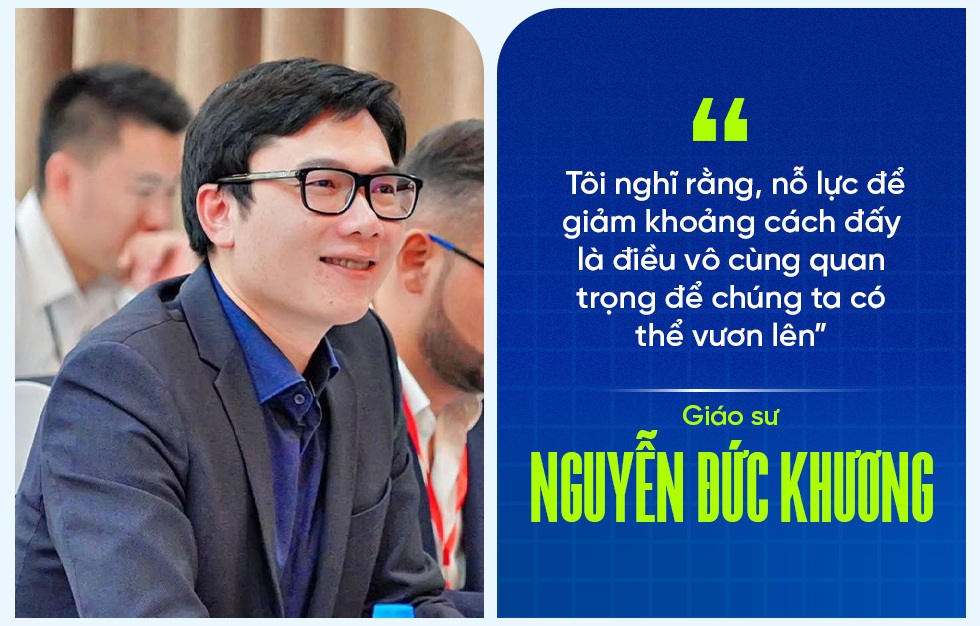
This gap motivated me to learn continuously. I realized I had to work very hard to close the gap in professional skills and then surpass them in order to continue my studies at a higher level. I think that striving to reduce that gap is extremely important for us to progress.
Secondly, I've noticed that the Vietnamese student and intellectual community in France is growing stronger. It's a huge resource. I think this force is fully capable of continuing the legacy of the great figures who came before, the generations that have been so successful, like Mr. Tran Dai Nghia.
That motivated me to join and establish the Vietnamese Student Association in Paris, and later the Vietnamese Student Association in France. By 2008, we had built a network with over 20 branches across the provinces and cities of France.
Most importantly, you have a strong connection with the Vietnam Student Association in Vietnam and the Central Committee of the Youth Union. It can be considered an inseparable part of the Vietnam Student Association in Vietnam.
As the members of the association matured and became experts and intellectuals, I posed the question of how to connect, support each other, and contribute to Vietnam. This led to the establishment of the Association of Vietnamese Scientists and Experts Global (AVSE Global) in 2011.
The professor once said that for Vietnam to become a powerful nation, it must start by doing the small things well. From what experiences in the professor's career did this philosophy originate?
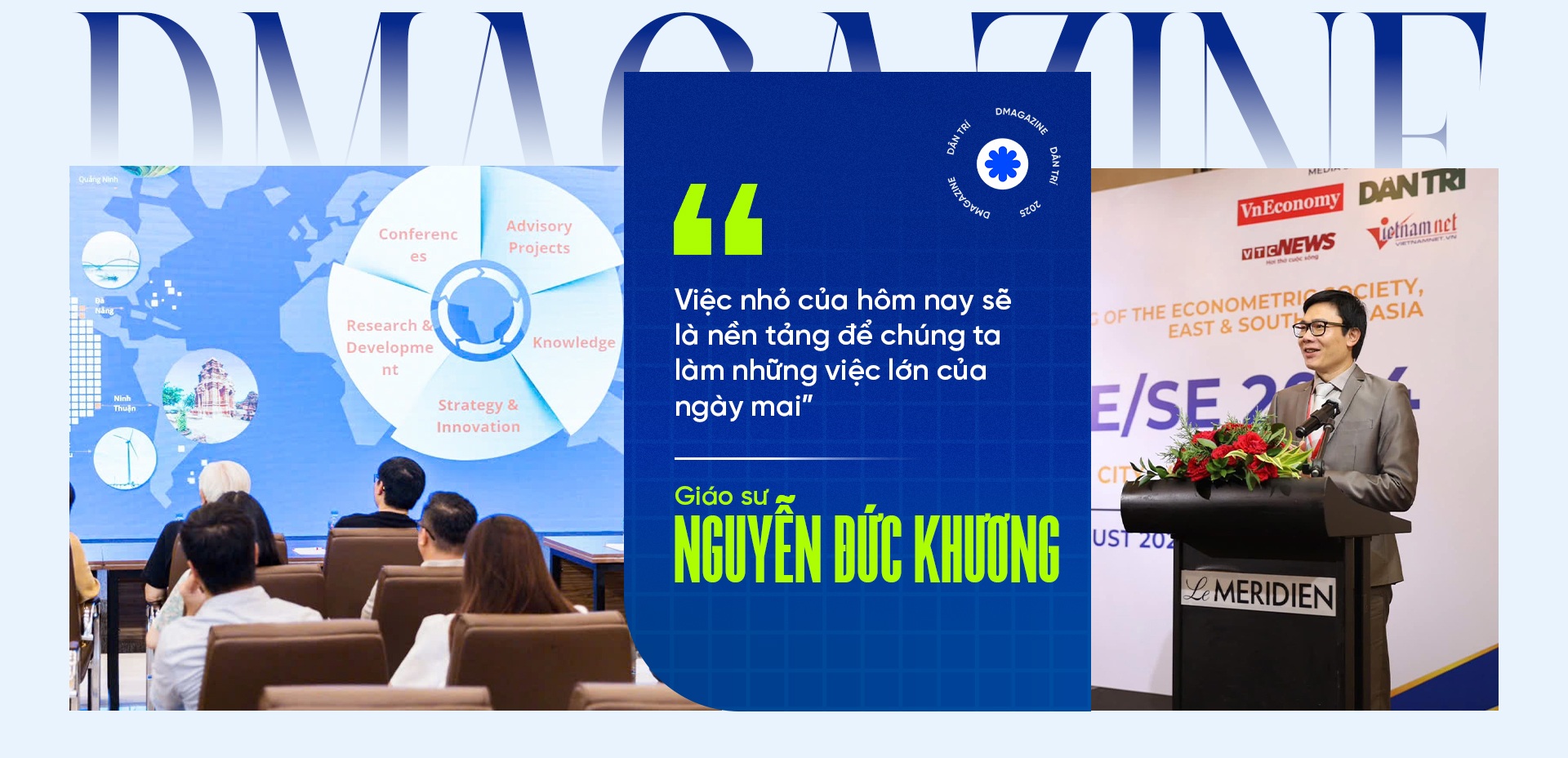
- This philosophy is my way of life. I've found that, when faced with any problem, if we don't take the first steps, we'll never leave the starting line. Once we start, we'll gradually move towards the goal. Along that journey, there will be big and small tasks. Usually, the experience gained from small tasks will help us shape how to tackle big tasks.
A major undertaking cannot be accomplished overnight. We must break down that large task into smaller ones. That is also the way to achieve success. Looking back at Vietnam's history, this story has almost become ingrained in the blood of the Vietnamese people. It is a natural trait.
I also believe that the destination is never the limit. Every time we achieve a goal, it becomes the starting point for a new one. And each time, we have small things to do. The small things of today will be much bigger than the small things of the past.
As an intellectual living and working abroad, what specific actions does the professor demonstrate the concept of patriotism?
- When I boarded the plane and left Vietnam, I had a different feeling about patriotism. When we are in the country, we take it for granted that patriotism is already within us. But when we go abroad, I realize that each of us is almost an "ambassador".
When people look at Vietnamese people abroad, they are looking at the face of Vietnam. We need to project the image of a peaceful, strong, dynamic Vietnam, ready to cooperate internationally.
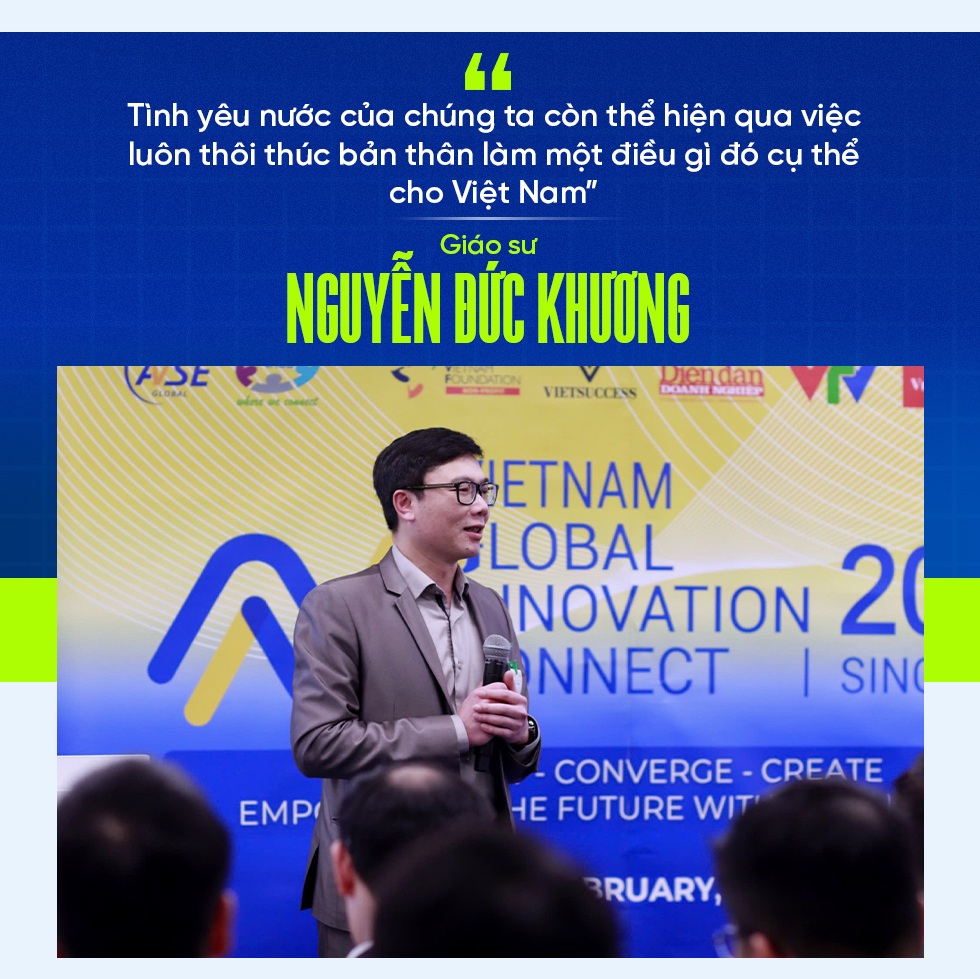
Our patriotism is also expressed through the constant urge to do something concrete for Vietnam. For scientists, this could be working as a visiting lecturer at Vietnamese universities, collaborating with businesses and research institutes to develop projects. For me, it's contributing ideas and policies to make Vietnam even more prosperous.
I was involved in advising the former Yen Bai province. Together with local leaders, we researched and developed a unique development model that combined growth and happiness. Instead of focusing solely on economic figures, this model also measured people's satisfaction in various aspects such as public services, healthcare, education, and the environment.
We spent weeks in Yen Bai, including in the most challenging areas like Mu Cang Chai, working with the local people to brainstorm about future development models. This project made me feel that what I'm doing is truly useful and beneficial for the country's development.

In the context of today's volatile world, geopolitical competition, climate change, and the rapid development of AI, Professor, what are the driving forces for the continued development of Vietnamese imagination and creativity?
- In the past, people used to say that the intelligence and creativity of the Vietnamese people would emerge when we were put in a passive position, meaning we only acted when the water reached our feet. But now, with the world constantly changing and unpredictable, we can no longer wait until the water reaches our feet. We need to build a roadmap, a longer-term vision.
What is valuable is that the entire Vietnamese nation shares a common vision: the vision for 2045, when the country celebrates 100 years of independence and becomes a developed nation. This is not only the aspiration of the leaders but also the aspiration of every citizen. This long-term vision is the driving force that prepares us to face any challenges.
To achieve that, we need to build a sufficiently strong internal self-reliance, combined with international integration to attract resources. A nation's internal strength, the self-reliance of its people, its risk management capabilities... all of these will create a synergistic strength. I believe that to stand on the shoulders of giants, we must first be self-reliant. Only then can we take advantage of the best that they have to offer.
Professor, could you send a message to the younger generation, those who will continue to write the glorious story of our nation?
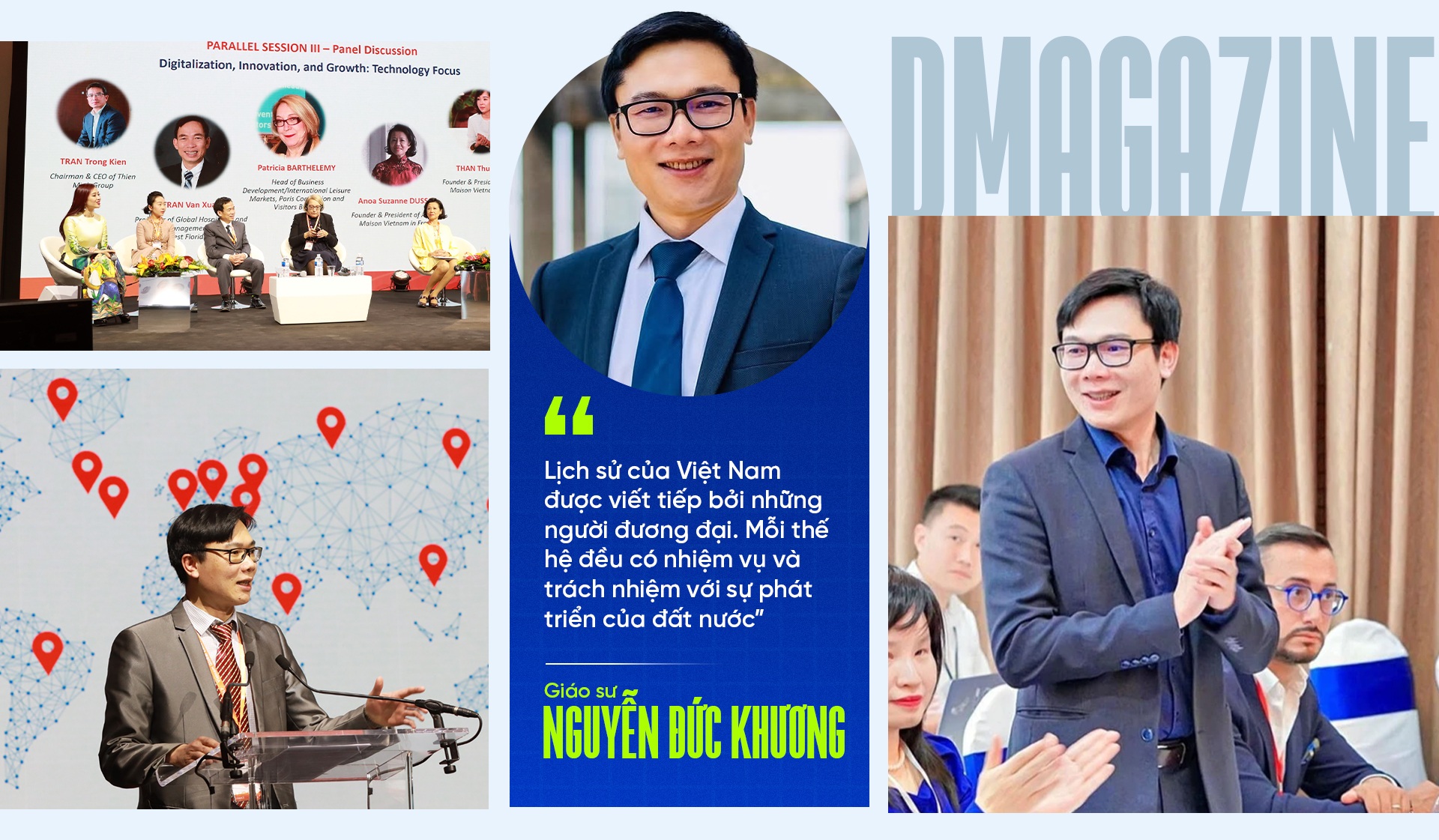
My message is perhaps very concise and focused on one point: Vietnam's history is being written by its contemporaries. Each era, each generation, has its own tasks and responsibilities for the country's development.
I think the younger generation just needs to be aware of this. We need to combine our internal strengths, our traditional strengths, with a sufficiently strong resource from the international community. Then, everyone will work towards common goals, so that Vietnam becomes a destination for intellect, science and technology, innovation, and all programs that can contribute to a more peaceful and stable world. This is the brand of Vietnam in the coming development phase.
We should place Vietnam's development within the context of global prosperity. Then, we will gain the support of the entire world, as if all the universes were converging for Vietnam's development. I believe that the younger generation, with their strengths, will be able to further develop Vietnam's unique characteristics.
Thank you, Professor, for taking the time for this conversation!
Source: https://dantri.com.vn/cong-nghe/gs-nguyen-duc-khuong-lich-su-viet-nam-duoc-viet-tiep-boi-the-he-duong-dai-20250817100502925.htm

































































Comment (0)