

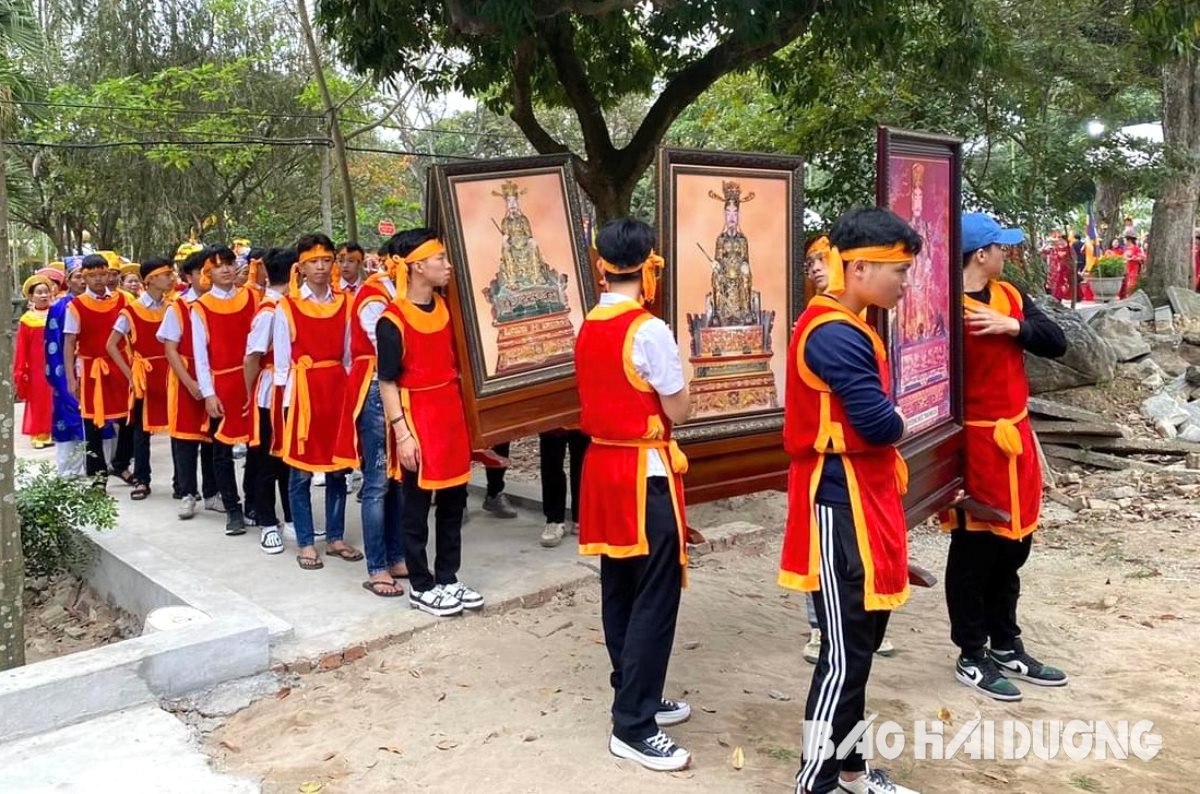
Preserving folk culture
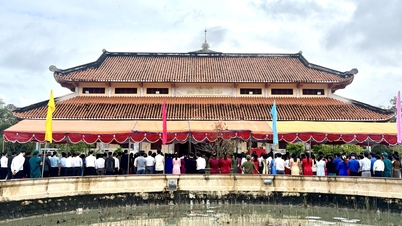
This year, the opening ceremony of the Tan Co village communal house festival (Tan Co hamlet, Cam Phuc commune, Cam Giang district) took place on Monday, February 19th (the 10th day of the first lunar month). Mr. Le Duc Cuong (from Hoang Hoa hamlet, Cam Dien commune) arranged his work early to return to his hometown to attend the festival. Mr. Cuong said that except for illness or being too busy, he always returns to his hometown of Cam Phuc to attend the festival every year. “This is an opportunity for me to meet, chat, and socialize with friends and neighbors that I rarely have the chance to see normally. Coming to the festival, I feel like I'm returning to my childhood as I enthusiastically participate in folk games like chess, tug-of-war, and football with everyone,” Mr. Cuong said.
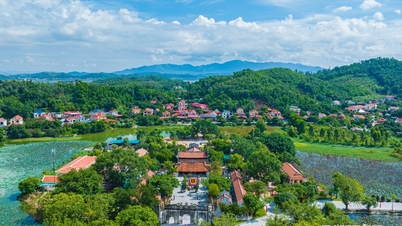
On the weekend of February 17-18 (the 8th and 9th days of the first lunar month), Ms. Truong Thi Thuy (from Tan Binh ward, Hai Duong city) also brought her grandchildren back to her hometown to attend the traditional festival at Tung Son Pagoda (in residential area No. 6, Phu Thu ward, Kinh Mon district). During the two days of the festival, Ms. Thuy's grandchildren watched traditional art performances such as Cheo, Cai Luong, and Chau Van singing; they also witnessed the calligraphy ceremony and enjoyed a vegetarian meal at the pagoda. “In previous years, the festival usually fell on days when the children had to go to school, so I couldn't bring them along. This is the first time they've participated in a traditional festival in their hometown, so they were all happy and excited,” Ms. Thuy said.
Ms. Nguyen Thi Hong, from Duong Thai village, Phuc Thanh commune (Kim Thanh district), is over 40 years old and has attended the Duong Thai communal house, temple, and pagoda complex festival nearly 30 times. Ms. Hong said that every year she attends the village festival, she clearly sees that traditional culture is still being nurtured and preserved through rituals and folk games. "The village festival is also an opportunity to strengthen community bonds, bringing people closer together and fostering appreciation for historical and cultural values," Ms. Hong said.
Preservation
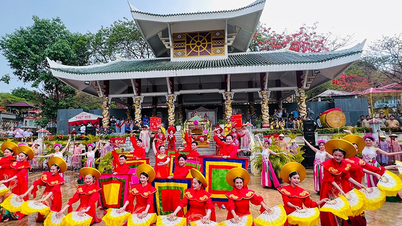
According to statistics from the Department of Culture, Sports and Tourism, Hai Duong province holds 818 traditional festivals annually across all 12 districts, towns, and cities. These festivals vary in scale, but the majority are village festivals, primarily held in the spring. Village festivals consist of two parts: the ceremony and the celebration, closely linked to beliefs, daily life, struggles against foreign invaders, and the challenges faced by people in the face of natural disasters. They are usually held in communal houses, temples, shrines, or sacred places dedicated to Buddha, national heroes, founders of trades, and patron deities of the village. “Each village festival carries its own meaning and character, but generally they all express belief in spirituality, reverence, remembrance of ancestors, those who contributed to the village and the nation, and the hope for a year of favorable weather. Village festivals also serve to strengthen community bonds and transmit cultural values between generations,” said Mr. Tang Ba Hoanh, Chairman of the Hai Duong Provincial Historical Science Association.
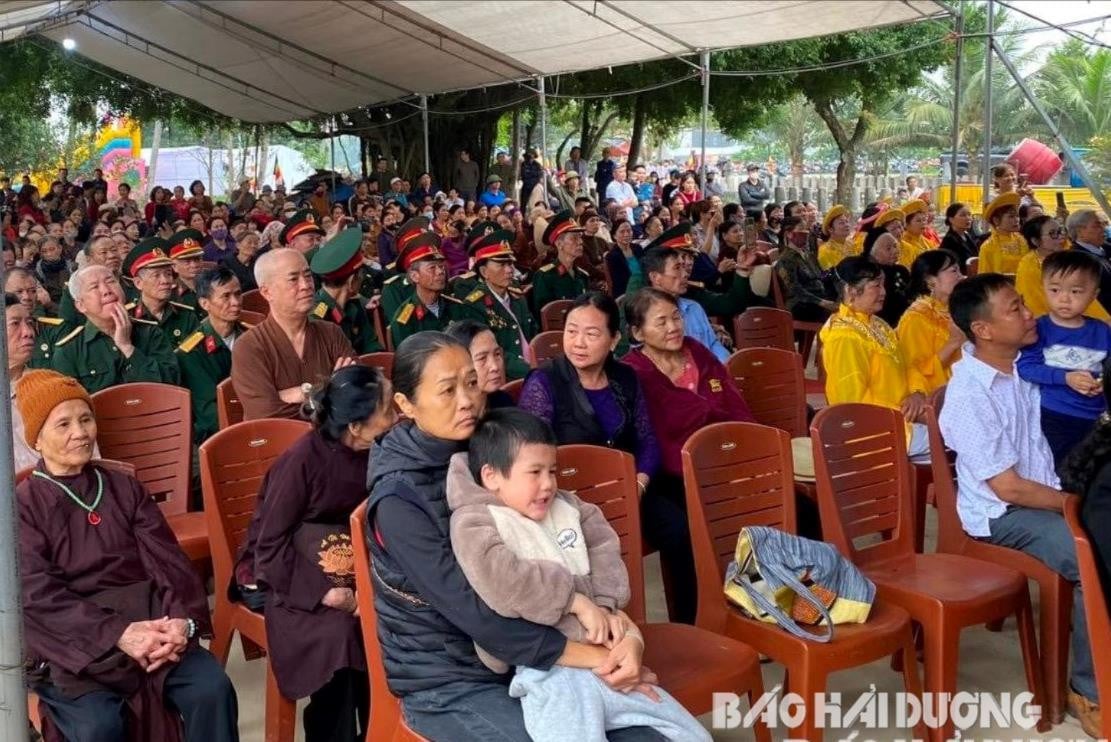
At village festivals, besides the ceremonial part, there is a festive part with many unique activities such as traditional dances, love songs, and theatrical performances; competitions and intellectual contests such as boat racing, wrestling, martial arts, rice cooking contests, chess, and games like swinging, blindfolded duck catching, blindfolded goat catching, pot smashing, tug-of-war… In these events, the people are the organizers, participants, spectators, and also the artists who perform, create, enjoy, and appreciate the festivities. Participating in village festivals gives people the opportunity to meet, socialize, and chat with each other after days of hard work. Therefore, village festivals are attractive to everyone, from the elderly to young children.
In previous years, at traditional festivals, whether large or small, regrettable phenomena still occurred such as: extravagant and prolonged celebrations; superstition, begging, overcrowding; pushing and shoving, scattering small change, burning votive paper indiscriminately; gambling, excessive drinking; inappropriate attire…
To "separate the wheat from the chaff," in addition to strictly implementing the directives of the Central Government, functional agencies and local authorities have focused on managing and organizing festivals. Localities strictly ensure security and order; build and promote civilized festival practices among the people... As a result, the negative aspects of traditional festivals and village festivals in Hai Duong are gradually being pushed back. "Besides historical, cultural, and social factors, today, village festivals are also an opportunity to develop tourism and stimulate consumption. Therefore, localities need to pay more attention to managing and organizing festivals so that village festivals truly remain a need of the spiritual, cultural, and religious life of the local people," Mr. Hoanh said.
HANH DUYEN - HA VYSource


![[Photo] Prime Minister Pham Minh Chinh receives Lao Minister of Education and Sports Thongsalith Mangnormek](/_next/image?url=https%3A%2F%2Fvphoto.vietnam.vn%2Fthumb%2F1200x675%2Fvietnam%2Fresource%2FIMAGE%2F2025%2F12%2F16%2F1765876834721_dsc-7519-jpg.webp&w=3840&q=75)
















































Comment (0)