

The new "Lao Hue Bridge," made of wood, is not very durable and has probably been repaired and rebuilt many times. Until after 1954, both the old-timers from the South and the parishioners of An Lac parish on the other side of the bridge remember it as a "nailed-down plank bridge," with many planks coming loose from the bridge deck; the handrails were made of makeshift round acacia logs, some beams wobbling, others missing. The bridge was mainly used by pedestrians or those carrying goods. Horse-drawn carriages didn't use this bridge but instead used the Ong Ta Bridge. The bridge had no nameplate; some called it the plank bridge, others the wooden bridge … Whatever the name, the reality was that this bridge no longer held its original important trading position.
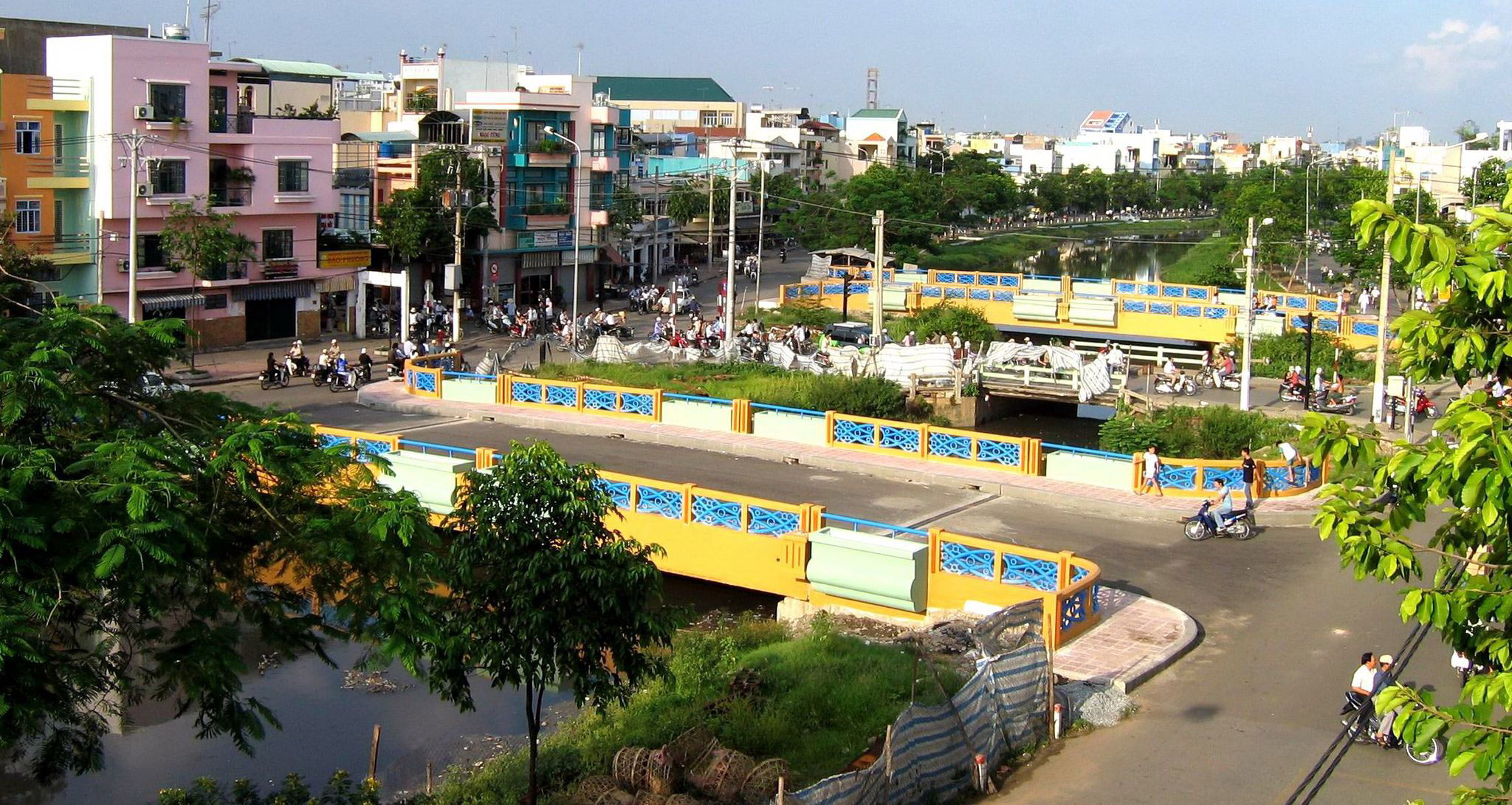
In July 2004, after completing bridges 1, 2, 3, 4, 5… all the bridges upstream of the Nhieu Loc - Thi Nghe canal were dismantled. In the photo: dismantling Ong Ta bridge, with bridge number 2 (left) and bridge number 3 on either side.
PHOTO: TRAN TIEN DUNG
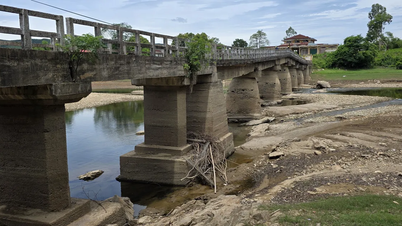
Around the late 1950s, the population on both sides of the bridge grew. Seeing that the bridge was unstable and too dangerous, the Tan Son Hoa Commune Council (Tan Binh District) demolished the old wooden bridge and built a new one made of concrete, cement mixed with 1x2 stone and gravel. The bridge was about 3-4 meters wide and over ten meters long, with iron railings, and no pedestrian walkway. People, bicycles , motorbikes, and horse-drawn carriages all shared the same space.
Because the concrete was mixed with gravel and not coated with asphalt, after a while, the surface cement layer gradually peeled off, revealing the gravel underneath. Locals called it the Gravel Bridge. It has since been repaired several times.
Until 1975, this bridge was merely a local boundary, dividing two communities: one side comprised mostly of long-time Southerners, and the other side consisted of Northerners from the An Lac area who had lived there since 1954. Calling it a boundary is accurate and there is concrete evidence. Those who lived on both sides of the bridge are familiar with this "boundary" bridge and the violent clashes between the young men on either side, which lasted for decades – starting in 1954.
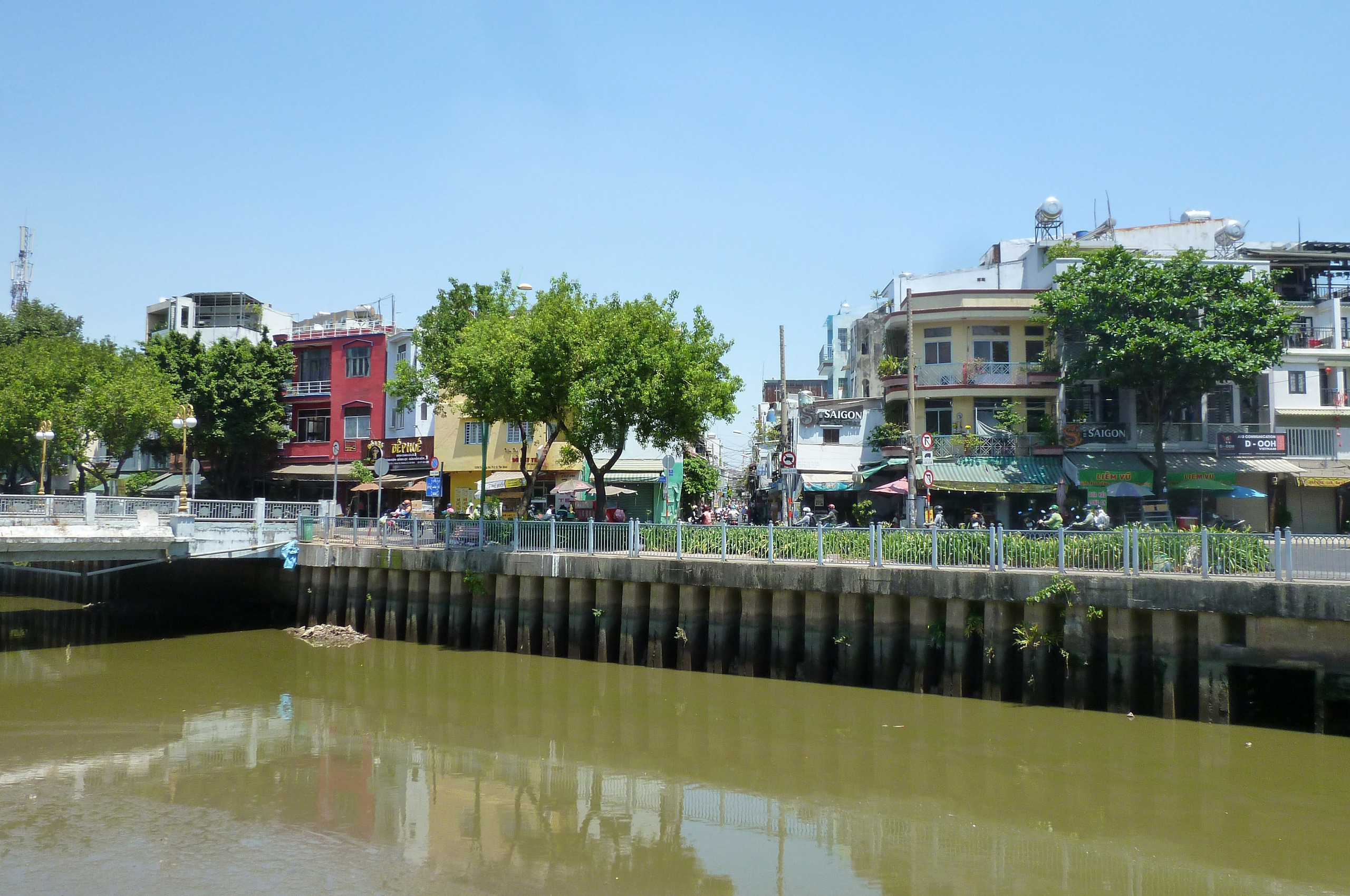
Bui Thi Xuan Street as seen from the An Lac area (now Ward 5, Tan Binh District). Before 2004, there was a bridge called San Bridge here. The bridge on the left of the photo is now Bridge No. 4.
PHOTO: CMC
In the late 1960s, while scavenging for mosquito larvae at the foot of this bridge, I noticed two rusty iron gates at either end, still securely locked – I don't know who installed them. Rumor has it, though the truth is unclear, that these gates were erected to prevent teenagers from the two sides of the bridge from clashing. In fact, I know and have heard stories of bloody fights between teenagers from both sides of the bridge.
Appearing to be built around the same time as the early 1910s, another unnamed bridge across provincial road 16 (now Pham Van Hai) also had no name. It wasn't until after 1954 that some initially called it the "Stack Bridge," then the "Cast Bridge," or the "Concrete Bridge," etc., whatever people called it. Later, and more recently, it has been called the "Ong Ta Bridge."
Initially, the Ong Ta bridge, connecting to Ong Ta market, was also made of wood, like the San bridge on the other side. Before 1954, the area around these two bridges was like a "death zone." Viet Minh members who went to the free zone (Ba Queo) were captured by the enemy, beheaded, and their heads thrown into the Nhieu Loc canal. Conversely, French and Vietnamese traitors were also punished by being beheaded and their heads thrown into the canal.
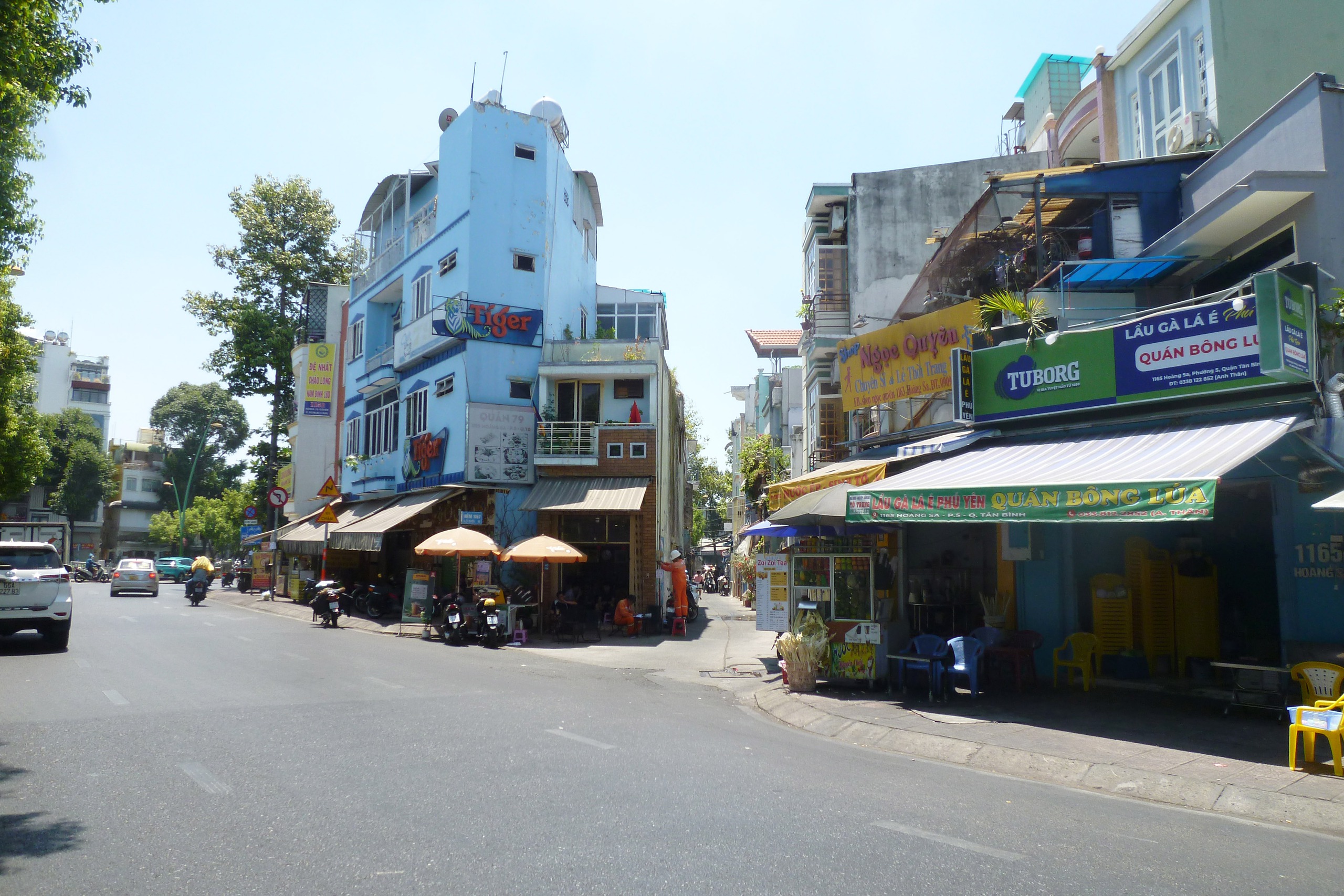
Before 1975, Bui Thi Xuan Street in the An Lac area, after crossing the San Bridge, was practically as narrow as an alley. Some houses there still bear the address of Bui Thi Xuan Street.
PHOTO: CMC
After 1954, the displaced people in the area of the Windmill Houses (now the Loc Hung Vegetable Garden area) would move wherever they saw an empty space nearby, setting up tents and houses on the canals around the San Bridge and Ong Ta Bridge, forming many hamlets: Ca Trac Hamlet, Vua Mam Hamlet, or Mam Hamlet (from San Bridge and Ong Ta Bridge extending to near the Bay Hien intersection, where some houses were making fish sauce at that time)...
The road running across Ong Ta Bridge before 1957 was called village road/rural road 16. Later, because it was the main route running from Hoa Hung, Ong Ta intersection to the General Staff Headquarters of the Republic of Vietnam Armed Forces and Tan Son Nhat airport, it was quickly paved with concrete, widened, extended, and asphalted. Until and before its demolition to build the current bridges No. 2 and 3 (July 2004), this bridge remained quite sturdy, approximately ten meters wide and nearly twenty meters long, with concrete railings and pedestrian walkways on both sides. Trucks and other vehicles could pass through freely.
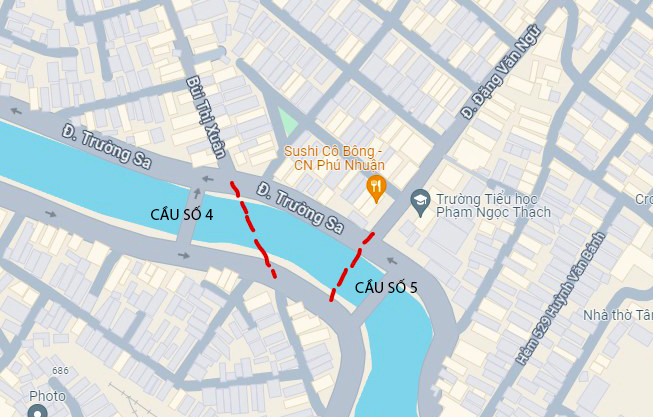
The current location of the two old bridges between bridges No. 4 and 5 on the Nhieu Loc - Thi Nghe canal.
PHOTO: GOOGLE MAPS - NOTE: CMC
With the Ông Tạ bridge becoming increasingly important, the Sạn bridge gradually lost its original position, becoming just a small local bridge. Even though it's located in the Ông Tạ area, some people have never even used it and don't know what it is. From mid-2004, along with other bridges in the upstream area of the Nhiêu Lộc canal, the Sạn bridge was demolished and replaced by bridges number 4 and 5 on either side.
The old Sạn Bridge is located right next to Bridge No. 4. However, its role is completely different: it primarily serves traffic on the Hoàng Sa - Trường Sa road pair, rather than internal traffic within the area.
In attempting to revisit the past from a limited perspective , this article may contain some shortcomings and biases. I respectfully request that scholars, intellectuals, and readers be understanding and offer further guidance. I am eager to hear your input and thank you.
Source: https://thanhnien.vn/hau-than-cua-cau-lao-hoa-lao-hue-cau-so-4-185250224232850115.htm



![[Photo] Two flights successfully landed and took off at Long Thanh Airport.](/_next/image?url=https%3A%2F%2Fvphoto.vietnam.vn%2Fthumb%2F1200x675%2Fvietnam%2Fresource%2FIMAGE%2F2025%2F12%2F15%2F1765808718882_ndo_br_img-8897-resize-5807-jpg.webp&w=3840&q=75)





























































































Comment (0)