


Illustrative image created using AI technology - By: TUAN ANH
This is the first time since the Doi Moi (Renovation) reforms of 1986 that the National Assembly has passed a resolution setting a GDP growth target of double digits or higher. Tuoi Tre newspaper has also recorded additional suggestions from National Assembly deputies on how to achieve this goal.
Representative Tran Van Tuan ( Bac Ninh ):
Consider small and medium-sized enterprises as the backbone of the economy.
In the coming period, in addition to continuing to promote growth drivers from public investment, attracting FDI and exports, it is necessary to quickly realize the viewpoints, goals, tasks, and solutions in the spirit of Resolution 68 of the Politburo on the development of the private economy.
This will create stronger impetus from the private sector, especially from small and medium-sized enterprises, to promote rapid and sustainable economic development. Emphasis should be placed on continuing to build and improve the legal system with breakthrough mechanisms and policies, creating a transparent and open environment to encourage private sector development, particularly in areas such as land, infrastructure, investment, finance, credit, administrative procedures, science and technology, innovation, digital transformation, and human resource training.
In particular, it is necessary to urgently study and amend the Law on Supporting Small and Medium-Sized Enterprises of 2017 to address some shortcomings that have emerged after more than 7 years of implementation.
The criteria for defining small and medium-sized enterprises (SMEs) remain vague, lacking specific support policies for digital transformation, innovation, and international integration. There is also a lack of clear priorities for micro-enterprises, household businesses transitioning into enterprises, and innovative startups. This will hinder the breakthrough in SME development in the coming period.
Along with identifying the private sector as the most important driving force of the national economy, it is also necessary to consider small and medium-sized enterprises (SMEs) as the backbone of the economy. Similar to most countries around the world, the proportion of SMEs in Vietnam is currently very high, accounting for up to 98% of the total number of businesses operating in the economy.
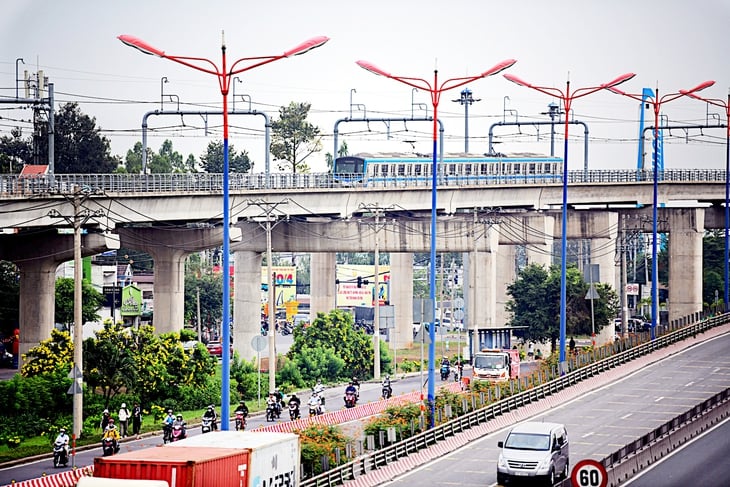
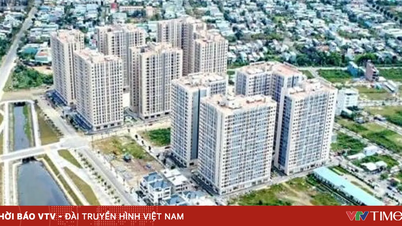
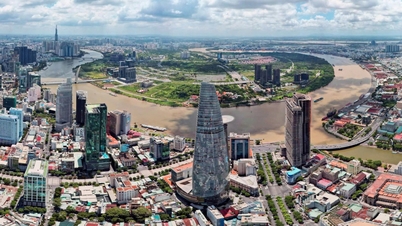
The development of metro networks and urban areas along the public transport routes plays a crucial role in economic development - Photo: QUANG DINH
Representative Le Huu Tri (Khanh Hoa):
Without decisive action, mere formality will make it difficult to achieve goals.
The National Assembly and the Government have spent considerable time focusing on reviewing bottlenecks caused by institutional constraints, acting decisively, making breakthroughs, and innovating in legislative work, addressing problems wherever they arise.
Even with a law being amended multiple times in a short period, or with multiple laws being amended, and with a shortened time for lawmaking, the bottlenecks, obstacles, and constraints stemming from mechanisms, policies, and laws have still not been overcome.
One knot is untied, another arises; one bottleneck is removed, another emerges...
Policies and laws will be difficult to implement effectively in practice if the officials and civil servants responsible for policy planning and implementation lack strategic vision, courage, responsibility, and the determination to pursue solutions until the final results are achieved.
If we set clear goals, have a long-term vision, and possess a stable and transparent legal framework, but the leadership, management, and implementation of policies and laws lack decisiveness, are half-hearted, and are overly rhetorical and formalistic, it will be difficult to achieve our goals in the short term.
This highlights the need for greater objectivity and accountability in evaluating the qualifications, capabilities, responsibilities, and ethics of officials and civil servants, in order to appoint leaders and managers with the right mindset and competence, and to place the right people in the right jobs.
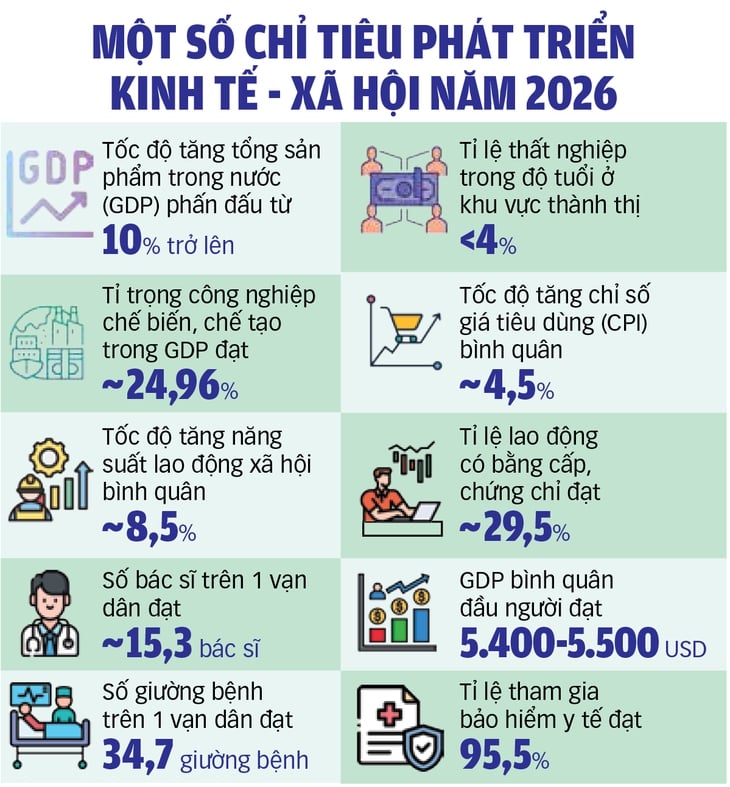
Graphics: TUAN ANH
Representative Nguyen Dai Thang (Hung Yen):
Foreign investment is shifting from quantity to quality.
To effectively implement the socio-economic development plan for 2026, it is necessary to strongly shift the growth model from extensive to intensive, placing productivity, innovation, and science and technology as the central driving force.
We propose that the Government increase investment in research and development to at least 1.5% of GDP; encourage businesses to allocate funds for science and technology; exempt businesses engaged in applied research from taxes; and establish a national innovation support fund to support technology businesses, supporting industries, and digital transformation.
Regarding attracting foreign investment, we must shift from focusing on quantity to quality. According to statistics, over 70% of export turnover comes from the FDI sector, but domestic added value has not met expectations.
Therefore, a selective policy is needed, prioritizing projects that commit to technology transfer, utilize Vietnamese human resources, and link with domestic businesses. For example, in the electronics and semiconductor chip manufacturing industries, Vietnam can fully capitalize on the opportunity to restructure the global supply chain if it has appropriate land, infrastructure, and human resource policies.
Improving the legal framework is an urgent requirement. This remains a major bottleneck; therefore, we propose that the Government continue to review the entire system of laws and regulations, and thoroughly review and reduce cumbersome procedures to create the most streamlined and convenient administrative procedures for citizens and businesses. Increase the predictability and stability of policies, ensure transparency and openness of socio-economic data, and further improve the institutional framework to protect officials who dare to think and act for the common good, combined with strict administrative discipline and order.
Representative Tran Hoang Ngan (Ho Chi Minh City):
Promptly issue decrees and circulars guiding the development of the private economy.
Regarding the implementation of Resolution 68 of the Politburo and Resolution 198 of the National Assembly on special mechanisms and policies for the development of the private economy, we currently see a delay in issuing decrees and circulars to guide private enterprises and business households in accessing resources.
Specifically, this includes land, production and business premises, rental of houses, land, public assets, financial support, credit, preferential taxes and fees in contractor selection, support for businesses to apply science and technology, innovation, e-commerce development, support for the formation of large enterprises and private economic groups of global scale, capable of competing with the world and producing many innovative unicorn startups.
In particular, it is necessary to promptly institutionalize Article 5 of Resolution 198 of the National Assembly, in which the principle for handling violations and resolving business cases should prioritize civil, economic, and administrative measures first.
We must persistently implement the three strategic breakthroughs for many more years, especially in terms of institutions, and pay particular attention to the institutions of cities, the leading engines of economic development.
Professor Nguyen Thi Canh (Faculty of Economics and Law, Vietnam National University Ho Chi Minh City):
We must focus on key industries.

To achieve a GDP growth rate of 10% or higher, development needs to be in-depth, prioritizing sustainable and long-term growth poles.
The first step to achieving this goal is to invest in technological innovation, focus on digital transformation, and prioritize the development of the digital economy. These are fundamental requirements and key sectors needed in this new era.
Secondly, we need to invest in human resources, preparing a high-quality and knowledgeable workforce.
At the same time, institutional changes and mechanisms must be made more open because if we want businesses and people to work together to realize the goal of double-digit growth, the business environment must be transparent.
How can we ensure that local authorities have the courage and the power to make immediate decisions when faced with social issues, avoiding delays that could lead to negative impacts and wasted social resources?
Local authorities must be empowered with autonomy, from land use and infrastructure development to attracting investment and disbursing public investment funds. Promoting faster and stronger disbursement of public investment funds will also help realize this goal.
Directing credit flows towards production and business activities.

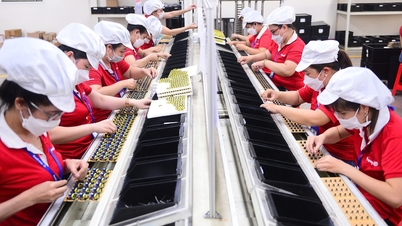
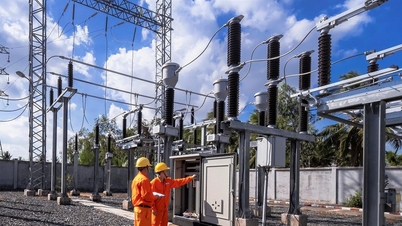
Effectively utilizing technology in production to increase production efficiency. In the photo: officials and engineers operating the Dinh Co Gas Processing Plant - Photo: M. CHUNG
This is one of the points mentioned in the resolution on the socio-economic development plan for 2026.
To achieve a growth target of 10% or more, along with 14 other indicators, the National Assembly requests the Government and relevant agencies to continue prioritizing the promotion of growth while maintaining macroeconomic stability, controlling inflation, and ensuring that major economic balances, public debt, and budget deficit remain within prescribed limits.
Close, effective, and flexible coordination between fiscal policy, monetary policy, and other macroeconomic policies is essential, with fiscal policy being reasonably expansionary, focused, and targeted, while monetary policy is proactive, flexible, timely, and effective.
Manage interest rates and exchange rates in line with macroeconomic developments and set targets, meeting the capital needs of the economy at a reasonable cost. Direct credit flows into production and business sectors, priority sectors, and growth drivers of the economy. Control credit to sectors with potential risks, and effectively manage the gold market, real estate market, and stock market.
The National Assembly also requested the Government to focus on comprehensively improving institutions and laws, strongly innovating thinking, promoting strategic breakthroughs, enhancing the effectiveness of law enforcement; and accelerating the reduction and simplification of administrative procedures and improving the investment and business environment.
Furthermore, proactively research the situation to promptly advise on policy development, especially controlled testing mechanisms for new economic models, technology-based businesses and digital platforms, and create a legal framework for new, non-traditional issues (artificial intelligence, digital transformation, green transformation, data resource exploitation, etc.).
Continue to build and improve mechanisms and policies for the development of special economic zones in Van Don, Van Phong, and Phu Quoc, as well as free trade zones and international financial centers in Vietnam. Complete the legal framework to promote the safe, transparent, efficient, and sustainable development of various markets (finance, securities, science and technology, labor, real estate, etc.). Resolutely cut and simplify administrative procedures and business regulations, preventing the emergence of new, inappropriate, or impractical business procedures, regulations, standards, and technical specifications.
"By 2026, 100% of unnecessary, conflicting, overlapping, or vague investment and business conditions will be eliminated and simplified; 100% of investment and business conditions for sectors not included in the list of conditional investment and business sectors under the Investment Law will be abolished; and the time for processing administrative procedures and the cost of complying with administrative procedures will be reduced by 50% and 50% compared to 2024," the resolution emphasized.
Assoc. Prof. Dr. Nguyen Huu Huan (University of Economics Ho Chi Minh City):
Rapid growth must be sustainable.

Setting a GDP growth target of 10% in 2026 is a challenge, requiring careful consideration of stability and sustainability, and even caution. If we want rapid yet sustainable long-term growth, we must focus on the key elements of the economy.
Monetary and fiscal policies alone are not the only factors determining success. Focus must be placed on labor productivity, as this is the decisive element in creating sustainable growth and generating real economic output.
To achieve a growth target of over 10% continuously for 20 years, longer-term strategies are needed. However, it must be emphasized that monetary policy currently has limited room to stimulate the economy. Furthermore, if the US maintains its current monetary policy, we will have little room to achieve this goal.
Ho Chi Minh City, in particular, will bear a significant responsibility towards achieving this goal. Therefore, the city needs to focus on real-world economic sectors and key growth drivers: financial services, seaports and logistics, and high technology.
Firstly, an international financial center will be a crucial driving force for economic growth in the city as well as the entire country. An international financial center also plays a vital role in attracting foreign capital and investment into Vietnam. It must be clearly stated that maintaining economic growth at 10% for many years requires an extremely large amount of capital, which domestic capital will certainly not be sufficient.
Secondly, free trade zones combined with international transshipment ports (Cai Mep - Thi Vai port cluster, Can Gio) will create what could be called the largest international transshipment hub in Southeast Asia. Achieving this requires the development of infrastructure and logistics systems. Thirdly, the development of industrial zones and high-tech industries (in the former Binh Duong province) is crucial.
Source: https://tuoitre.vn/hien-ke-giai-phap-tang-truong-hai-con-so-20251114083607066.htm























![[Photo] Reception to welcome General Secretary and President To Lam and his wife on their State visit to the Philippines](https://vphoto.vietnam.vn/thumb/1200x675/vietnam/resource/IMAGE/2026/06/01/1780295488620_vna-potal-chieu-dai-chao-mung-tong-bi-thu-chu-tich-nuoc-to-lam-va-phu-nhan-tham-cap-nha-nuoc-toi-philippines-8798060-7855-jpg.webp)
































































Comment (0)