

The FTA's core principles indicate that over 90% of tariff lines will be eliminated immediately, and approximately 95% of products will benefit from the agreement. This means that food products, raw materials, and industrial equipment will be imported into Israel at lower prices. The FTA's scope includes modern trade provisions, such as the use of Declarations of Origin instead of Certificates of Origin, recognition of software as part of the manufacturing process, flexible cumulation rules, and new measures and mechanisms tailored to global supply chains. All of these are expected to simplify processes, shorten lead times, and enhance the competitiveness of Israeli industry. The agreement also, for the first time, regulates the services trade sector between the two countries, enabling remote service provision, promoting free and secure digital trade, recognizing electronic signatures, and ensuring equal rights for Israeli suppliers.
According to Minister of Economy and Industry Nir Barkat, Costa Rica is a natural trading partner of Israel – a member state of the Organization for Economic Cooperation and Development (OECD) with a deep commitment to free and open trade. Following the announcement of the reopening of free trade agreement negotiations with India and a week before the visit of the German Minister of Economy and Energy and a large economic delegation, the official signing of the FTA between Israel and Costa Rica marks a significant achievement in the foreign economic policy undertaken by the Directorate General of Foreign Trade under the Israeli Ministry of Economy and Industry. The negotiations were led by the Directorate General of Foreign Trade, in coordination with the Ministries of Foreign Affairs , Finance, Agriculture and Justice, the Competition Authority, and the General Directorate of Customs. The agreement was successfully reached after two rounds of intensive negotiations and numerous specialized meetings. The Free Trade Agreement is expected to boost Israel's export growth, strengthen business cooperation, and help lower the cost of living in Israel by reducing import prices. This agreement reflects Israel's policy of expanding into new markets, diversifying trade destinations, and strongly reinforcing the growth drivers of the Israeli economy. The agreement will immediately eliminate over 90% of tariffs, opening the Costa Rican market to Israeli industrial and agricultural products. Simultaneously, Israel will reduce import costs for a wide range of products from Costa Rica, including tropical fruits, nuts, vegetables, and medical equipment. Officials say these tariff reductions could benefit both Israeli producers and consumers.
Meanwhile, Costa Rica's Minister of Foreign Trade, Manuel Tovar Rivera, emphasized the potential benefits of the signed agreement. He stated that the agreement opens significant new avenues for both Costa Rica and Israel, enhancing access to high-quality Costa Rican goods and services, and creating a mutually beneficial platform for cooperation in high-tech industries, premium agribusiness, and specialized services. Costa Rica views this partnership as a catalyst for bilateral investment, innovation, and expanded trade opportunities, thereby strengthening economic ties between the two countries.
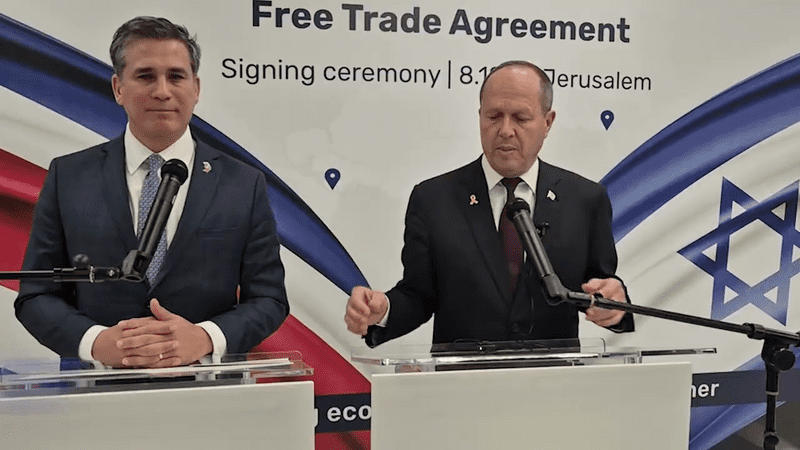
Israeli Minister of Economy and Industry Nir Barkat (left) and Costa Rican Minister of Foreign Trade Manuel Tovar Rivera (right) at the signing ceremony of the Free Trade Agreement between the two countries in Jerusalem on December 8, 2025.
The new agreement gives Israeli exporters a real competitive advantage in the Costa Rican market – a market where currently only about 2.5% of tariff lines are exempt. Once in effect, 99 out of 100 major Israeli export products to this market will benefit from reduced tariffs, gaining greater market access. Under the agreement, Israeli exports to Costa Rica will enjoy a 0% tariff rate on products including fertilizers, agricultural chemicals, plastic sheets, machinery, laboratory equipment, aluminum profiles, printing inks, olive oil, dates, grapefruit, citrus fruits, waffles, and roasted cereals. Conversely, Israeli importers and consumers will benefit from lower prices on products imported from Costa Rica. Costa Rican exports to Israel, such as fresh and processed vegetables, asparagus, nuts, mushrooms, cabbage, celery, dried pineapple, tropical fruits, coffee, cocoa, sugarcane, and medical and orthopedic equipment, as well as raw materials for industry, will have tariffs eliminated or maintained under preferential conditions. Fresh pineapple, Costa Rica's main export to Israel, will continue to be tariff-free in general. This reduction will create competition and expand the variety of products available in Israel.
Currently, Israel's annual exports to Costa Rica are relatively modest, averaging around $32 million per year, but officials from the Israeli Ministry of Economy and Industry expect and predict that the new agreement will significantly expand trade across various sectors. Costa Rica already has trade agreements with 18 major trading partners worldwide, including the European Union, the United States, China, and South Korea. The newly signed agreement will give Israeli industry a competitive position comparable to, or even better than, other countries in the Costa Rican market. Following the signing, the formal ratification process will begin before the agreement takes effect. Roy Fisher, Director General of Foreign Trade at the Israeli Ministry of Economy and Industry, stated that the signing of the agreement is a significant achievement for Israeli industry. When the agreement comes into effect, Israeli exporters will benefit from preferential access to the Costa Rican market, which currently has high tariff rates, an advantage that will enhance the competitiveness of Israeli businesses. Furthermore, Israel and Costa Rica will complement each other in the fields of agriculture, manufacturing, and technology. The combination of the two countries' strengths (Israel excels in technology, agricultural technology, and industrial equipment; while Costa Rica is a major agricultural and industrial powerhouse) will create a favorable foundation for expanding bilateral trade and opening up new opportunities for cooperation. Despite the challenges, the Ministry of Economy and Industry continued to represent the needs of Israeli industry even during wartime, and Israel is pleased with the results it will bring to its exporters and economy.
Most recently, Israel signed VIFTA with Vietnam in July 2023 and it will come into effect in November 2024. To date, after more than a year of implementing VIFTA, trade between Israel and Vietnam has grown strongly.
Source: https://moit.gov.vn/tin-tuc/israel-va-costa-rica-ky-hiep-dinh-thuong-mai-tu-do-mo-rong-thuong-mai-song-phuong.html



























































































Comment (0)