

Poverty reduction is multidimensional.
On August 12, 2025, the People's Committee of Lao Cai province issued the Plan for implementing the National Target Program for socio -economic development in ethnic minority and mountainous areas of Lao Cai province in 2025. This is an important document, providing direction and specific actions, aimed at continuing to achieve the goals of Phase I of the National Target Program for the period 2021-2025, and preparing a solid foundation for the next phase.
The overall objective of the Plan is to exploit the potential and advantages of the locality to develop the economy, ensure social security, reduce poverty quickly and sustainably, and narrow the gap in living standards and income between ethnic minorities and people in mountainous areas and the national average...
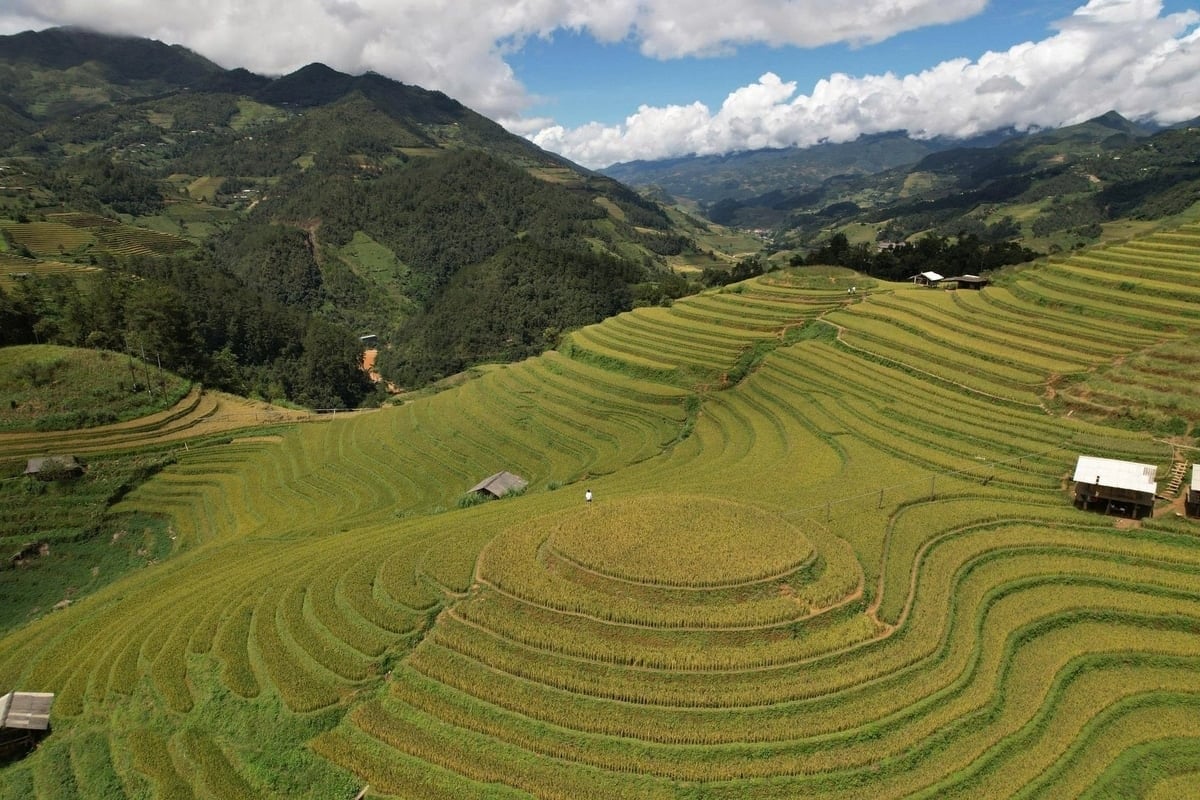
The raspberry-shaped hills of Mu Cang Chai are one of the most promising tourist destinations. Photo: Thanh Tien.
The specific targets emphasized by the end of 2025 are quantified in detail with many clear indicators, most notably striving to reduce the poverty rate among ethnic minorities by an average of 5-6% per year; having 61 communes and 494 villages removed from the list of particularly difficult areas; ensuring 100% of communes have paved or concrete roads leading to their centers, 70% of villages have hardened roads, 100% of schools and health stations are built solidly, 99% of households have access to the national power grid, and 90% of ethnic minorities have access to clean drinking water.
In terms of education, the school attendance rate at all levels ranges from 60% to 98%, with high school students exceeding 60% and 5-year-old kindergarten students reaching 98%. Regarding health and social services, the rate of ethnic minority people participating in health insurance reaches 98%; 80% of pregnant women receive regular prenatal checkups, 80% of women give birth at medical facilities or with the assistance of medical personnel, and the rate of underweight malnutrition among children under 5 years old has decreased to 15%.
Regarding labor, 50% of people of working age received appropriate vocational training, 155,418 workers received vocational training during the year, over 14,000 households received support for career chuyển đổi, 1,143 households received support for production land, 2,520 households were resettled, and 48 new centralized water supply facilities were constructed.
Implement multiple solutions
To achieve these goals, the Plan proposes a comprehensive set of solutions. First, it ensures basic social security by providing support for land for housing and production, housing, clean water, and relocating residents to necessary areas, especially those affected by natural disasters and spontaneous migration. Next, it focuses on developing sustainable agricultural and forestry production, linked to forest protection and income improvement; supporting commodity production along the value chain; encouraging entrepreneurship; and attracting investment in disadvantaged areas.
In addition, the province focuses on investing in essential infrastructure serving production and daily life, prioritizing particularly disadvantaged communes and villages; and at the same time, maintaining and repairing existing infrastructure to ensure long-term effective use.
Another important solution is to improve the quality of human resources through innovation in the operation of ethnic boarding and semi-boarding schools, promoting literacy, expanding vocational training linked to practical needs, and fostering ethnic knowledge and languages for grassroots officials and civil servants.
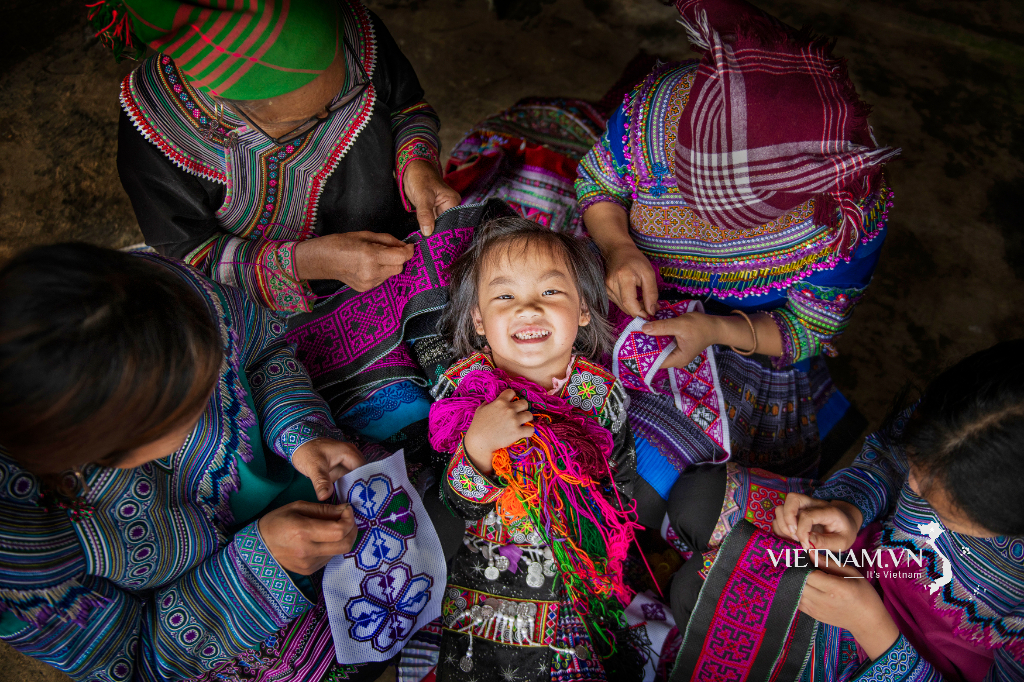
Alongside economic development, the Plan also emphasizes the preservation and promotion of traditional cultural values of ethnic groups in conjunction with tourism development; supporting artisans, transmitting cultural knowledge, reviving festivals, building community cultural models, and developing unique tourism products. Healthcare for the people is prioritized with solutions to improve the physical condition and stature of ethnic minorities, improve nutrition for women and children, prevent and control diseases, and strengthen grassroots healthcare.
According to Mr. Nong Viet Yen, Director of the Department of Culture, Sports and Tourism of Lao Cai province, with great tourism potential from its landscapes, spirituality, and cultural diversity from many ethnic groups, the core philosophy of the province is "transforming heritage into assets".
This is not just a slogan, but a concrete action strategy. The province will support and facilitate ethnic communities such as the Hmong, Dao, Tay, Muong, Thai, etc., to proudly and proactively transform their unique cultural values into tourism products.
Source: https://daibieunhandan.vn/lao-cai-dong-bo-nhieu-giai-phap-thuc-hien-muc-tieu-giam-ngheo-10392853.html


















![[Photo] Prime Minister Pham Minh Chinh holds a phone call with the CEO of Russia's Rosatom Corporation.](/_next/image?url=https%3A%2F%2Fvphoto.vietnam.vn%2Fthumb%2F1200x675%2Fvietnam%2Fresource%2FIMAGE%2F2025%2F12%2F11%2F1765464552365_dsc-5295-jpg.webp&w=3840&q=75)












































Comment (0)