

Apartment prices continue to increase
Contrary to the general slump in the real estate market recently, apartment prices have been continuously rising. Currently, in major cities like Hanoi and Ho Chi Minh City, apartments remain attractive as the top segment of interest for real estate seekers.
According to a newly released report from a real estate market research firm, in the third quarter of this year, while many types of properties slowed down in both the buying and renting markets, apartment buildings were one of the rare types that maintained positive growth figures.
Specifically, in the buying and selling market, interest in apartments increased by 1%, while other segments decreased by 4-11%. In the rental market, interest in the aforementioned segments decreased by 13-28%, while apartments increased by 6%.
According to the same unit's Q3 real estate market report, from 2015 to the present, people's incomes have not kept pace with the increase in apartment prices in Hanoi and Ho Chi Minh City. After 8 years, urban residents' incomes have only increased by 39% (data from the General Statistics Office), but apartment prices in Ho Chi Minh City and Hanoi have increased by 82% and 56% respectively.
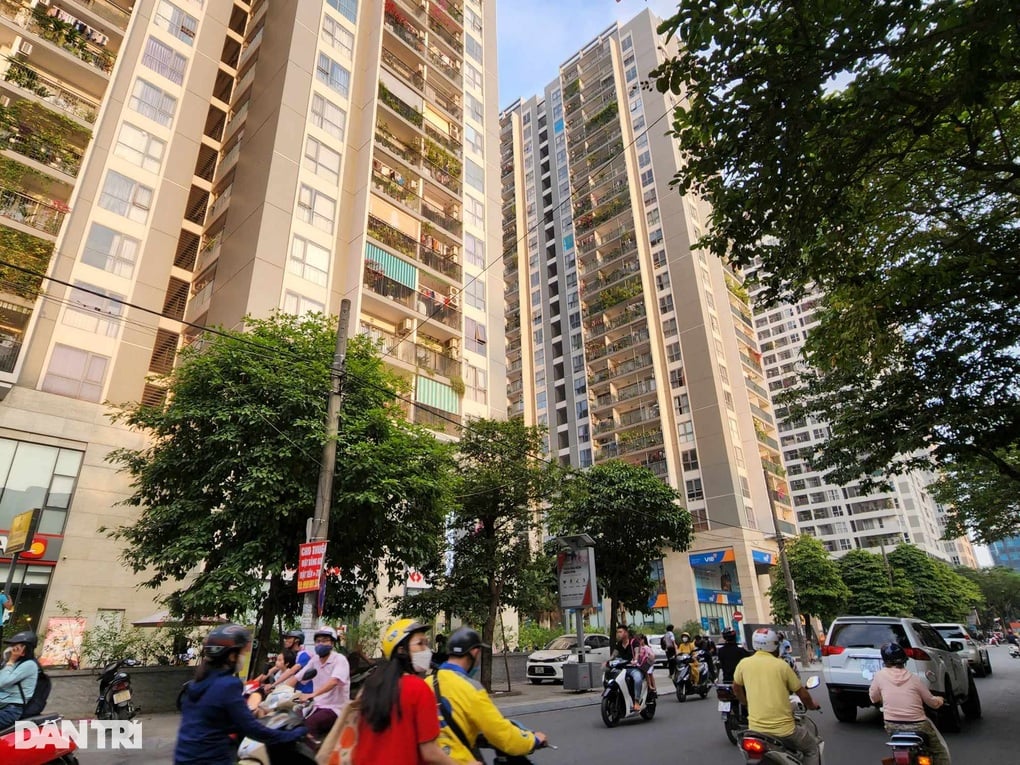
Apartment prices are constantly rising, far exceeding the income of urban residents (Illustrative image: Ha Phong).
According to the Ministry of Construction , based on compiled reports and survey information from localities and market research organizations, apartments were the type of real estate least affected by negative market impacts last year in the third quarter because this type of property serves the actual housing needs.
Interest in apartments has shown signs of recovery, with demand for buying apartments increasing by 1% and for renting by 6% compared to the previous quarter. Apartments priced between 2 and 4 billion VND are the most sought-after. Major cities have shown good absorption, particularly in the segment of apartments and houses priced under 10 billion VND in central areas.
Specifically, in Hanoi, the average selling price of apartments launched in the primary market in the third quarter increased by nearly 7% quarter-on-quarter, and 14% year-on-year, reaching approximately VND 50.8 million/m2. This upward price adjustment is due to the overwhelming proportion of new supply in the high-end segment (over 90%). In addition, some developers have adjusted prices upwards and launched additional units on higher floors.
In the secondary market, the average selling price of apartments continued its upward trend from the previous quarter, reaching approximately VND 32 million/m2, an increase of 2.7% quarter-on-quarter and 0.8% year-on-year. All districts in Hanoi recorded an increase in secondary market selling prices in the third quarter compared to the second quarter, with Dong Da, Thanh Xuan, Tay Ho, Nam Tu Liem districts and Gia Lam district seeing increases of over 3%.
In Ho Chi Minh City, the majority of new apartments launched in the third quarter came from subsequent phases of existing projects. Approximately 60% of the new supply in the first nine months of this year came from a single urban development project in the East.
Approximately 96% of the new supply in the third quarter came from the high-end segment, and the remaining 4% was in the luxury segment, from the next phase of a project in the Thu Thiem New Urban Area. The primary selling price of apartments in Ho Chi Minh City in the third quarter reached over 60 million VND/m2.
In the secondary market, the average apartment price reached VND 45 million/m2, a 3% increase compared to the previous quarter. Meanwhile, secondary market prices in the luxury and affordable segments remained almost unchanged compared to the second quarter.
Short-term investors, buyers pay high prices.
Mr. Tran Duc Cuong, residing in Hoang Mai district (Hanoi), said that last Thursday he decided to put down a deposit to buy a 72m2 apartment in Hoang Mai district (Hanoi) for 2.2 billion VND. Mr. Cuong bought this apartment from a "speculative" investor.
"The person who sold me the apartment is an investor. They bought this apartment for 1.9 billion VND in September of this year, and the current transaction status is that they have paid a notarized deposit of 300 million VND," Mr. Cuong shared.
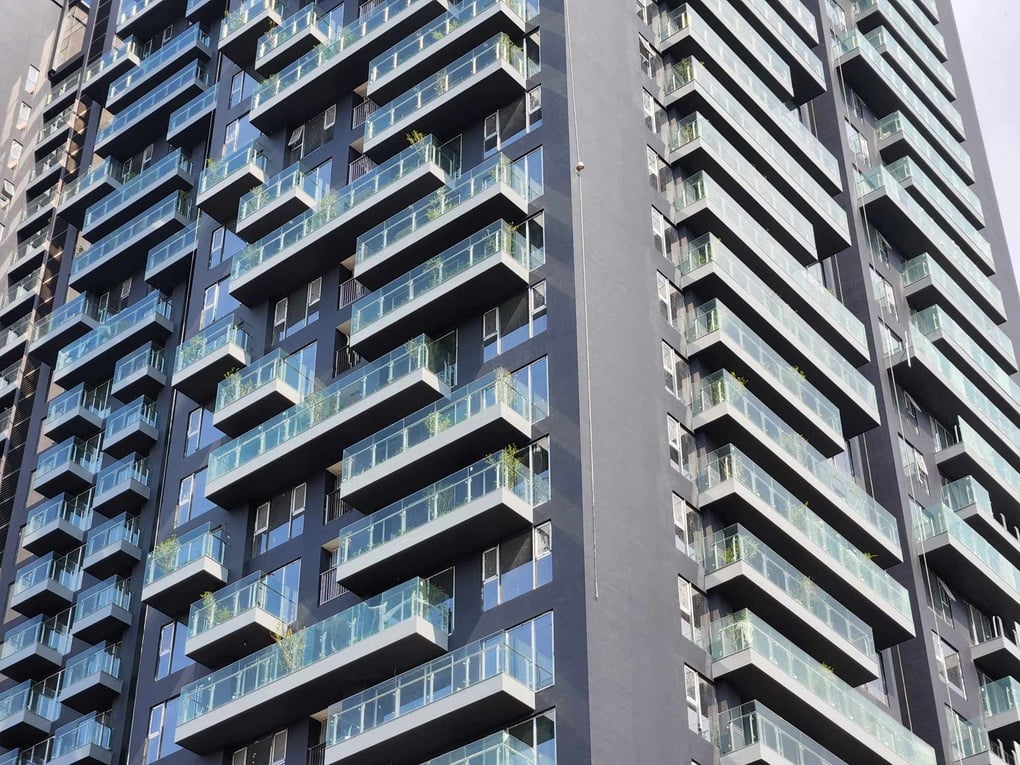
Apartment buildings have become a lucrative investment opportunity for short-term speculators in recent times (Illustrative image: Ha Phong).
According to Mr. Cuong, since he needs a place to live, buying a desirable apartment at a higher price from a "speculative" investor is acceptable. "What I'm most worried about isn't the price, but how to make the transfer process as smooth and risk-free as possible," Mr. Cuong said.
According to Mr. Nguyen Van Nam, a professional real estate investor in Hanoi, apartment buildings have been a segment of particular interest to investors in the last 2-3 years. While the profit margin and price increase aren't as rapid as with land or detached houses, apartment prices have shown stable growth, low risk, and especially high liquidity in recent times.
"Since the end of 2021, when the land market was booming nationwide, many investors, including myself, withdrew capital to invest in apartments in Hanoi. The use of financial leverage has also become more cautious," Nam shared.
According to this investor, investing in apartments won't yield quick or large profits, but at this stage, it's a segment with good liquidity. "Depending on the capital, some investors will choose to invest long-term and rent them out. Others will be quick-witted, seeking good properties to 'flip' for profit, but the returns certainly won't be high," Mr. Nam added.
From an expert's perspective, Mr. Nguyen Van Dinh - Chairman of the Vietnam Real Estate Brokers Association - also acknowledged that apartment prices will continue to trend upwards in both the primary and secondary markets, especially in the affordable and mid-range segments and in projects that are nearing the end of their sales cycle.
This expert also emphasized that supply is increasingly scarce while the cost of land fund creation, raw material costs, and financial access costs are increasing. Therefore, real estate projects find it difficult to reduce prices and are forced to maintain high selling prices.
"The price increase may stop when procedural, legal and capital problems are resolved, boosting market supply," Mr. Dinh emphasized.
Source

![[Photo] Explore the US Navy's USS Robert Smalls warship](/_next/image?url=https%3A%2F%2Fvphoto.vietnam.vn%2Fthumb%2F1200x675%2Fvietnam%2Fresource%2FIMAGE%2F2025%2F12%2F10%2F1765341533272_11212121-8303-jpg.webp&w=3840&q=75)
























![[Video] The craft of making Dong Ho folk paintings has been inscribed by UNESCO on the List of Crafts in Need of Urgent Safeguarding.](https://vphoto.vietnam.vn/thumb/402x226/vietnam/resource/IMAGE/2025/12/10/1765350246533_tranh-dong-ho-734-jpg.webp)





























































Comment (0)