

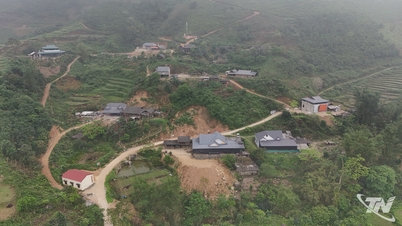
Standing on a high hilltop at the end of the village, Mr. Luc Van Dinh, Head of Ngoi Ngu village, Bao Ai commune, reflected: “Ngoi Ngu is one of the most remote and difficult villages in Bao Ai commune. Difficulties regarding arable land, lack of jobs, and weak electricity are hindering the socio -economic development of the village.” Together with the village head, we visited households to better understand the difficulties and aspirations of the people in Ngoi Ngu.
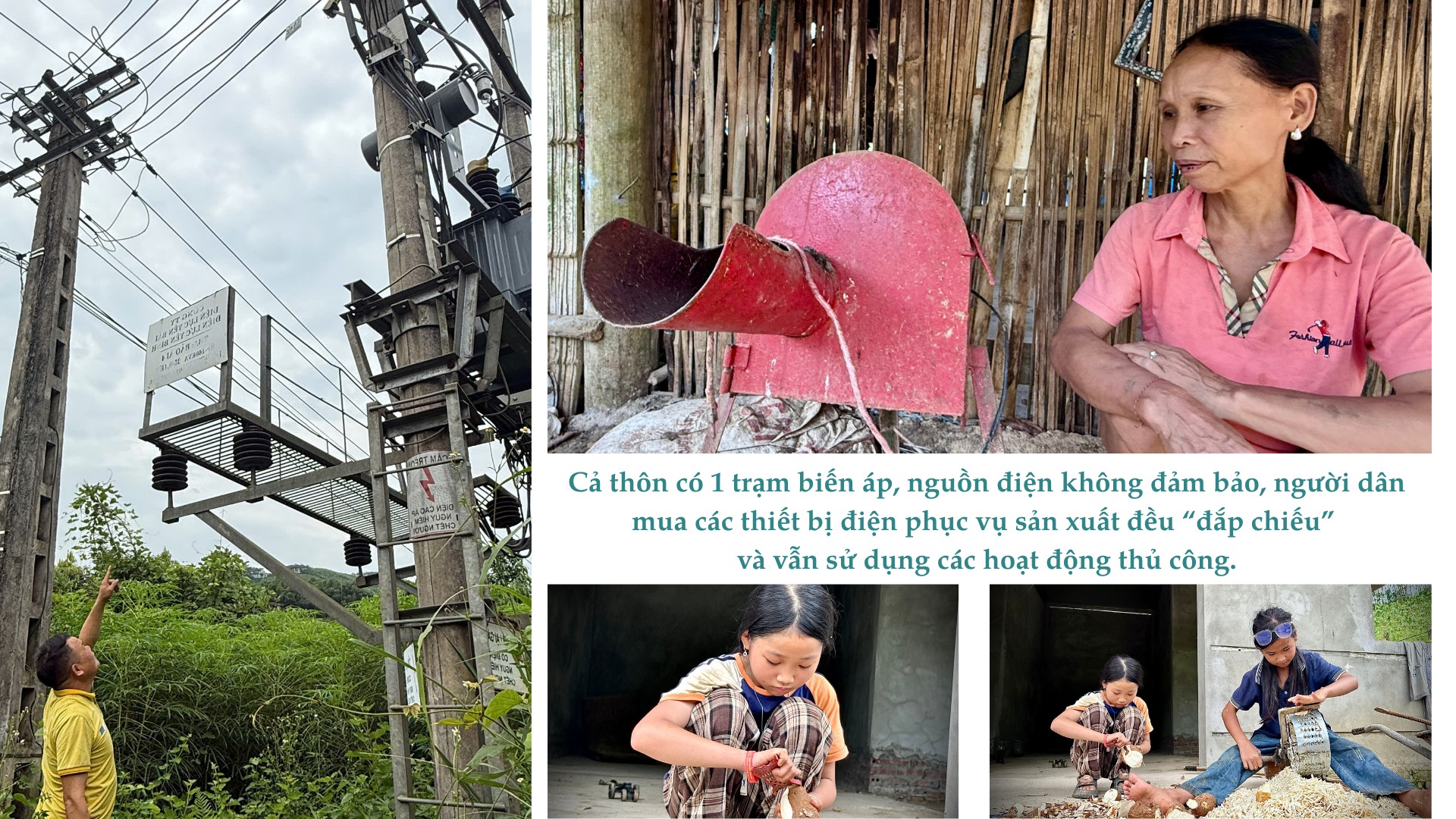
Although it was already autumn, the sun still blazed from early morning until late afternoon. In her unfinished house, Mrs. Luc Thi Tam sat amidst the clutter, looking exhausted by the heat that seemed to intensify many times over; her grandchildren each had a task, some chopping vegetables, others peeling and grating cassava.
“We have several pigs and chickens, and every day we have to chop vegetables and grate cassava for them to eat. A few years ago, when we got electricity, my children bought some equipment, including a vegetable and root vegetable chopper, but because the electricity is weak, it's still sitting there, unusable,” shared Mrs. Luc Thi Tam.
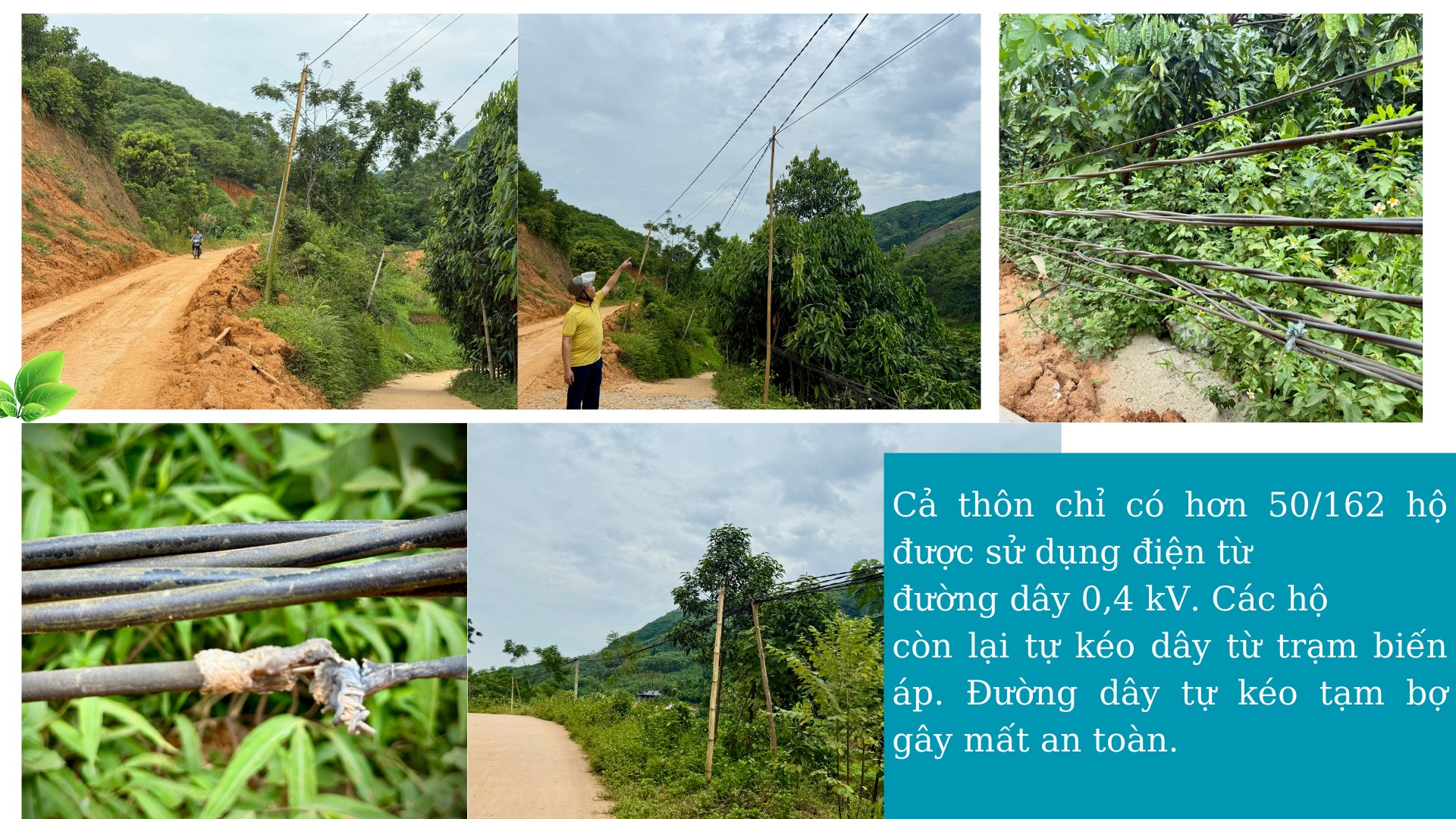
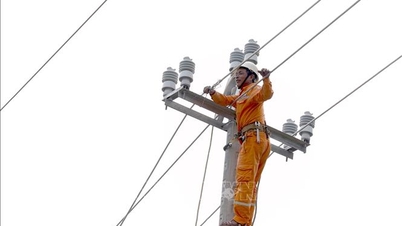
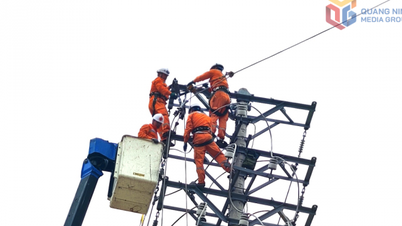
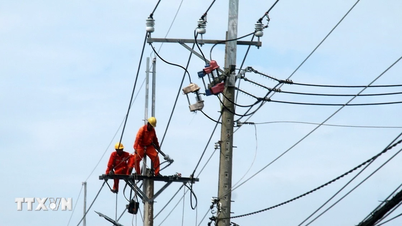
Weak electricity supply is not just a problem for Mrs. Tam's family, but for over 100 households in Ngoi Ngu. Currently, the entire village has only one transformer station. From this station, only two 0.4 kV power lines supply electricity to two residential areas; the remaining two residential areas do not have low-voltage power lines. Therefore, only over 50 out of 162 households have access to electricity from the 0.4 kV line. To have electricity for daily use, households have to pool money to buy power lines to run from the village's transformer station to their homes, or run lines from a transformer station in a neighboring village, located 3-4 km away.
Walking along the village's side roads, we saw many bamboo and iron utility poles on both sides, with power lines strung like a "spider web," swaying after each rain, posing a potential safety hazard. Furthermore, due to the long distances, the electricity supplied to households was weak, only enough for lighting and small fans; other appliances like televisions, refrigerators, and air conditioners could not be used.
A few years ago, Mr. Ban Van Yen's family pooled money with several other households to bring electricity from the transformer station in Ngoi Ngan village. Along with that, he bought many essential electrical appliances for his family's daily needs, including a refrigerator… However, since buying it, the refrigerator has been unused due to weak electricity. Mr. Yen is considering selling the refrigerator, but the buyer's offer is too low, so he hasn't decided yet.
Mr. Ban Van Yen shared: "Without electricity, people suffer many disadvantages. They can't even invest in machinery to develop their family's economy. For example, an electric fan sometimes runs very fast, but during peak hours it sometimes stops and starts again. The villagers just hope for a stable power grid to improve their lives."
Besides the difficulties with electricity for daily life, Ngoi Ngu village also faces many challenges in economic development. Currently, the area of rice cultivation is only about 4.5 hectares, of which only 2 hectares are located above the water level of the hydroelectric dam. The rice fields below this level are very precarious; in many years, villagers have lost their entire crops due to prolonged heavy rains and the rising water level of the hydroelectric reservoir before the rice has ripened or been harvested. In addition, in recent years, due to the impact of storms and floods, many rice fields in the village have been buried by landslides, making it difficult to restore production.
Along with the difficulty of having rice paddy land, the village also has very little forest land. "Looking around, you might see mountains and forests all over the village, but the owners are not local people," said village head Luc Van Dinh. Ngoi Ngu has 162 households, but only 60 hectares of production forest belong to the villagers, while the remaining more than 160 hectares of forest belong to Yen Binh Forestry One-Member Limited Company. To have land for production, the villagers have to rent forest land from the company.
Limited arable land, difficult living conditions, and a lack of local employment are the reasons why many working-age villagers choose to seek work elsewhere. According to statistics, approximately 90 out of 162 households have members working away from home, with some families having both husband and wife working elsewhere. Most people go to Bac Ninh province to work for companies and factories. Each couple cannot bring their young children with them when they leave for work, often leaving them with their grandparents. Therefore, raising children is very difficult. Many hamlets are left with only the elderly and young children.
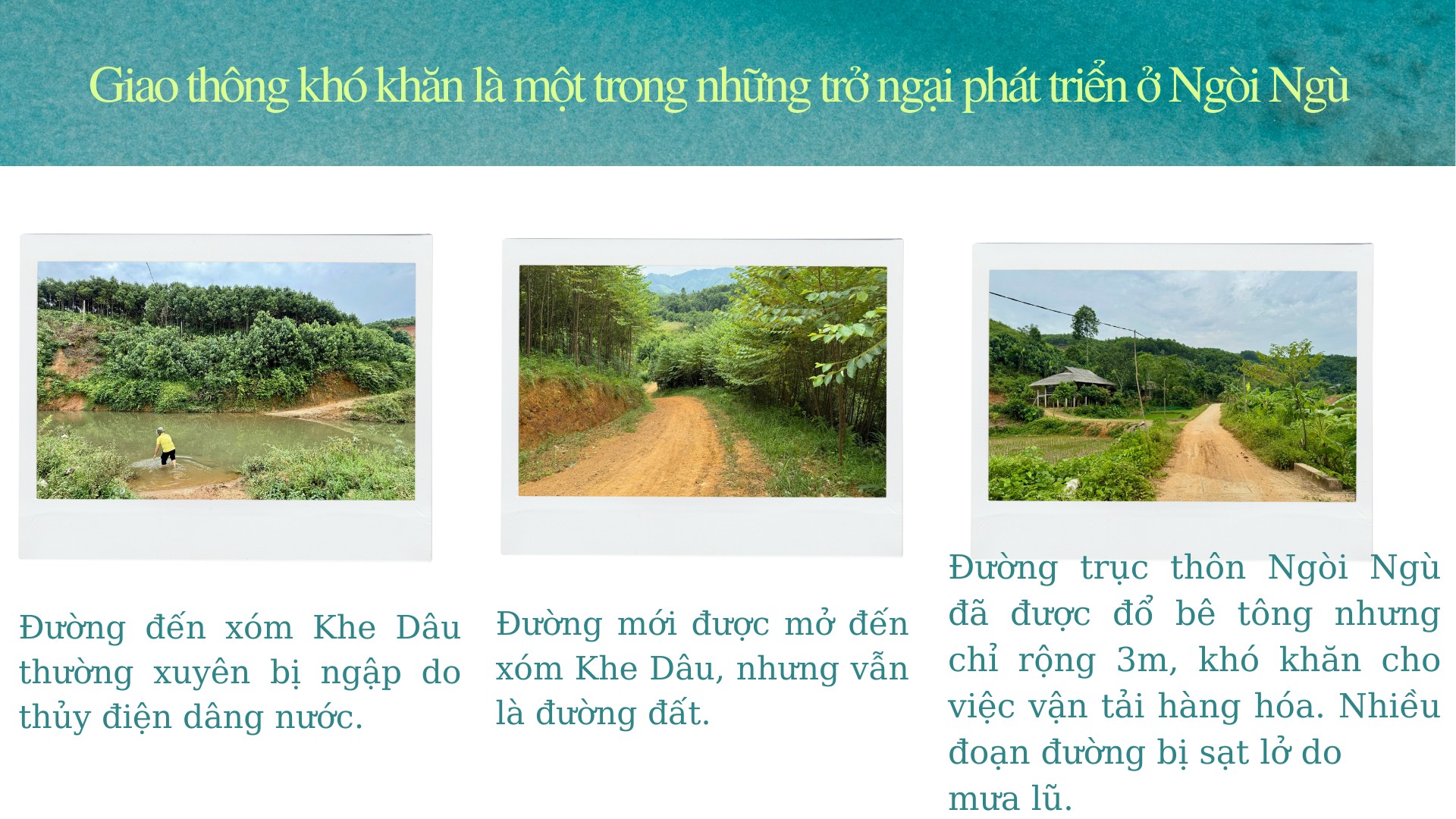
Two years ago, the main roads in Ngoi Ngu village were paved with concrete; however, the new roads are only 3 meters wide. In practice, this has created many problems, especially in the transportation of goods and the purchase of agricultural and forestry products, due to the narrow roads hindering movement. Furthermore, the main village road leading to Khe Dau hamlet, which serves 20 households, is frequently flooded at the beginning of the village due to rising water levels from the hydroelectric dam. The village has called for social contributions to build a new road to Khe Dau, nearly 2 kilometers long. Although not deeply flooded, the newly opened road is still unpaved and has steep, winding sections, making it inconvenient for traffic.
While writing this article, we had the opportunity to speak with several residents of Ngoi Ngu village. We learned that the village has repeatedly reported the situation to higher-level leaders and raised concerns at voter outreach meetings, hoping the government would find solutions to the difficulties. However, these problems and obstacles remain unresolved.
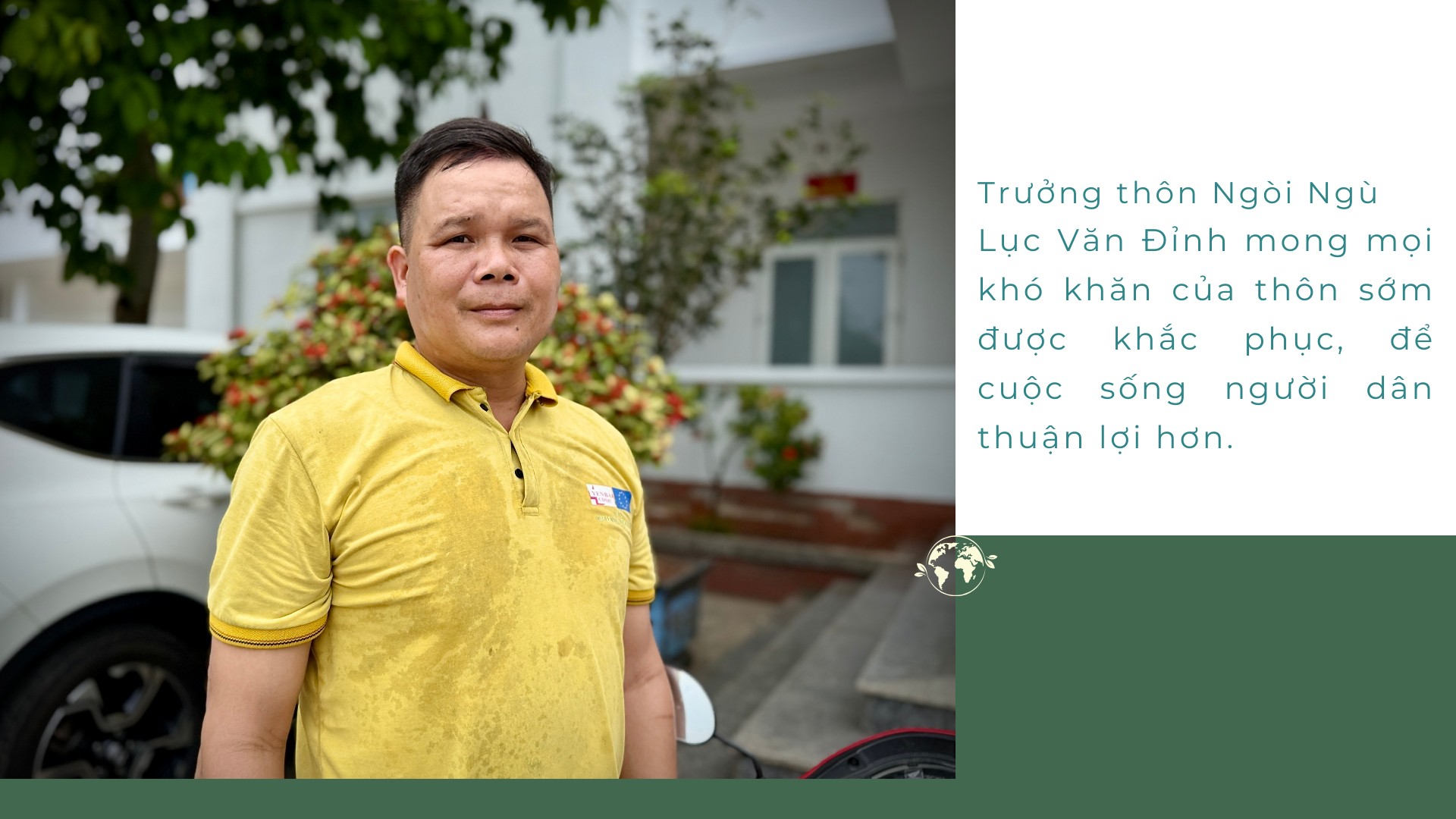
Village head Luc Van Dinh thoughtfully told us as we parted ways: "I only hope that all the difficulties of Ngoi Ngu will be resolved so that the lives of the people will be less arduous."
Source: https://baolaocai.vn/mong-uoc-o-ngoi-ngu-post881868.html

![[Photo] National Assembly Chairman Tran Thanh Man attends the groundbreaking ceremony for the National Highway 1A spatial axis project.](https://vphoto.vietnam.vn/thumb/1200x675/vietnam/resource/IMAGE/2026/05/19/1779161360398_ndo_br_bnd-1412-jpg.webp)
![[Photo] Capturing the moment the tide recedes at Yen Binh Son rapids - a million-year-old scenic spot in Quang Ngai.](https://vphoto.vietnam.vn/thumb/1200x675/vietnam/resource/IMAGE/2026/05/19/1779175463885_yen9-1199-jpg.webp)

































































Comment (0)