

Southeast Asia, with its advantageous tropical climate and growing energy demand, is becoming one of the most vibrant regions for solar energy development.
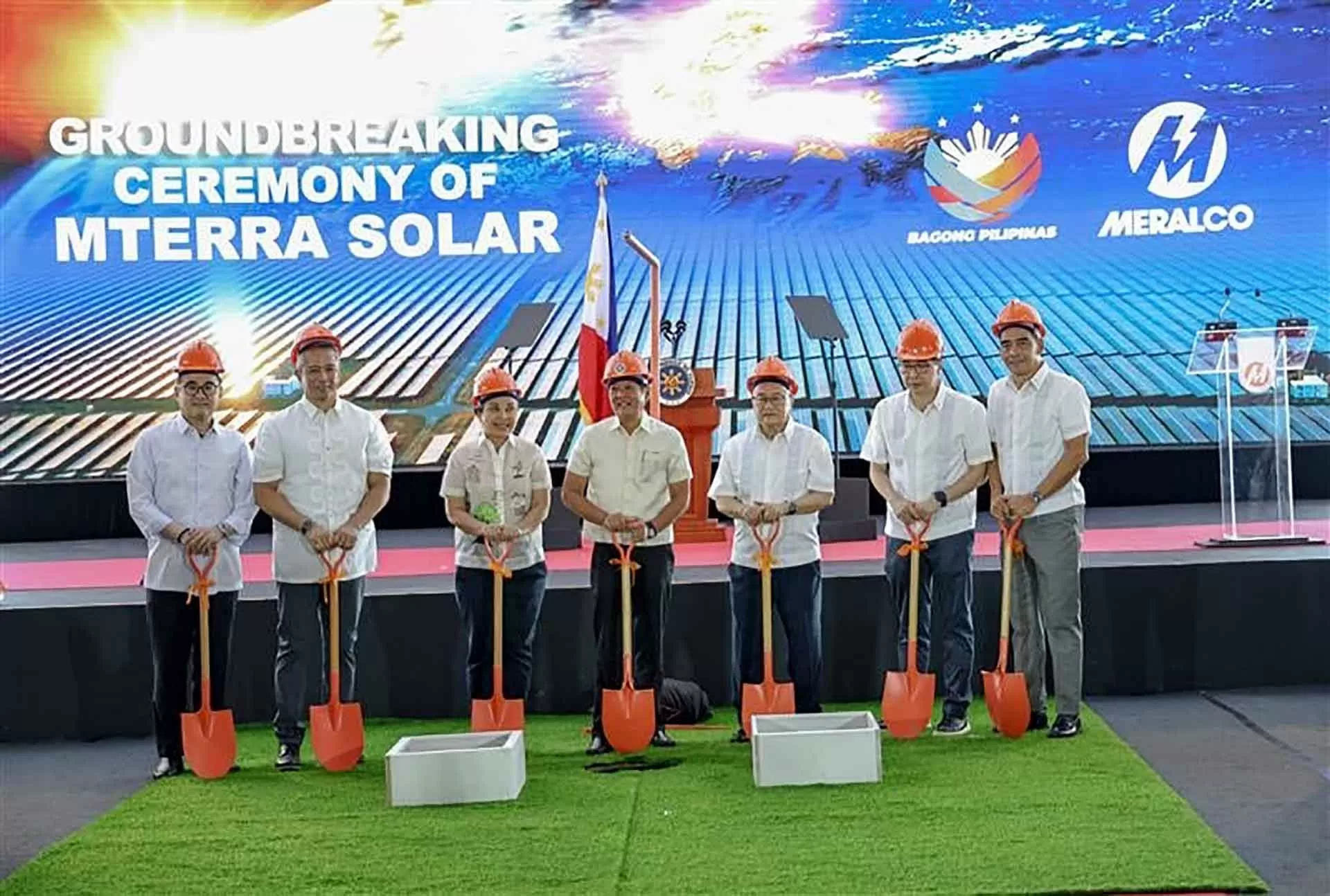 |
| Groundbreaking ceremony for the Meralco Terra Solar energy project in Gapan City, Luzon, Philippines. (Source: Meralco Terra Solar) |
Countries in the region have been implementing numerous large-scale projects, ranging from floating solar power plants to rooftop solar power systems.
With abundant solar energy resources, Southeast Asian countries such as the Philippines, Indonesia, Thailand, and Vietnam have identified solar energy as one of the pillars in their national energy development strategies. Policies encouraging investment, providing financial support, and reducing taxes have created favorable conditions for the development of this clean energy sector.
Philippines' breakthrough
The Philippines has just marked a significant milestone in its energy transition journey with the groundbreaking of the Meralco Terra solar power project, the world's largest project combining solar energy and state-of-the-art battery storage.
The groundbreaking ceremony took place in Gapan City, Nueva Ecija province, with the attendance of President Ferdinand R. Marcos Jr. He expressed his belief that this project would make the Philippines a leading renewable energy power in the world.
Scheduled for completion in 2027, Meralco Terra will not only provide enough electricity for over 2 million households but also contribute significantly to reducing carbon emissions, equivalent to removing millions of cars from the road.
According to the Philippine Department of Energy, with its scale spanning over 3,500 hectares and impressive power generation capacity, this project not only meets the country's growing energy needs but also promotes sustainable development and environmental protection.
Indonesia's "Big Dream"
Indonesia marked a significant milestone in its energy transition journey with the inauguration of the Terapung Cirata floating solar power plant last November. With a capacity of 192 MWp, this plant is not only the largest in Southeast Asia but also the third largest globally, laying the foundation for a green energy future in the archipelago nation.
President Joko Widodo at the time described Terapung Cirata as a "big dream" come true. He emphasized that the plant not only provides clean electricity but also perfectly complements the existing hydropower system, contributing to national energy security. Indonesia even set a target of increasing the plant's capacity to 1,000 MWp in the future, affirming its determination to become one of the leading countries in the renewable energy sector.
Thailand - The leading nation
In ASEAN, Thailand is currently the leading country in the region in the use of solar power. It is projected that the installed solar power capacity in Thailand will reach 6,000 MW by 2036.
To encourage the development of solar power in small-scale projects, Thailand has offered the highest levels of support for small producers. Specifically, Thailand has offered a preferential price of 21 cents/kWh for rooftop solar projects and launched the "Photovoltaic Rooftop" program.
The 120-hectare farm, located at the Sirindhorn hydroelectric dam in Thailand, has been operational since early 2022 with a capacity of 45MW. During the day, 145,000 solar panels are installed to generate electricity. At night, the plant continues to produce electricity using three large turbines powered by the water flow beneath the dam.
This solar farm is estimated to reduce CO2 emissions by 47,000 tons annually. And although the farm occupies only about 1% of the lake's surface area, it helps retain 460,000 cubic meters of water from evaporation each year. The cool air from the lake's surface ensures the solar panels don't overheat, increasing power generation efficiency by 15% compared to installations on land.
Floating solar power
In Southeast Asia, rapid economic development and increasing energy demand are often accompanied by land shortages. Floating solar power is an attractive solution due to its ability to generate clean energy without requiring a large land area.
Floating solar power, also known as floating photovoltaic (FPV), is a type of solar energy system that is installed floating on the surface of water.
These systems can minimize water evaporation from reservoirs and deliver higher production efficiency thanks to the cooling effect of the water.
One of the successful applications of floating solar power in Malaysia is a 100MW mixed solar farm owned and developed by the Malaysian company Cypark Resources Berhad. Located in Merchang, a coastal town in the northeastern Malaysian state of Terengganu, the farm officially commenced operations on June 9th and is expected to generate enough clean energy to offset 202,024 tonnes of annual CO2 emissions.
Dato Ami Moris, Executive Chairman of Cypark Resources Berhad, said that this hybrid solar power plant is Malaysia's largest and most unique project, combining both floating and ground-mounted solar panels, particularly suited to Terengganu's flood-prone terrain.
Vietnam's potential
In Vietnam, recognizing the importance of clean energy, the Vietnamese government has issued many preferential policies to promote the development of solar energy. A prime example is Decision 2068/QD-TTg dated November 25, 2015, which sets a clear objective of increasing the proportion of renewable energy in the national energy mix.
The Trung Nam 450 MW solar power plant project in Thuan Nam, Ninh Thuan province, is a clear testament to the determination to transition to a green economy. With its large scale and modern technology, the project not only contributes to national energy security but also creates thousands of jobs and promotes local socio-economic development.
Developing solar energy not only helps reduce dependence on fossil fuels but also protects the environment and public health. By harnessing the clean, abundant, and inexhaustible energy source from the sun, Southeast Asian countries are moving closer to the goal of building sustainable nations and regions.
Source



![[Image] Vietnam's colorful journey of innovation](/_next/image?url=https%3A%2F%2Fvphoto.vietnam.vn%2Fthumb%2F1200x675%2Fvietnam%2Fresource%2FIMAGE%2F2025%2F12%2F14%2F1765703036409_image-1.jpeg&w=3840&q=75)























































![[Image] Vietnam's colorful journey of innovation](https://vphoto.vietnam.vn/thumb/402x226/vietnam/resource/IMAGE/2025/12/14/1765703036409_image-1.jpeg)


























Comment (0)