

From road construction to the movement of opening literacy classes
People in My Huong commune, Can Tho city still tell each other the story of more than half a century ago, in the middle of a deep, swampy area, teacher Son Hen carried baskets of soil to build a road for his students to go to class.
From that small road built by hand, the literacy movement spread throughout the Khmer community in Dai Ui hamlet, and today this purely agricultural countryside has become a place with more than 200 people pursuing the teaching profession, a rare bright spot in the tradition of studiousness of the Khmer people in the South.
In the 1960s, on the dirt roads in Dai Ui hamlet, children going to school had to cross slippery roads, sometimes falling down in the mud. Unable to bear seeing his students suffer, Mr. Son Hen himself carried baskets of soil, building each meter of road leading to Bang Kyoong pagoda - which later became the first place to open a literacy class in the hamlet.
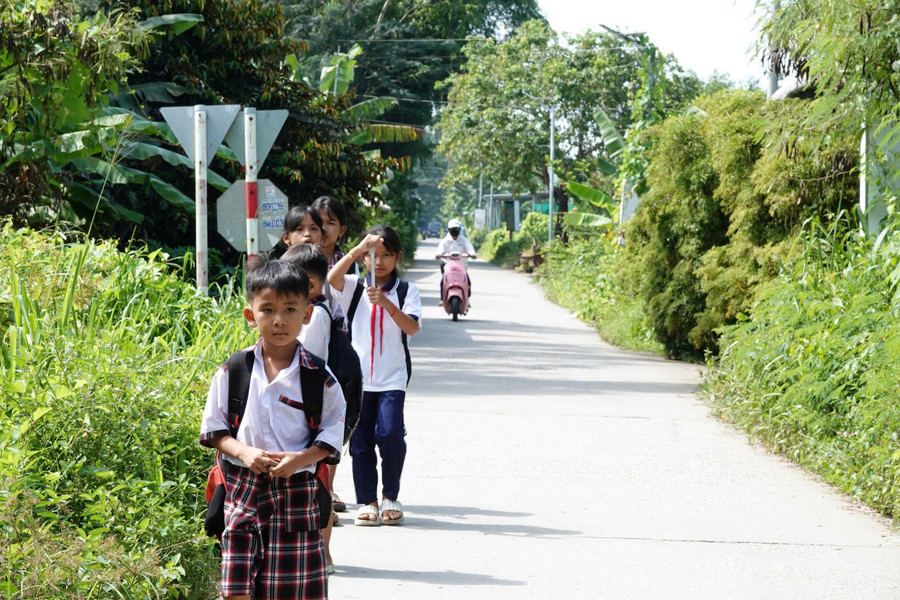
But building the road was only the first step. Master Hen soon understood that if he wanted people to escape poverty and for children to have a future, the path to knowledge had to be opened. And he began to convince his family to sell thousands of bushels of rice (each bushel weighs 20kg), and mobilized the people and the government to build a small school right on the temple grounds.
In 1964, the first class opened: a first grade class with 42 students. The school was in the pagoda's stilt house, with wooden tables and chairs donated by the locals. Teacher Son Hen was in charge of teaching the national language, while teacher Mai Khuong taught Khmer, with textbooks provided by Khleng Pagoda... Since then, the literacy movement has spread rapidly.
By 1965, the school had four classes (two first grade and two second grade) with more than 100 students. Seeing the positive results, monks, Buddhists and local authorities decided to join hands to build a more solid school.
After 2 years of construction, in 1967, the school with 8 classrooms and 1 semi-permanent office was completed. This is the predecessor of today's Phu My B Primary School.
In 1972, the school built two more classrooms and continued to be upgraded through stages, becoming a place associated with many generations of Khmer students in the region.
Purely agricultural hamlet has more than 200 teachers
From the classes at the pagoda years ago, the desire to learn in the Khmer community of Dai Ui was nurtured persistently. Then, many decades later, the purely agricultural countryside with 711 households and nearly 4,000 people, of which more than 98% are Khmer, has become a place with over 200 people pursuing the teaching profession, a rare number.
Mr. Duong Soc, Head of Dai Ui Hamlet, said: The tradition of learning has become a cultural feature of the hamlet. From the first teachers such as Son Hen, Mai Khuong, Ly Sinh… many families have continued the teaching profession for 3-4 generations.
The most typical is the family of Mr. Ly Ngoc Sach (65 years old). Mr. Sach's father is Mr. Ly Sinh, a local teacher during the war. Following their father's example, many of Mr. Sach's brothers and children continued to enter the teaching profession.
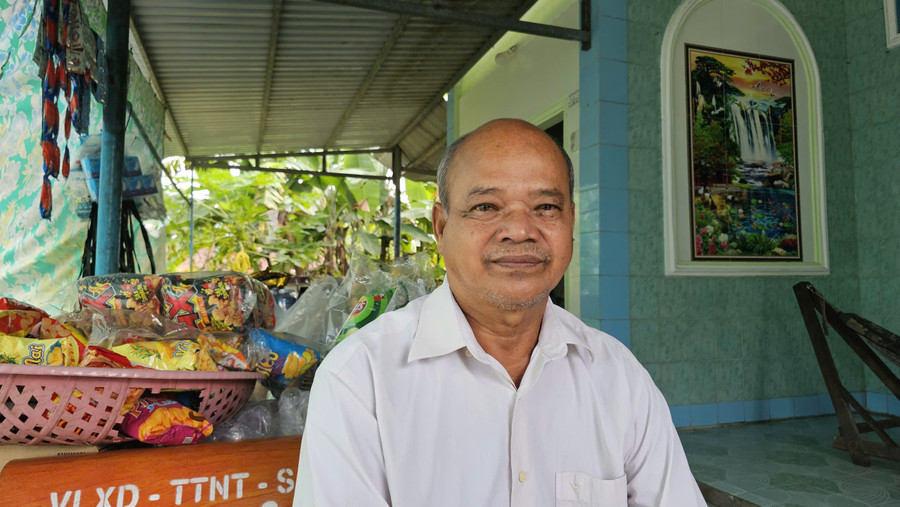
To date, his family has 29 members working as teachers, teaching at many schools in the area. Mr. Sach has been in the profession since 1978, working for nearly 40 years at Phu My B Primary School. His four sons and four daughters-in-law are all teachers.
In addition, he has two children who are in the medical field and are working at a hospital in Phu Loi ward (Can Tho city). He said he still hopes his grandchildren will continue to pursue teaching or medical careers to preserve the family tradition.
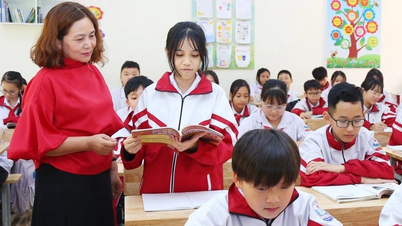
Thanks to the guidance and example of teachers in the community, 100% of Dai Ui children go to school, the dropout rate is almost zero. Higher education has become a common goal of the whole hamlet, something that was once considered far away for poor rural areas.
Love of learning contributes to improving people's lives. Not only stopping at having many teachers, the strong learning movement has contributed significantly to improving people's knowledge and expanding job opportunities for Khmer Dai Ui youth.
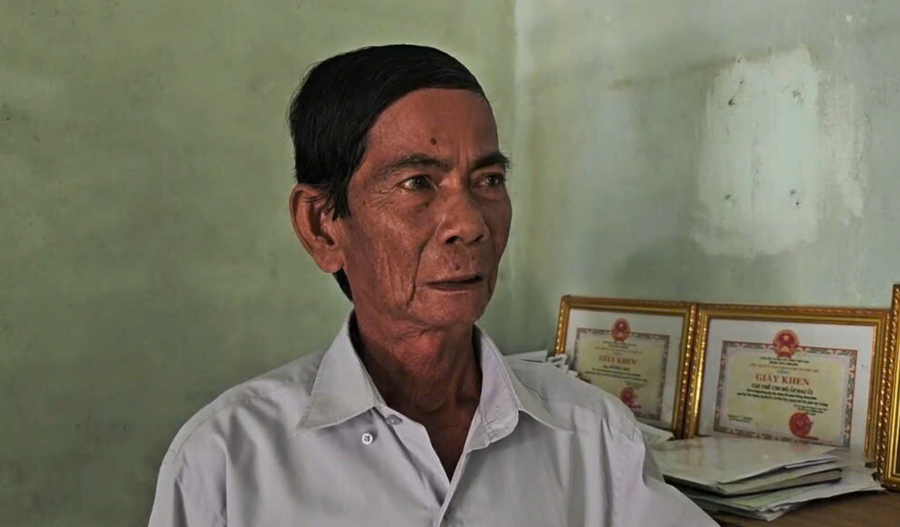
Many families who previously only knew how to rely on a few fields now have children who are teachers, doctors, commune officials, civil servants, etc. Life is increasingly more prosperous and stable.
Head of Duong Soc hamlet shared: “People are very proud to have more than 200 people working as teachers. It is the tradition of studiousness that has contributed to changing the economic and social face of the hamlet.”
From the dirt roads built by teachers carrying baskets of soil, from the school built by the joint efforts of the whole village, the learning movement of Dai Ui has become a beautiful symbol of the Khmer people. That tradition is still preserved and continued, so that the young generation can step out of the fields, towards knowledge and a brighter future.
Source: https://giaoducthoidai.vn/nguoi-thay-ganh-dat-mo-duong-hoc-chu-va-cau-chuyen-hon-200-nha-giao-o-ap-dai-ui-post757509.html















































Comment (0)