

Doctors at Children's Hospital 2 (Ho Chi Minh City) have successfully performed an endoscopic-assisted inferior cranial suture resection to treat cranial suture fusion in a nearly 4-month-old boy.

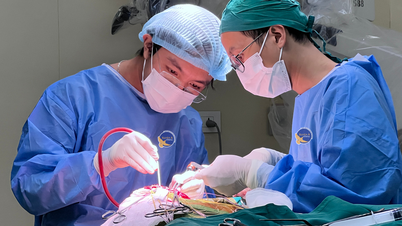
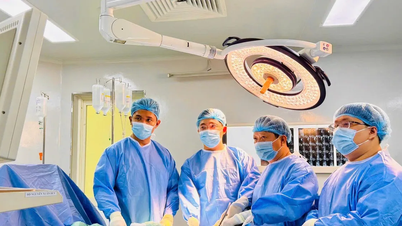
Doctors are focusing on brain surgery for the child (Photo: Hospital).
According to information from the hospital, the family noticed an abnormality in the child's head shape and took him for a screening examination.
The results showed that the baby had sagittal craniosynostosis – a form of simple craniosynostosis, causing the child's head to be deformed into a boat shape, elongated along the anterior-posterior axis. This defect poses a risk to brain development if not treated early.
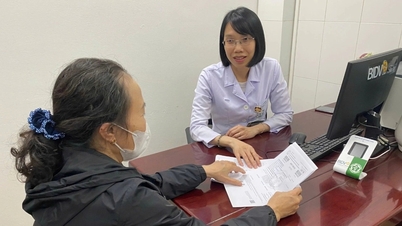
After the examination, Dr. Nguyen Ngoc Pi Doanh, from the Neurosurgery Department, advised the family on the patient's condition and treatment options.
In cases of simple craniosynostosis, infants under 6 months old may be treated with minimally invasive surgery such as endoscopic-assisted craniosynostosis resection. Older children, usually after 9 months of age, will require more complex and invasive total cranial vault reconstruction surgery.
According to Dr. Doanh, previously, endoscopic surgery techniques were not widely implemented because children needed to wear orthopedic headgear after surgery. This equipment was also not readily available in the country.
Currently, Vietnam has specialized units producing orthopedic helmets with modern technology, at a much lower cost than treatment abroad, creating favorable conditions for the effective application of this minimally invasive surgical method.
The surgery lasted approximately 1.5 hours, with two small incisions, each about 4 cm long. The doctors completely removed the fused cranial sutures and simultaneously widened the cranial vault on both sides, creating space for brain development and helping to reshape the skull as the child grows.
According to Dr. Doanh, endoscopic-assisted cranial suture resection is a global trend in the treatment of craniofacial deformities.
This method offers several advantages, including minimal invasiveness, small incisions, shorter surgery and hospital stays, reduced blood loss and the need for blood transfusions, and the ability to intervene at an early age, thereby optimizing long-term results in terms of both aesthetics and neurological function.
However, after surgery, children need to wear orthopedic headgear to support the development of the skull bones, helping the head to develop in a balanced and harmonious way.
According to doctors, flat head syndrome and head deformities are quite common in children today. Besides the pathological cause of craniosynostosis, many cases stem from posture but are not given enough attention by parents. Hesitation and missing the "golden time" for treatment, usually between 4 and 10 months of age, can significantly reduce the effectiveness of intervention after the age of one.
Doctors recommend that when parents notice signs of head deformities in their children, they should take them for early examination and screening to receive an accurate diagnosis and develop an appropriate treatment plan, giving the child the best chance for optimal development.
Source: https://dantri.com.vn/suc-khoe/phat-hien-dau-meo-be-4-thang-tuoi-duoc-can-thiep-di-tat-so-nao-kip-thoi-20251215161150225.htm
![[Photo] Two flights successfully landed and took off at Long Thanh Airport.](/_next/image?url=https%3A%2F%2Fvphoto.vietnam.vn%2Fthumb%2F1200x675%2Fvietnam%2Fresource%2FIMAGE%2F2025%2F12%2F15%2F1765808718882_ndo_br_img-8897-resize-5807-jpg.webp&w=3840&q=75)


























































































Comment (0)