

On December 15th, the Institute of Health Strategy and Policy ( Ministry of Health ), in collaboration with Opella Vietnam, announced the research "Assessing Vietnam's Readiness for Self-Care and Influencing Factors".
What indicators assess the level of readiness for self-care?
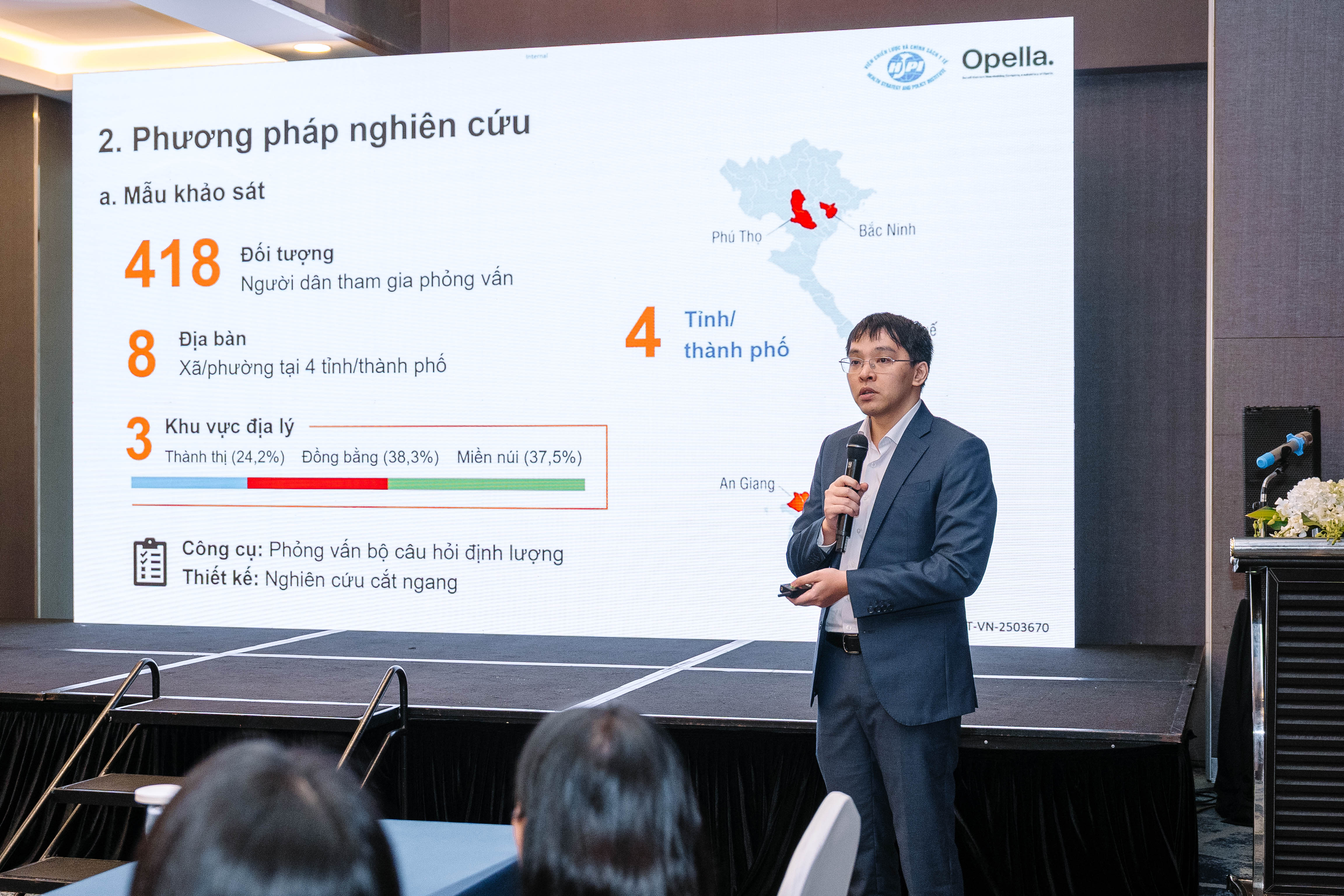
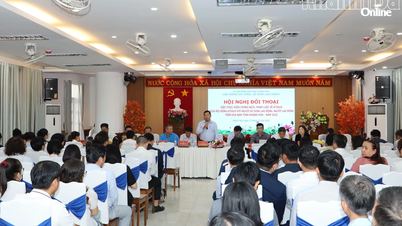
Representatives from the Institute of Health Strategy and Policy shared the research findings.
The study, conducted from June to December 2025, is based on the Global Health Care Readiness Framework, which comprises four key factors and fourteen component indicators.
The study combined qualitative and quantitative methods and was conducted in four locations: Phu Tho, Bac Ninh, Hue City, and An Giang . Data was collected from five in-depth interviews with policymakers, 28 focus group discussions with managers, healthcare officials, and residents; and a quantitative survey with 171 healthcare officials and 418 consumers.
The results show that Vietnam scored 3.04 points out of 4, ranking behind Singapore, Australia, and Germany among the 10 countries compared. The scores for the four key factors are: Stakeholder support and acceptance (2.79 points); Patient and consumer empowerment (3.06 points); Health policies on self-care (3.05 points); and the legal environment (3.26 points).
Of the 14 component indicators, 9 scored 3 points or higher, reflecting a relatively good but uneven level of readiness.
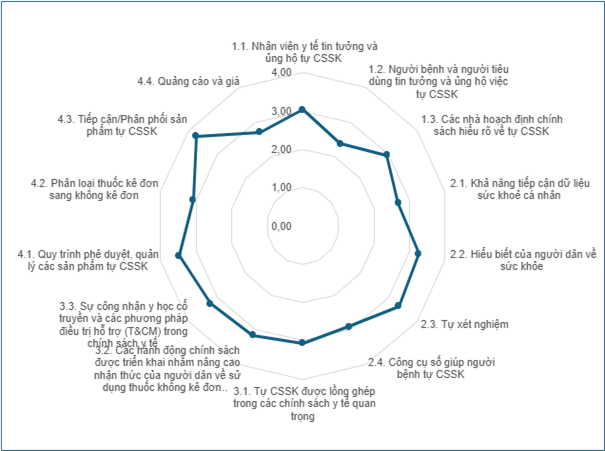
In the "Support and Acceptance from Stakeholders" group, the "Healthcare Workers Trust and Support Self-Care" index reached 3.03 points; 73.1% of healthcare workers reported regularly advising patients on self-care. Meanwhile, the "Public Trust and Support Self-Care" index only reached 2.38 points, indicating that the public remains hesitant, although willing to use over-the-counter medications for minor illnesses.
The "Empowering Patients and Consumers" group scored 3.06 points, with the "Self-Testing" index scoring 3.36 points. Conversely, access to personal health data (2.69 points) and digital tools to support self-care (2.91 points) were only at an average level.
The "Legal Environment" index scored the highest (3.26 points). Access to and distribution of self-care products scored 3.75 points, but also poses risks regarding product quality on online channels. The "Advertising and Price" index scored 2.72 points due to Vietnam's strict advertising regulations for pharmaceuticals.
The next priority for improving self-care capacity in Vietnam.
Although Vietnam's level of self-care readiness is relatively good compared to the region, research suggests continued focus on raising public awareness, strengthening the counseling capacity of healthcare professionals, and improving access to reliable information.

Dr. Nguyen Khanh Phuong - Director of the Institute of Health Strategy and Policy.
The study identifies future priorities including: Strengthening mainstream communication on self-care; Accelerating the deployment of integrated electronic health records (VneID) to expand people's ability to independently access their medical history, tests, and medications; Promoting the application of electronic labels for medicines, especially over-the-counter drugs, to enhance access to drug information; and Piloting self-care models in the community as a basis for developing a National Strategy/Plan on self-care.
Dr. Nguyen Khanh Phuong, Director of the Institute of Health Strategy and Policy, shared: Research results show that Vietnam has favorable foundations to promote self-care, but there is still much room to be exploited through official media, medical consultation, and solutions to support people in accessing safe self-care information. This is the right time to gradually form national models and orientations on self-care.
Dr. Valentina Belcheva, General Director of Opella Vietnam and Cambodia, shared that this research is an important step forward, helping us to better understand the needs and barriers of people in their journey of self-care for their health.
As a leading global corporation in the field of self-care, Opella is proud to partner with regulatory authorities in introducing and implementing this research framework in Vietnam, and is committed to further promoting self-care through raising consumer awareness, distributing quality products, and promoting products responsibly, so that health is truly in the hands of every Vietnamese citizen.

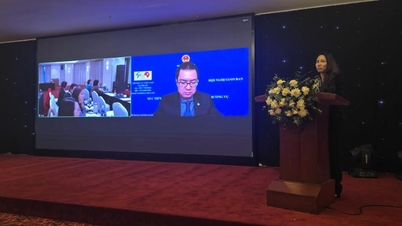
Delegates from various ministries and departments discussed and contributed ideas to the research.
Source: https://suckhoedoisong.vn/viet-nam-dung-thu-4-10-quoc-gia-ve-muc-do-san-sang-tu-cham-soc-suc-khoe-169251215214705492.htm
![[Photo] Prime Minister Pham Minh Chinh receives the Governor of Tochigi Province (Japan)](/_next/image?url=https%3A%2F%2Fvphoto.vietnam.vn%2Fthumb%2F1200x675%2Fvietnam%2Fresource%2FIMAGE%2F2025%2F12%2F16%2F1765892133176_dsc-8082-6425-jpg.webp&w=3840&q=75)
![[Image] Leaked images ahead of the 2025 Community Action Awards gala.](/_next/image?url=https%3A%2F%2Fvphoto.vietnam.vn%2Fthumb%2F1200x675%2Fvietnam%2Fresource%2FIMAGE%2F2025%2F12%2F16%2F1765882828720_ndo_br_thiet-ke-chua-co-ten-45-png.webp&w=3840&q=75)


![[Photo] Prime Minister Pham Minh Chinh receives Lao Minister of Education and Sports Thongsalith Mangnormek](/_next/image?url=https%3A%2F%2Fvphoto.vietnam.vn%2Fthumb%2F1200x675%2Fvietnam%2Fresource%2FIMAGE%2F2025%2F12%2F16%2F1765876834721_dsc-7519-jpg.webp&w=3840&q=75)
![[Live] 2025 Community Action Awards Gala](/_next/image?url=https%3A%2F%2Fvphoto.vietnam.vn%2Fthumb%2F1200x675%2Fvietnam%2Fresource%2FIMAGE%2F2025%2F12%2F16%2F1765899631650_ndo_tr_z7334013144784-9f9fe10a6d63584c85aff40f2957c250-jpg.webp&w=3840&q=75)
















































































Comment (0)