

According to Deputy Prime Minister Tran Hong Ha, land valuation needs to be accurate, precise, and reflect reality, without shifting the difficult task to local authorities.
"Land valuation methods must be feasible, scientific , transparent, and ensure fair benefits for the people, businesses, and the State," the Deputy Prime Minister said while chairing a meeting with ministries, agencies, and localities to resolve obstacles related to land valuation on the afternoon of October 30.
Given that most obstacles and legal violations when using land resources for economic development stem primarily from land valuation, the Deputy Prime Minister requested the Ministry of Natural Resources and Environment to ensure the accuracy and consistency of calculation formulas. The Ministry should revise the conditions for applying the comparative method and supplement information, data, and indicators used in land valuation from official sources; simultaneously, it should quantify project development costs and the responsibilities of each agency and unit in the process of determining, appraising, and approving land prices.
Regarding the local authorities' proposal to allocate land and collect land use fees according to investment phases, the Deputy Prime Minister clarified that the competent State agencies must determine this when approving projects as a basis for implementation. Local authorities should urgently study methods to determine the coefficients and sub-indices to be applied in combination with the land price adjustment coefficient for land parcels valued at less than 30 billion VND (for centrally-governed cities); 10 billion VND (for mountainous provinces); and 20 billion VND (for other localities).
"The decree will be implemented at the local level, so it's necessary to provide frank feedback and point out shortcomings so that the Ministry of Natural Resources and Environment can promptly and practically incorporate them. This is both the responsibility and the right of the localities," the Deputy Prime Minister said.
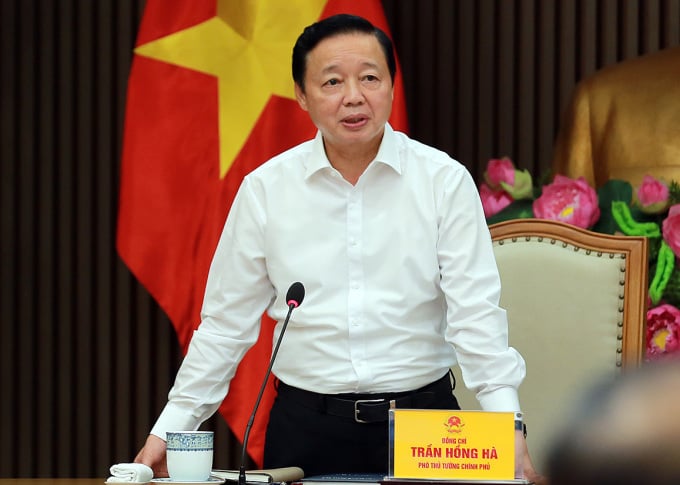
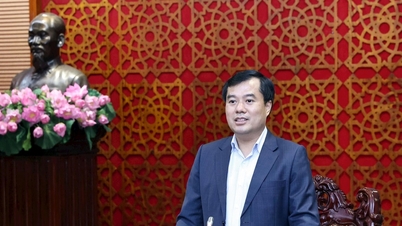
Deputy Prime Minister Tran Hong Ha. Photo: Minh Khoi
At the meeting, Director of the Land Resources Planning and Development Department, Dao Trung Chinh, stated that after incorporating the directives from government leaders and relevant agencies, the drafting committee has finalized the concept, procedures, content, and methods for determining land prices. The conditions for applying each land valuation method have also been clarified. Accordingly, there are four methods for determining land prices: comparative, income, surplus, and land price adjustment coefficient.
The drafting agency also added detailed regulations on factors affecting land prices to ensure transparency and prevent appraisers from imposing their subjective will.
Vice Chairman of the People's Committee of Binh Duong province, Mai Hung Dung, suggested clarifying the responsibilities of individuals and organizations in each stage of land valuation. "Local authorities should be allowed to decide on specific land prices more flexibly than the initial valuation results to attract investors," Mr. Dung suggested.
Vice Chairman of Hoa Binh Provincial People's Committee Quach Tat Liem proposed that an independent agency be established to assess the development costs of investors in projects applying the surplus method.
According to current regulations, land prices are determined using one of five methods: direct comparison, deduction, income, surplus, and land price adjustment coefficient. The draft of the new Decree eliminates the deduction method.
The draft revised Land Law will be considered and passed by the National Assembly at its ongoing 6th session.
Source link











































































Comment (0)