

These limitations cause the stages of compensation, support, resettlement and land use fee calculation to continue to face the risk of lack of transparency, which can easily lead to complaints and need to be reviewed and clarified.
Perfect for clear, unified understanding
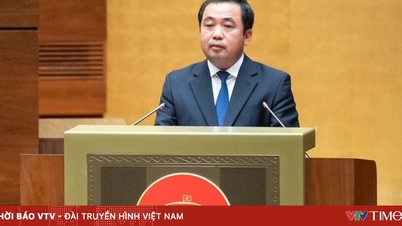
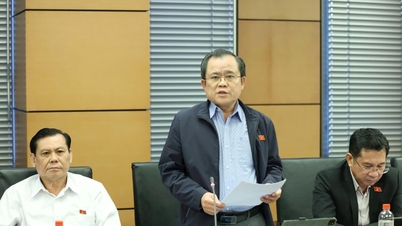
- Regarding the land recovery cases in Article 3, the content that attracts the attention of many voters is the regulations on compensation, support, resettlement and transitional regulations for land recovery, compensation, support, and resettlement. What is your opinion on the contents in the draft?

- Regarding compensation, support and resettlement in Clause 7, in my opinion, the two compensation options in Clause 7, Article 3 state the mechanism for handling the difference between the agreed price and the State price, but do not clearly explain how to determine the "average level of the agreed land price", the time of price closing, as well as the method of verifying agreed transactions to avoid price increases. I suggest that this issue be clarified.
At Point a, Clause 13, the transitional provisions for land recovery, compensation, support, and resettlement are: "In cases where there has been a decision to recover land and a decision to approve the compensation, support, and resettlement plan before the effective date of this Resolution but it has not been implemented, the approved compensation, support, and resettlement plan shall continue to be implemented."
The above regulation leads to inconsistent understanding in the case: The decision to approve the compensation, support and resettlement plan is incorrect or incomplete according to regulations, then the approval of adjustments and supplements to the compensation and support plan shall be implemented according to the regulations at the time of approval of the previous compensation, support and resettlement plan; or implemented according to the regulations at the time of approval of adjustments and supplements to the compensation, support and resettlement plan. Therefore, it is necessary to review and complete the above regulation to have a clear and consistent understanding.
Clear legal responsibility when valuation results cause damage
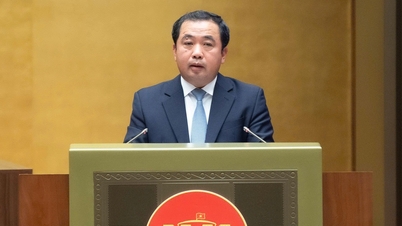
- The regulation on land valuation in Article 6 is also a content that attracts the attention of many voters and people. Do you have any suggestions when studying the draft?
- In reality, the mechanism for determining land prices still depends largely on land price lists and adjustment coefficients - tools that are often much lower than actual transaction prices in many localities, leading to significant errors. The draft also does not have a strong enough mechanism to handle the gap between specific land prices and market data; at the same time, it does not clearly define legal responsibilities when valuation results cause damage to the budget or to the people. These limitations cause the stages of compensation, support, resettlement and land use fee calculation to continue to face the risk of lack of transparency and are very susceptible to complaints. It is recommended that this be considered and clarified.
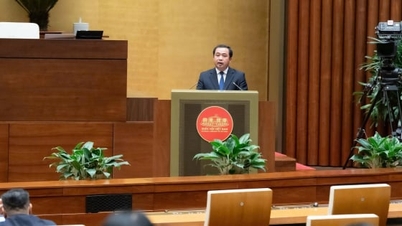
In addition, the provisions in Clause 3, Article 7 on land price tables require localities to issue land price tables and apply them from January 1, 2026. However, in reality, many provinces and cities have not completed the construction of databases, collected land price information or prepared sufficient resources to build new price tables according to the market method. This leads to the risk of delay in issuing land price tables, with the direct consequence of blocking all land-related transactions such as land allocation, land lease, land use fee calculation, certificate issuance, and compensation when land is recovered.
The draft does not yet have a provisional mechanism for handling cases where localities have not yet issued the price list on time, nor does it clearly define the responsibilities and sanctions for agencies that are slow to issue. This may create a legal gap and cause confusion in implementation.
Thank you very much!
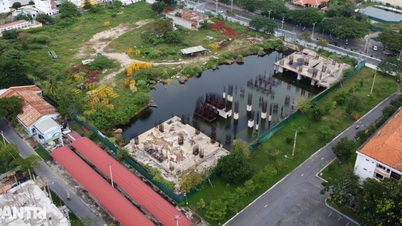
The Draft Resolution does not clearly stipulate how to handle projects being implemented under the 2013 Land Law when switching to the 2024 Law, including unfinished appraisal dossiers on compensation, land recovery and land prices, to determine which procedures will be applied and which agency will be primarily responsible in each case. The lack of transitional guidance can easily lead to different understanding and handling by each locality, leading to the risk of procedural stagnation or disputes. It is recommended that the Government add a separate provision on transitional regulations to clarify responsibilities, procedures and ways to resolve situations arising during the transitional period, ensuring that no legal "gaps" are created and protecting the legitimate rights and interests of people, businesses and state agencies.
Source: https://daibieunhandan.vn/dbqh-la-thanh-tan-giai-quyet-triet-de-hon-viec-dinh-gia-dat-va-chenh-lech-so-voi-gia-thi-truong-10398101.html











![[Video] More than 96% of cases related to land planning, management and use have been resolved.](https://vphoto.vietnam.vn/thumb/402x226/vietnam/resource/IMAGE/2025/12/03/1764775937805_1-5566-png.webp)











![[Photo] Worshiping the Tuyet Son statue - a nearly 400-year-old treasure at Keo Pagoda](/_next/image?url=https%3A%2F%2Fvphoto.vietnam.vn%2Fthumb%2F1200x675%2Fvietnam%2Fresource%2FIMAGE%2F2025%2F12%2F02%2F1764679323086_ndo_br_tempimageomw0hi-4884-jpg.webp&w=3840&q=75)
![[Photo] Parade to celebrate the 50th anniversary of Laos' National Day](/_next/image?url=https%3A%2F%2Fvphoto.vietnam.vn%2Fthumb%2F1200x675%2Fvietnam%2Fresource%2FIMAGE%2F2025%2F12%2F02%2F1764691918289_ndo_br_0-jpg.webp&w=3840&q=75)





































































Comment (0)