

Highly practical and aesthetically pleasing.
Spanning 500 square meters, the exhibition showcases over 350 unique and creative handicraft products from traditional craft villages. This is a wonderful space for the public, especially those interested in handicrafts in general and rattan, bamboo, and sedge weaving, as well as horn crafts, to admire representative, distinctive, and aesthetically valuable works created by the skillful hands of artisans and craftsmen.
Speaking to the press, Mr. Hoang Quan, Deputy Director of the Center for Industrial Promotion and Development Consulting ( Hanoi Department of Industry and Trade), said that the exhibition helps businesses and rural industrial production facilities in the rattan, bamboo, and sedge weaving and horn handicraft industries in Hanoi to learn, understand, and introduce new designs into production.
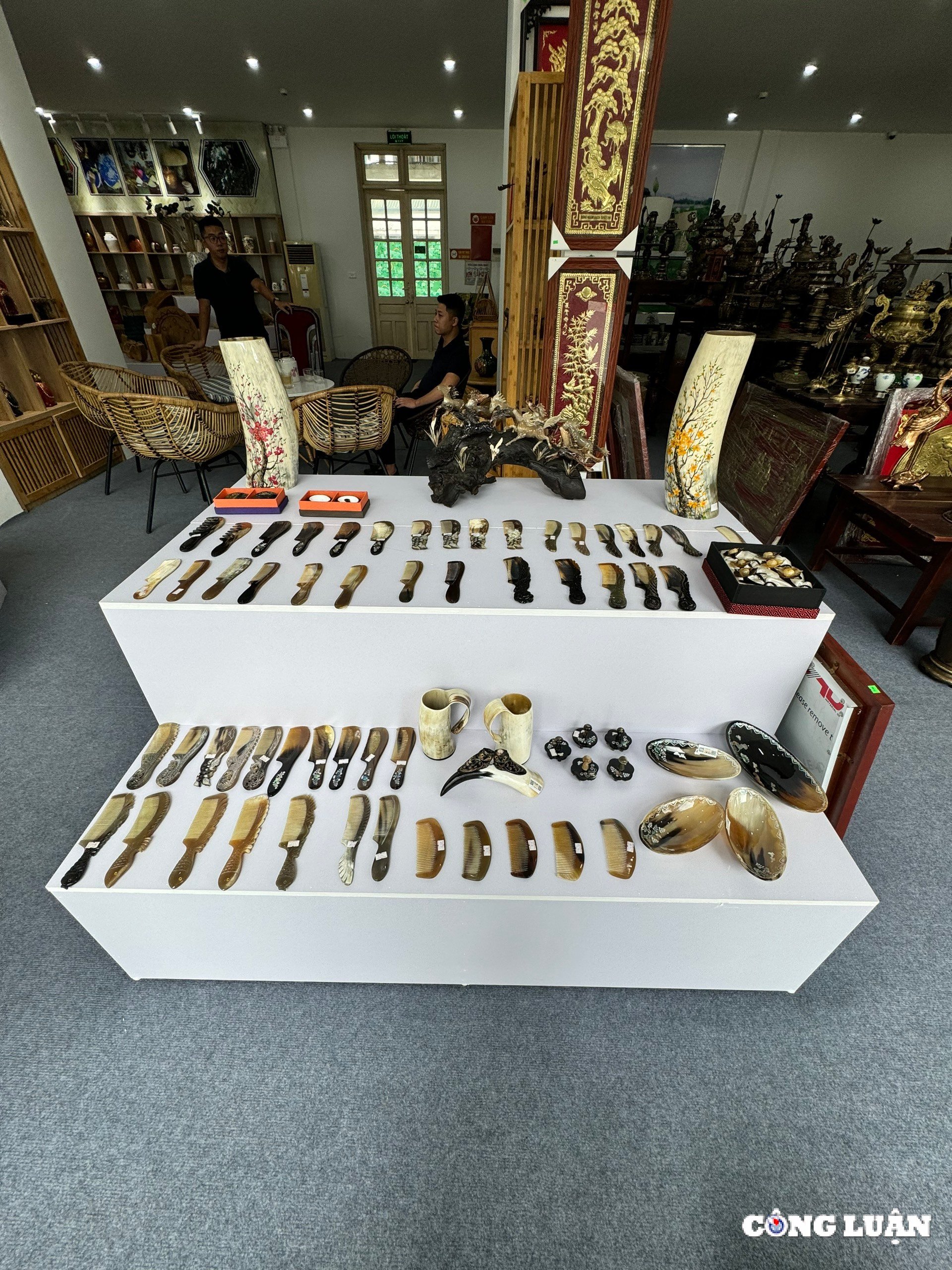
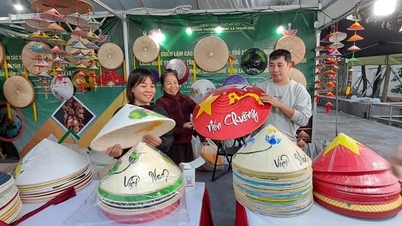
Handicraft products are on display at the exhibition.
In particular, these designs are used to develop new products that meet market demands, especially the export market. Furthermore, visitors can experience and learn about the history and production processes of traditional and modern rattan, bamboo, and sedge weaving, as well as participating in promotional activities and trade connections for these products.
According to the artisans participating in the exhibition, this is a place to encourage and guide designers in creating products that are both practical and aesthetically pleasing, supporting businesses and rural industrial production facilities in Hanoi's handicraft industry to diversify product designs and meet market demands.
This contributes to strengthening the links between the five key stakeholders: designers, artisans, manufacturers, distributors, and consumers. Furthermore, the exhibition serves as a platform to introduce and promote unique and representative products showcasing the strengths of Hanoi's traditional craft villages to the public.
"The exhibition also contributes to promoting the potential and strengths of the Capital in the fields of creative design, thereby contributing to the economic and social development of Hanoi. It connects and expands business cooperation between organizations, experts, and domestic and international businesses in the field of design and creative industries," Mr. Quan emphasized.
Integrating culture with craft village tourism.
Over the years, departments and agencies of Hanoi City have continuously organized festivals, fairs, and exhibitions linking culture with tourism and traditional crafts, introducing and promoting OCOP products of Hanoi City and the whole country.
Typical examples include: Hanoi Tourism Festival, Hanoi Tourism Gift Festival, Hanoi Culinary and Traditional Craft Village Tourism Festival; Hanoi Creative Design Festival; Hanoi Ao Dai Tourism Festival; Hanoi City Fruit Festival; Hanoi Autumn Festival; Hanoi Beer Festival; the first Hanoi Lotus Festival in 2024, the first Hanoi Ornamental Plants Festival in 2024… Thanks to these, thousands of local OCOP products from traditional craft villages have been introduced and promoted, becoming favorite destinations for a large number of customers.
Recently, the Hanoi Lotus Festival and the introduction of OCOP products associated with the culture of the northern mountainous provinces, held at the Tay Ho Creative Cultural Space (Hanoi), attracted approximately 50,000 visitors and shoppers. With the participation of over 1,000 OCOP products from various regions, it offered many interesting experiences for tourists and consumers.
From July 12th to 16th, 2024, the total revenue and value of contracts and memoranda of understanding for the purchase of OCOP products, lotus-based products, and various types of tea reached over 11 billion VND, of which direct sales accounted for 6 billion VND. The shopping atmosphere at the festival was very lively and bustling, with consumers readily spending large quantities of goods due to their trust in the quality of OCOP products.
Participating in the Hanoi Lotus Festival are many OCOP products from craft villages in the capital city, such as silk and lotus silk products from My Duc Silk and Mulberry Company Limited; conical hats from Chuong village (Chuong My, Hanoi); lacquer paintings and souvenirs from Ha Thai (Thuong Tin, Hanoi); Thanh Tri rice rolls; and dairy products from Ba Vi, etc.
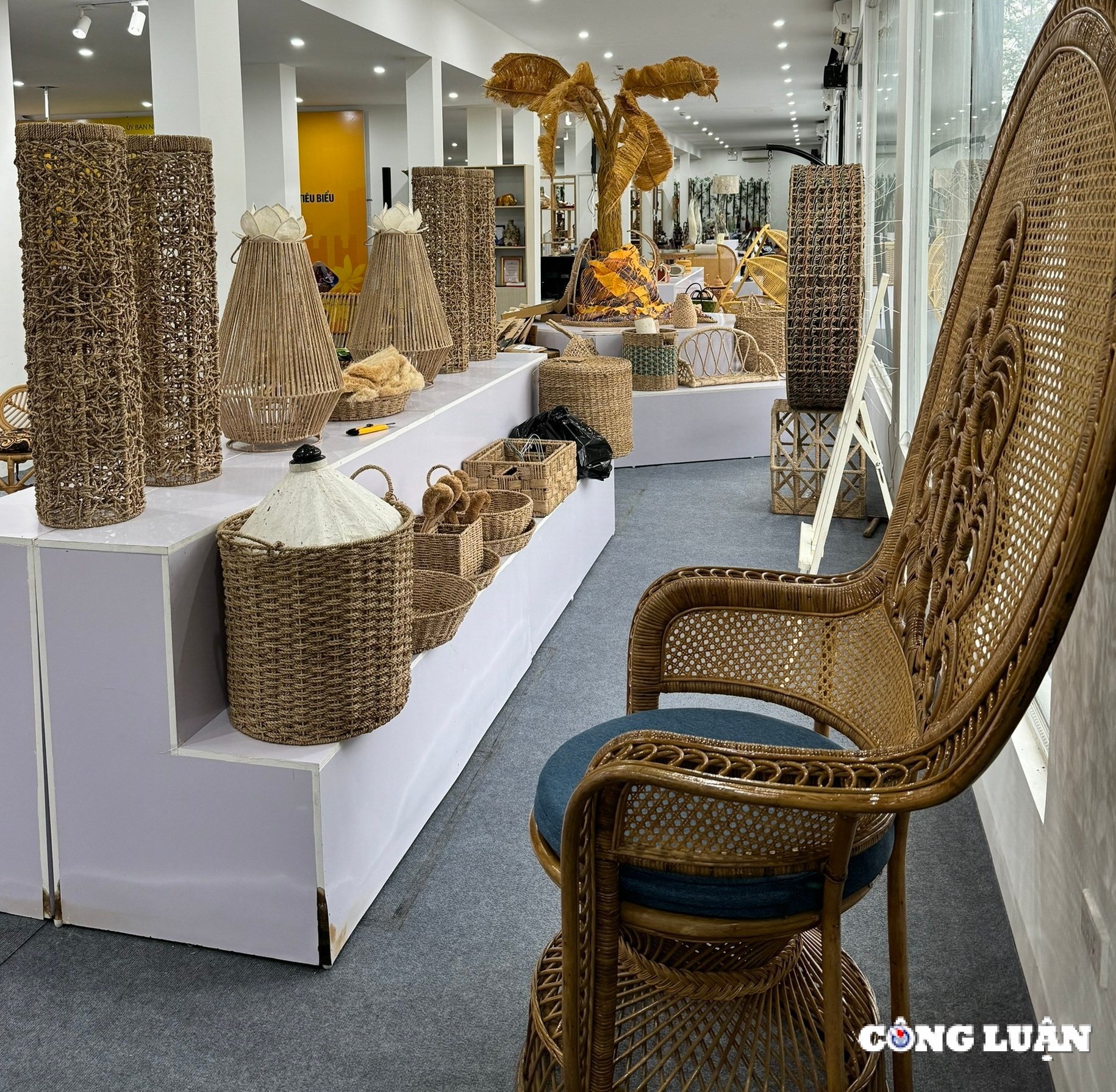
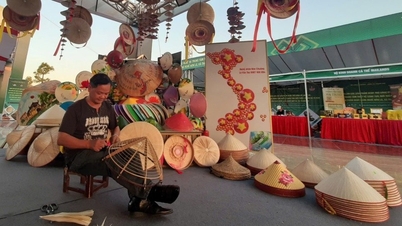
Many handcrafted products made from rattan, bamboo, and other materials were displayed at the exhibition.
Currently, Hanoi has 1,350 craft villages and villages with traditional crafts. To date, 745 out of 2,711 OCOP products in the city are products from craft villages and villages with traditional crafts (accounting for 27.48% of the total OCOP products in the city).
At the Hanoi Lotus Festival and the introduction of OCOP products associated with the culture of the northern mountainous provinces, Minister of Agriculture and Rural Development Le Minh Hoan stated that Hanoi is on the right track in exploiting local cultural values and strengths to develop OCOP products. The introduction and promotion of OCOP products in conjunction with events and festivals is becoming increasingly professional and attractive.
Hanoi aims to have 2,000 products evaluated and classified under the One Commune One Product Program (OCOP) for the period 2021-2025. With strong determination from the government and local authorities, from 2021 to the end of 2023, Hanoi evaluated and classified 1,657 products. In 2024, districts and towns in Hanoi registered for evaluation and classification of an additional 510 products. With these results, Hanoi's OCOP program will surpass its target one year ahead of schedule.
Source: https://www.congluan.vn/ha-noi-quang-ba-cac-san-pham-thu-cong-my-nghe-gan-voi-su-kien-le-hoi-chuyen-nghiep-post306004.html
![[Live] 2025 Community Action Awards Gala](/_next/image?url=https%3A%2F%2Fvphoto.vietnam.vn%2Fthumb%2F1200x675%2Fvietnam%2Fresource%2FIMAGE%2F2025%2F12%2F16%2F1765899631650_ndo_tr_z7334013144784-9f9fe10a6d63584c85aff40f2957c250-jpg.webp&w=3840&q=75)
![[Photo] Prime Minister Pham Minh Chinh receives Lao Minister of Education and Sports Thongsalith Mangnormek](/_next/image?url=https%3A%2F%2Fvphoto.vietnam.vn%2Fthumb%2F1200x675%2Fvietnam%2Fresource%2FIMAGE%2F2025%2F12%2F16%2F1765876834721_dsc-7519-jpg.webp&w=3840&q=75)
![[Photo] Prime Minister Pham Minh Chinh receives the Governor of Tochigi Province (Japan)](/_next/image?url=https%3A%2F%2Fvphoto.vietnam.vn%2Fthumb%2F1200x675%2Fvietnam%2Fresource%2FIMAGE%2F2025%2F12%2F16%2F1765892133176_dsc-8082-6425-jpg.webp&w=3840&q=75)
![[Image] Leaked images ahead of the 2025 Community Action Awards gala.](/_next/image?url=https%3A%2F%2Fvphoto.vietnam.vn%2Fthumb%2F1200x675%2Fvietnam%2Fresource%2FIMAGE%2F2025%2F12%2F16%2F1765882828720_ndo_br_thiet-ke-chua-co-ten-45-png.webp&w=3840&q=75)


































































Comment (0)