

The 7.6 magnitude earthquake destroyed homes in Suzu on the Noto Peninsula and caused fires in Wajima City, Ishikawa Prefecture. The full extent of the damage is yet to be determined, as the rubble and cut roads are hindering aid and rescue efforts.
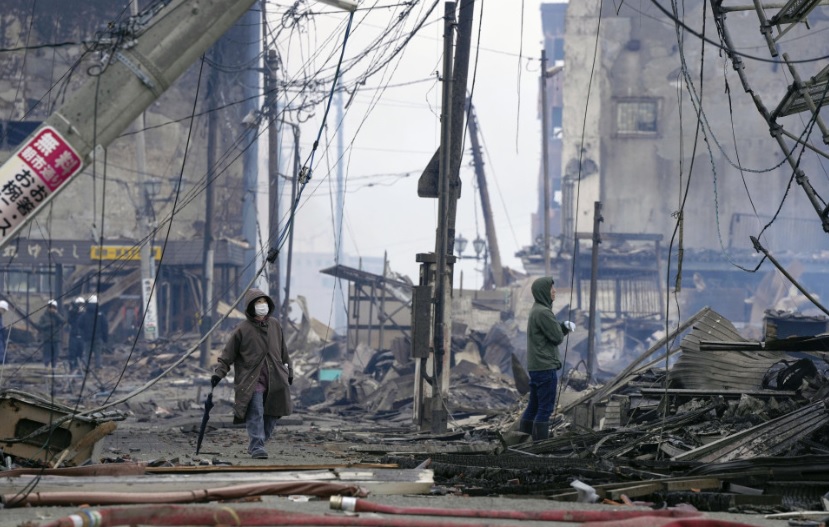
A market known as a popular tourist destination in Wajima, Ishikawa Prefecture, was destroyed by fire after the earthquake. Photo: Kyodo
In Suzu, a town of just over 5,000 households near the earthquake's epicenter, 90% of homes may have been destroyed, according to the area's mayor, Masuhiro Izumiya. "The situation is catastrophic," he said.
According to Japanese authorities, at least 57 victims have been reported dead: including 24 in Wajima, 20 in Suzu, and 5 in Nanao, among others.
The situation became even more tragic when a Japanese Coast Guard plane carrying aid to the earthquake-stricken area collided with a commercial aircraft in Tokyo on Tuesday, killing five coast guard officers. Fortunately, all 379 people on board the Japan Airlines flight escaped unharmed.
According to the Japan Meteorological Agency, approximately 200 tremors have been detected since the initial earthquake struck on Monday, and they warned that stronger tremors could occur in the coming days.
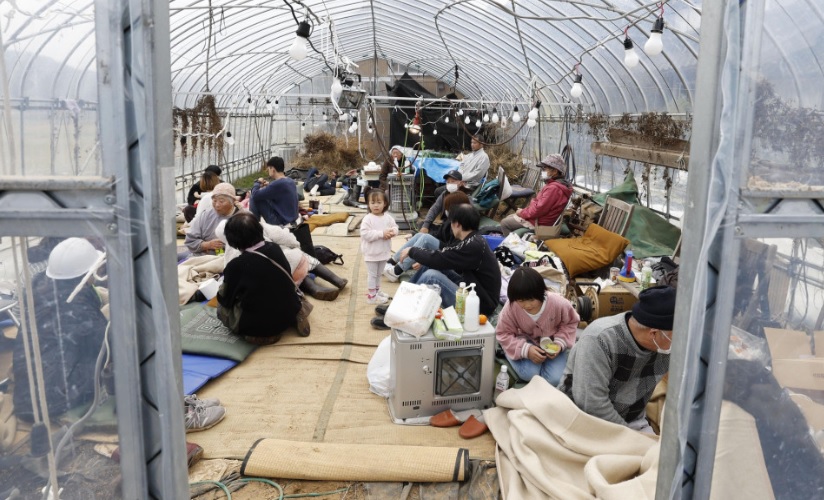
Evacuees are seen inside a greenhouse in Ishikawa Prefecture, Japan, on January 2, 2024. Photo: Reuters
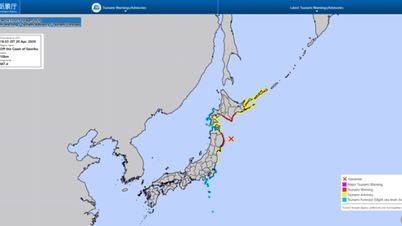
A tsunami warning covering large areas along the Sea of Japan was lifted Tuesday morning, after the highest wave, at least 1.2 meters high, hit Wajima Port following the earthquake at 4:10 p.m. Monday.
In Wajima, a morning market was gutted by a massive fire that broke out on Monday. Officials in Ishikawa Prefecture said the blaze engulfed more than 200 structures in the central Wajima area, but it has since been brought under control.
The earthquake also caused injuries and damage to buildings in Niigata, Toyama, Fukui, and Gifu prefectures. Chief Cabinet Secretary Yoshimasa Hayashi said that as of noon Tuesday, the number of evacuees, including those in Ishikawa and Niigata, had reached 57,360.
Prime Minister Fumio Kishida said at a press conference, "It is very difficult for vehicles to access the northern area of the Noto Peninsula," adding that the central government is coordinating the transport of relief supplies by ship.
According to the Japan Meteorological Agency, the New Year's Day earthquake had its epicenter approximately 30 km east-northeast of Wajima, with a provisional depth of 16 km, reaching a maximum intensity of 7 on the country's scale.
The magnitude 7 earthquake was described as making it impossible for people to stand upright. The agency said the last such earthquake was recorded in Hokkaido in 2018.
Huy Hoang (according to Kyodo, Reuters, CNA)
Source





























![[Image] National Assembly discusses the implementation of the socio-economic development plan.](https://vphoto.vietnam.vn/thumb/1200x675/vietnam/resource/IMAGE/2026/04/20/1776696707422_ndo_br_img-20260420-185419-jpg.webp)
![[Photo] General Secretary and President To Lam meets with National Assembly delegates from ethnic minorities.](https://vphoto.vietnam.vn/thumb/1200x675/vietnam/resource/IMAGE/2026/04/20/1776696701056_a1-bnd-8331-3342-jpg.webp)































































Comment (0)