

University autonomy is an inevitable trend in the future. One of the biggest challenges for universities when they become autonomous is solving the problem of revenue generation while still retaining students. In the context of university autonomy, policies on loan support also need to be adjusted to better support students.
University autonomy: Many universities are forced to increase tuition fees to cover costs.
Associate Professor Hoang Van Hung, Director of Thai Nguyen University's Lao Cai branch, believes that university autonomy is one of the major challenges facing higher education institutions today. Understanding of university autonomy is not yet complete; each institution implements it differently, and some even try to force autonomy into impractical situations.
According to Associate Professor Hoang Van Hung, while previously the operations of universities mainly depended on the state budget, the transition to autonomy, coupled with budget cuts, difficulties in student recruitment, and weak local science and technology research programs, will directly impact annual revenue.
Furthermore, when universities become autonomous, they also face difficulties related to other legal regulations such as leasing land, facilities, and state-owned assets. Because of these difficulties, many institutions, after applying for autonomy for a few years, have withdrawn their financial autonomy applications.
“Currently, investment from the state budget remains the main source of revenue for higher education institutions, followed by tuition fees from students. Other sources of revenue during operation are very low. Therefore, when budget cuts are implemented, coupled with the unstable and uneven student enrollment across different disciplines at many universities, it leads to difficulties in achieving autonomy,” said Associate Professor Hoang Van Hung.
Dr. Pham Thanh Ha, Head of the Undergraduate Training Department at the University of Transport and Communications, believes that with the trend towards university autonomy, the state will cut the regular budget allocation for universities. Therefore, many universities will be forced to increase tuition fees to compensate for these costs. While this will initially create difficulties for students, in the long run, once tuition fees are sufficient to cover expenses, this budget allocation will help improve the quality of education, the qualifications of lecturers, and the capacity of laboratories. University autonomy will therefore also benefit society more by providing a generation of high-quality human resources.
"Currently, the University of Transport and Communications is not yet autonomous, so the tuition fees are quite attractive to prospective students. From 2025, the university will transition to autonomy. However, the university will also conduct assessments to develop solutions to ensure funding for operations; increasing tuition fees is one solution, but not the first one."
"We are evaluating various other resources, as well as taking into account the affordability of students, given that the majority of our students come from rural areas. The University of Transport will be very cautious about tuition fees," said Dr. Pham Thanh Ha.
The Head of Training at the University of Transport also stated that increasing university tuition fees during the autonomy process requires a roadmap and careful calculation; it's unacceptable for tuition fees to be 10 million VND this year and then increase to 40 million VND next year. Universities need to carefully consider tuition fees; excessively high increases will negatively impact student choices and are generally not beneficial to the universities.
Tuition fees are rising, and student loan support is low.
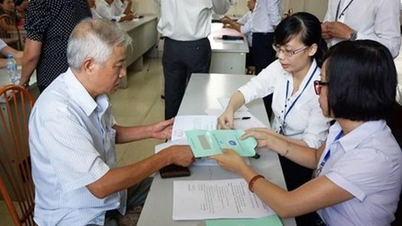
Amidst the recent sharp increase in university tuition fees, many students have reported seeking student loan options, but the loan amounts are not sufficient to meet their academic and living expenses in the city.
Associate Professor Hoang Van Hung, Director of Thai Nguyen University, believes that policies on preferential student loans have been implemented in many countries. In Vietnam, after 17 years of implementation, the policy has also created positive changes among students. To ensure students, especially those from disadvantaged areas, have good access to this funding during their studies, it is necessary to overcome some existing problems such as limited loan capital and banks imposing too many restrictive mechanisms and conditions, making it difficult for students, particularly those in mountainous regions, to access loans.
Furthermore, during implementation, there was a lack of close coordination and commitment between banks, schools, and local authorities, which would have made it difficult to resolve debt issues and recover debts easily in case of problems.
According to Dr. Tran Khac Thac, Head of Training Department at the Water Resources University, the loan amounts offered by student support funds are currently quite modest. While the support is based on tuition fees, students actually need to cover a larger portion of their monthly living expenses. Because of this modest support, many students are hesitant to access loans. Only when the loan amount is increased to cover both living expenses and tuition fees will it become truly attractive to students.
"The problem lies in the flawed policies, not in the lack of student demand. Many students want to borrow funds, but the procedures for receiving support are complicated, and the loan amounts are low, so they often look for other solutions," said Dr. Tran Khac Thac.
Source: https://vov.vn/xa-hoi/tang-hoc-phi-khi-tu-chu-dai-hoc-can-tinh-toan-than-trong-post1122062.vov

![[Photo] Prime Minister Pham Minh Chinh receives the Governor of Tochigi Province (Japan)](/_next/image?url=https%3A%2F%2Fvphoto.vietnam.vn%2Fthumb%2F1200x675%2Fvietnam%2Fresource%2FIMAGE%2F2025%2F12%2F16%2F1765892133176_dsc-8082-6425-jpg.webp&w=3840&q=75)
![[Live] 2025 Community Action Awards Gala](/_next/image?url=https%3A%2F%2Fvphoto.vietnam.vn%2Fthumb%2F1200x675%2Fvietnam%2Fresource%2FIMAGE%2F2025%2F12%2F16%2F1765899631650_ndo_tr_z7334013144784-9f9fe10a6d63584c85aff40f2957c250-jpg.webp&w=3840&q=75)
![[Image] Leaked images ahead of the 2025 Community Action Awards gala.](/_next/image?url=https%3A%2F%2Fvphoto.vietnam.vn%2Fthumb%2F1200x675%2Fvietnam%2Fresource%2FIMAGE%2F2025%2F12%2F16%2F1765882828720_ndo_br_thiet-ke-chua-co-ten-45-png.webp&w=3840&q=75)
![[Photo] Prime Minister Pham Minh Chinh receives Lao Minister of Education and Sports Thongsalith Mangnormek](/_next/image?url=https%3A%2F%2Fvphoto.vietnam.vn%2Fthumb%2F1200x675%2Fvietnam%2Fresource%2FIMAGE%2F2025%2F12%2F16%2F1765876834721_dsc-7519-jpg.webp&w=3840&q=75)

























































































Comment (0)