

Discussing the draft Resolution of the National Assembly regarding breakthrough mechanisms for the work of protecting, caring for and improving people's health at the National Assembly on the morning of December 2, many delegates were interested in proposing to exempt tuition fees for medical students, because the current reality is that training doctors takes a long time, tuition fees are high, beyond the ability of many middle- and low-income families.
Regarding this issue, in an interview with VTC News, National Assembly member Tran Khanh Thu ( Hung Yen delegation) said that the proposal to add medical students at public institutions to the group of subjects receiving tuition support during the training period, along with a commitment to work as assigned by the State after graduation, aims to solve the problem of human resource shortage.
"The medical profession at public schools has always had the highest standard score in the past 10 years. The study time is long, the tuition is high because public schools operate financially autonomously, the main source of income is tuition. Tuition fees at all schools are high, beyond the ability of low-middle income families. This becomes a barrier for many students who want to pursue a medical career," said National Assembly member Khanh Thu.
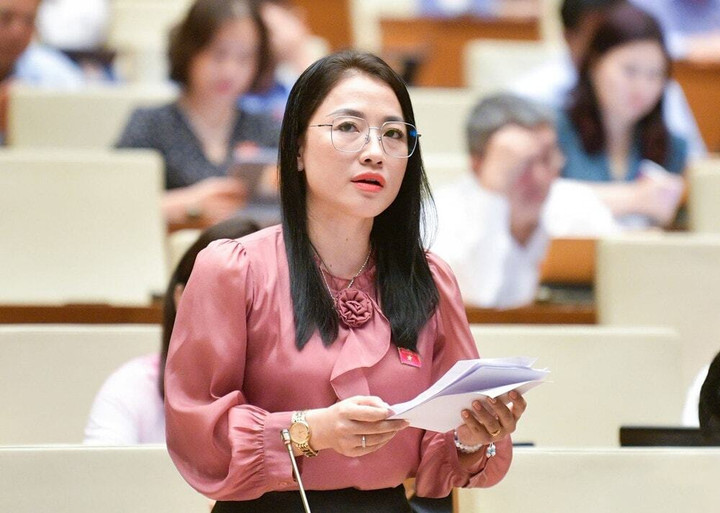
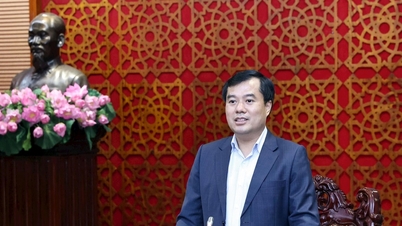
National Assembly Delegate Tran Khanh Thu (Hung Yen delegation).
Ms. Thu cited a report from the Ministry of Health showing that the country has 214 medical human resource training facilities, including 66 universities (18 public schools training medical doctors). In 2024, nearly 11,300 doctors will graduate, but this number is still "insignificant", when the total medical workforce is about 431,700 people, much lower than the target of 632,500 people according to the medical human resource planning for the period 2011-2020.
Currently, the need for doctors, especially at the grassroots level, is urgent. More than 3,300 commune health stations nationwide need 4-5 doctors each from now until 2030. National Assembly member Khanh Thu said this is an important reason to calculate the most effective tuition support policy.
National Assembly Deputy Tran Khanh Thu proposed 3 proposals on tuition support for medical students, including: Exemption of tuition fees for students with difficult circumstances (fully confirmed); Support of 70% of tuition fees for medical students at public schools, similar to the mechanism currently applied to nurses, technicians or laboratory workers. Finally, it is necessary to clarify the scale of support, avoiding lumping all health sectors together, causing the total state budget expenditure to increase too high.
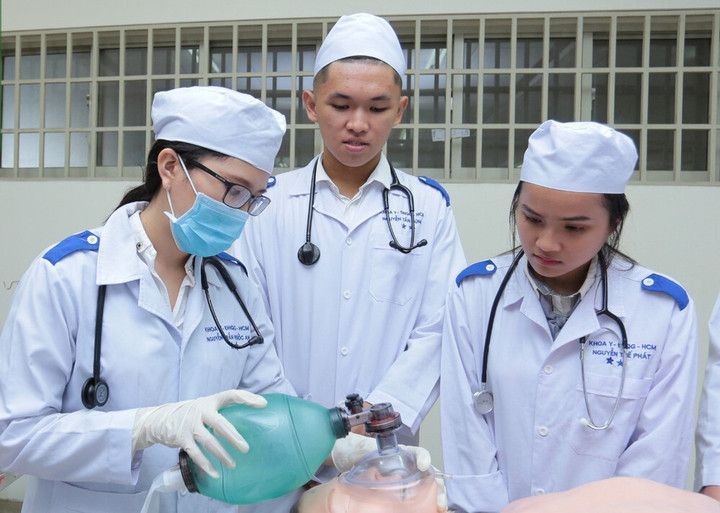
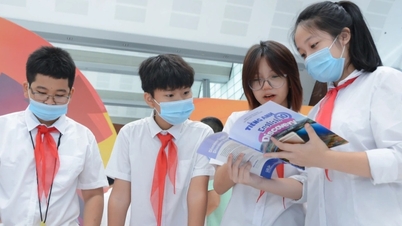
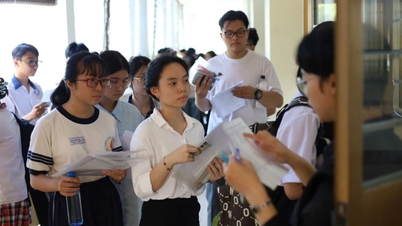
Many opinions believe that exempting tuition fees for medical students helps remove barriers to access to education and build a team of quality doctors for the future. (Illustration photo)
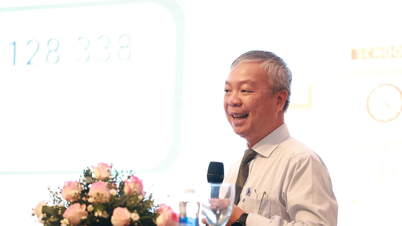
Meanwhile, Mr. Pham Van Hoc - Chairman of the Board of Members, General Director of Hung Vuong Healthcare System, assessed that the proposal to exempt tuition fees for medical students "goes against" the market mechanism and could cause many consequences in training.
Mr. Hoc gave three main reasons. First, education and training in the context of a market economy is a type of service, and must comply with the principle of equality between public and private schools and between the medical industry and other industries. Returning to a subsidized mindset is inappropriate and even slows down development.
Second, the policy of free tuition sounds simple, but its implementation is complicated and difficult. If the mechanism is not designed appropriately, it can create a mentality of dependence for both students and teachers.
In addition, a series of important questions remain unanswered: "To what extent will tuition be exempted?"; "Will only tuition be exempted or will living expenses such as food, accommodation, and travel be exempted?"; "Who will be responsible for paying and monitoring the funding source?";...
Third, Mr. Hoc believes that there is no need to exempt tuition fees because the social mechanism is self-regulating. People who love the medical profession will find a way to overcome difficulties to pursue their goals, not because of exempt tuition fees that they love the profession more or switch from another field to the medical field.
Explaining the risks, Mr. Pham Van Hoc asked: What should be done if students study for 2-3 years and then drop out of the bachelor's program? When "tuition is subsidized" and employment is guaranteed, learning motivation and training quality can be affected. Students can both study and play, as long as they have a job after graduation, which directly affects the quality of the medical staff. Meanwhile, if students pay for their own expenses, they will be motivated to strive, hone their skills and expand their job opportunities, thereby earning higher income.
In fact, at public schools today, student tuition fees are only a very small part of the total training costs. Most of the costs are covered by the State budget. Facilities, equipment and training systems are all public assets, but upon graduation, students are not subject to any constraints and can choose to work at public hospitals, private hospitals or abroad. Therefore, it is necessary to legalize training packages according to the "correct calculation - sufficient calculation" mechanism.
"For example, the training fee for a 6-year general practitioner is about 1 billion VND; for a specialist I is about 300 million VND; for a specialist II is about 400 million VND. Students who can pay the full training fee have the right to choose their workplace after graduation. On the contrary, students who cannot pay are still trained but have their tuition fees recorded in arrears. Universities (both public and private) have the right not to grant degrees if students have not fulfilled their financial obligations," Mr. Pham Van Hoc proposed.
When hospitals want to accept students, they will pay the remaining tuition fees to the school. The payment is divided according to the academic results: Excellent is 1.3 billion VND; Fair is 1.2 billion VND; Average is 1.1 billion VND.
Mr. Hoc believes that this mechanism can both motivate students and lecturers and ensure transparency and efficiency in medical training.
In your opinion, should medical students be exempted from tuition fees? Please leave your comments and specific solutions in the comment box below.
Source: https://vtcnews.vn/tranh-luan-ve-de-xuat-mien-hoc-phi-cho-sinh-vien-y-khoa-ar991004.html


![[Photo] Cat Ba - Green island paradise](/_next/image?url=https%3A%2F%2Fvphoto.vietnam.vn%2Fthumb%2F1200x675%2Fvietnam%2Fresource%2FIMAGE%2F2025%2F12%2F04%2F1764821844074_ndo_br_1-dcbthienduongxanh638-jpg.webp&w=3840&q=75)





















































































Comment (0)