FlyNow Aviation's eCopter model promises to offer passengers a cheaper and simpler option for city travel.
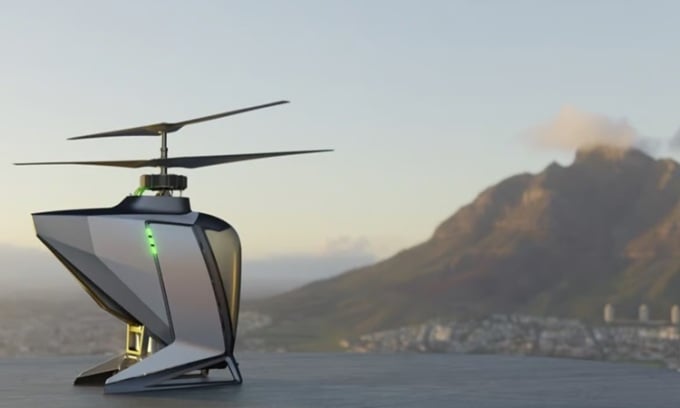
eCopter uses an autonomous flight system based on pre-programmed flight patterns. Photo: FlyNow Aviation
Several companies are currently developing electric vertical take-off and landing (eVTOL) flying taxis, most of which resemble larger versions of quadcopter drones. However, the eCopter has a different design that makes it more likely to be practical, New Atlas reported on February 10.


Developed by the Austrian startup FlyNow Aviation, the self-driving eCopter features a coaxial electric drive system incorporating two counter-rotating rotors. This arrangement allows the vehicle to be classified as an electric helicopter by the European Union Aviation Safety Agency. According to FlyNow, because the eCopter falls under the current classification category, obtaining permits will be much faster and simpler than for multi-rotor flying taxis similar to drones.
Additionally, coaxial drive systems contain fewer moving parts and less hardware overall, resulting in reduced weight, material costs, and complexity. As a result, compared to most other flying taxi models, eCopters are cheaper to manufacture, sell, and use, while also offering better battery range.
FlyNow plans to offer single and double passenger versions, along with a cargo version. All three are based on a common platform, meaning each vehicle doesn't need to be redesigned or rebuilt from scratch, thus reducing costs. Ultimately, FlyNow hopes the eCopter's taxi fares will be not significantly different from what users pay for traditional taxis.
Although FlyNow does not yet have a flightable prototype, the company has successfully conducted ground tests with a fully equipped, full-scale proof-of-concept model. The company estimates that all three versions of the eCopter will have a range of up to 50 km, a cruising speed of 130 km/h, and a maximum payload of 200 kg.



According to Jürgen Greil, CEO of FlyNow, commercial production of the eCopter is expected to begin in 2026. The cargo version will be produced first due to its easier licensing process, followed by two passenger versions.
An Khang (According to New Atlas )
Source link