

To realize the 'dream' of flying taxis, many believe that a specific, systematic investment strategy tailored to the realities of Vietnam is needed.
Recently, the People's Committee of Binh Dinh province proposed a pilot project for flying taxis in the province, which has rekindled interest in this new mode of transportation.
eVTOL (electric vertical take-off and landing) flying taxis are helicopter-like aircraft that take off and land vertically, powered by electricity, and can carry 4-5 people. The vision of a future for flying taxis, first mentioned in the 1960s cartoon series The Jetsons, in which cars fly instead of being driven, may be getting closer, as many countries have officially joined this race.
According to statistics, hundreds of technology companies in countries around the world are currently working to develop this type of vehicle, believing that flying taxis will gradually replace outdated traditional vehicles.
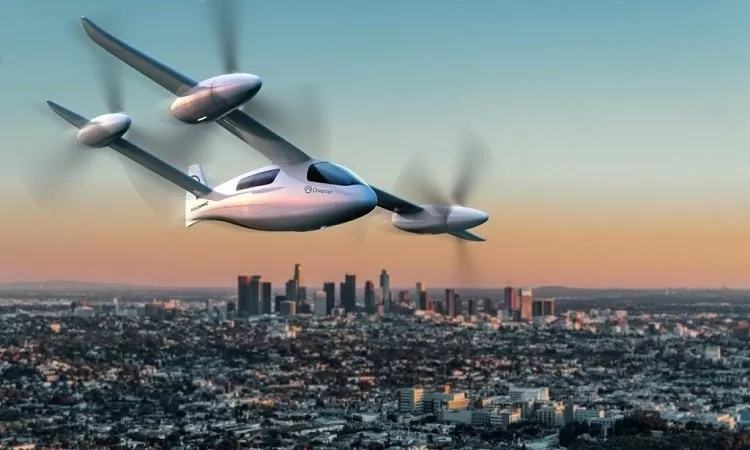 |
| Overair, a California-based company, is currently undergoing testing with its Butterfly electric taxi prototype. (Photo: Overair) |
Thanks to technological breakthroughs, over the past decade, propeller-driven drones have shown an incredible transformation and are poised to become a reality in major cities such as Dubai (United Arab Emirates) and New York (USA). More recently, the UK Department for Transport has announced plans to bring the first eVTOLs to London, with a target of as early as two years from 2024.
Recognizing the potential of this new "territory," many technology companies are accelerating their efforts to reach the finish line, with numerous aircraft models being developed and undergoing testing. Supporters of flying taxis believe this is a cleaner alternative to fossil fuel-burning jets for passenger transport. Although many countries around the world have invested in this type of service, none are currently operating commercially due to a lack of legal framework.
To help realize the "dream" of flying taxis, the US Federal Aviation Administration (FAA) recently issued what is considered the final regulation on the operation of flying taxis and their operators. Mike Whitaker, head of the FAA, emphasized that "flying taxis will be humanity's first new type of aircraft in 80 years since the invention of the helicopter."
However, a current concern is that, despite incorporating advanced technology and numerous superior features, the production costs remain high (some models cost over $1 million). Consequently, the price of flying taxis will be unaffordable for low-income earners, making them only suitable for high-income individuals. Although there isn't an exact figure yet, given the competition among manufacturers and the clear legal framework, the price of flying taxis could potentially meet the expectations of the majority of the population.
In Vietnam, Binh Dinh province recently developed a pilot project for flying taxis. The Ministry of Transport subsequently responded, stating that it supports localities in researching and implementing suitable and safe modes of transportation, including flying taxis, creating an advanced and modern mode of transport to build image and develop tourism .
However, experts point out that when Vietnam develops this type of vehicle, it needs its own set of technical standards for flying taxis. These standards relate to flight safety and the safety of the aircraft itself, meeting stringent technical requirements. Therefore, this requires considerable time and research by leading experts. In particular, Vietnam needs to learn from the experiences of countries like the United States and some European countries, and refer to international framework standards.
Furthermore, piloting flying taxis requires certain technical infrastructure conditions. To set a longer-term goal of commercial flying taxi services, regulatory agencies need to assess the opportunities, scale, and market potential of the flying taxi industry. This will help determine Vietnam's capacity and competitiveness, leading to the development of a specific and systematic investment strategy.
According to transportation experts, flights of this type must have fixed flight paths, and aviation safety issues need to be considered very carefully. As Associate Professor Dr. Nguyen Thien Tong - former Head of the Department of Aeronautical Engineering at Ho Chi Minh City University of Technology - recommended , "Air taxi flight paths should be planned like establishing a road bus network. It's an elevated highway, an elevated bus system for each city. Passengers can go to the flight points to choose a suitable route."
Although investment in this type of transportation is still in its early stages in Vietnam, there are no regulations yet governing its management and operation. Therefore, the challenge is that research and development of flying taxis, as well as other types of transportation, requires a safe and sustainable roadmap with cautious, scientific, and rigorous steps.
Source: https://congthuong.vn/cuoc-dua-taxi-bay-tren-the-gioi-va-bai-hoc-kinh-nghiem-cho-viet-nam-365183.html


































![[Video] The craft of making Dong Ho folk paintings has been inscribed by UNESCO on the List of Crafts in Need of Urgent Safeguarding.](https://vphoto.vietnam.vn/thumb/402x226/vietnam/resource/IMAGE/2025/12/10/1765350246533_tranh-dong-ho-734-jpg.webp)
































































Comment (0)