

With 86 pages, "Tet in Truong Sa, My Homeland" is structured as a collection of short stories and poems for children, with the central character being 6-year-old Hat Dua, a "little citizen" born and raised in the Truong Sa archipelago.
Through the innocent and pure voice of Hạt Dưa (Watermelon Seed), the book unfolds before the eyes of children on the mainland a Tet holiday amidst the waves and winds, both familiar and new, simple and sacred.
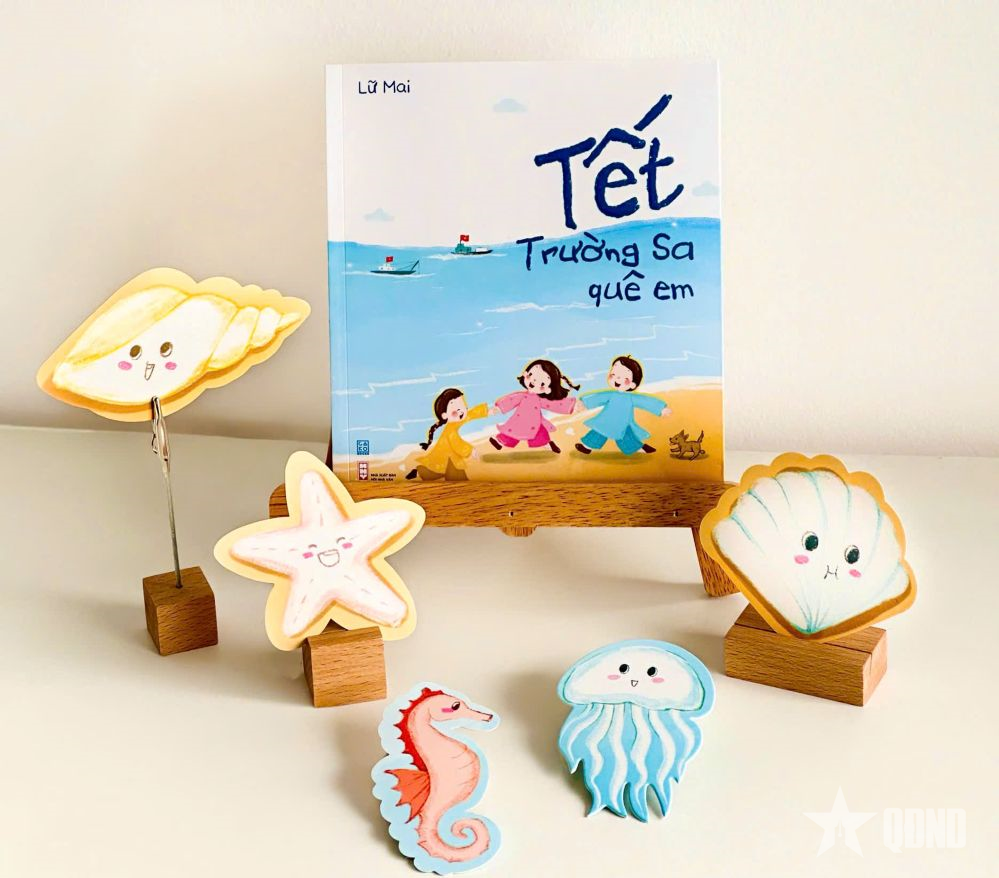 |
"Tet in Truong Sa, My Hometown" is structured as a collection of short stories and poems for children, with the central character being a little girl named Hat Dua (Watermelon Seed). |
In the trend of children's books with the theme of Tet (Vietnamese Lunar New Year), "Tet in Truong Sa, My Homeland" opens up a space for Tet on a remote island with unique perceptions of the colors, rhythms, and beauty of nature and people.
Aesthetically, the poetry collection primarily uses white, blue, and pink. White represents clouds, sand, coral, and pristine mornings; blue represents the sea, the sky, the navy uniform, and unwavering faith; and pink represents cherry blossoms, the morning sun, and the whimsical dreams of childhood on the waves. These gentle, clear colors, filtered by the sea breeze and spring sunshine, create a pure, peaceful world of Tet (Vietnamese New Year), very close to the sensibilities of childhood.
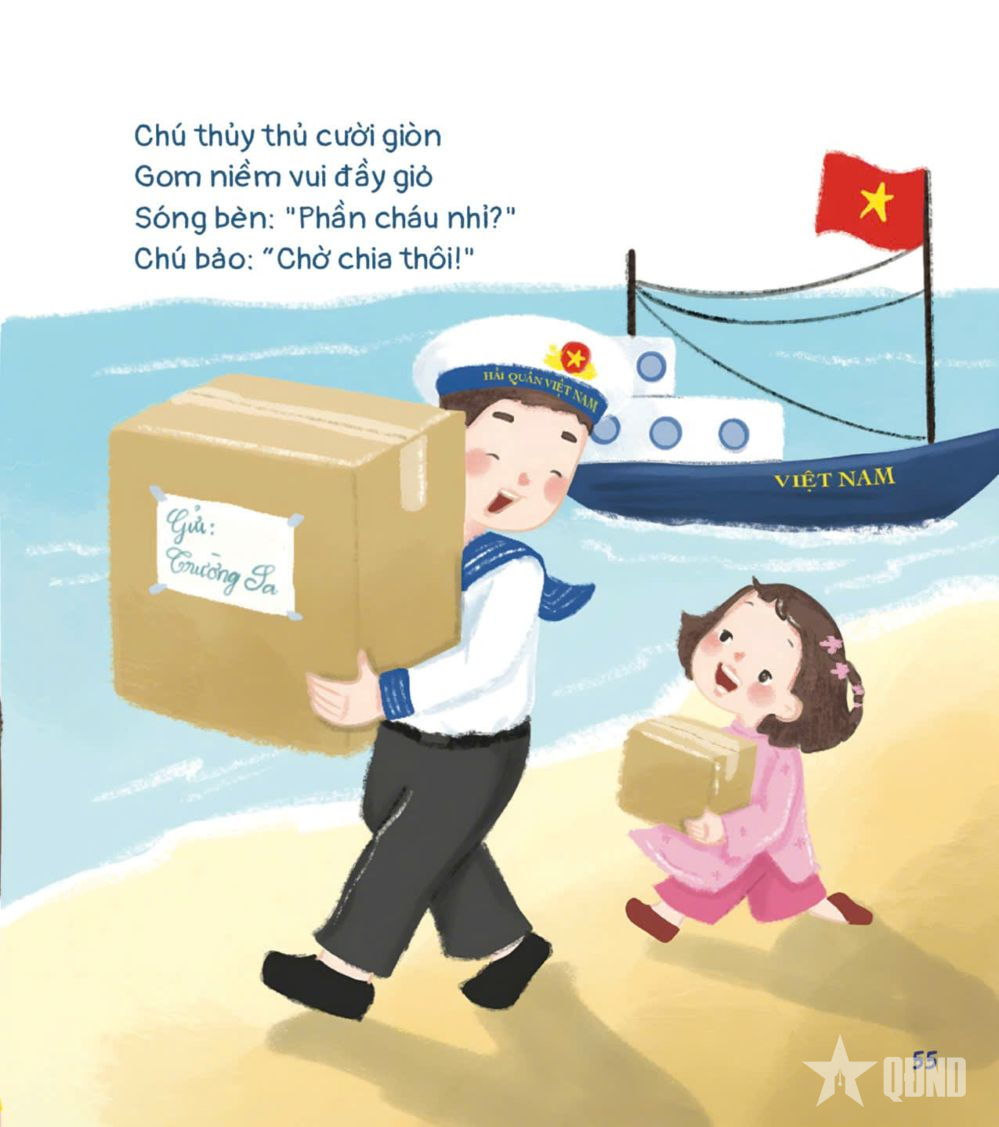 |
| Each poem is like a gentle wave, softly caressing the souls of children and then spreading naturally. |
The four-word and five-word verse forms, consistently chosen by poet Lữ Mai, create a flexible, playful, clear, easy-to-read, easy-to-remember, and easy-to-sing rhythm.
Each poem is like a gentle wave, softly caressing a child's soul and then spreading naturally. The short length of the poems allows for clear, evocative imagery, perfectly matching a child's observational and perceptive rhythm, while maintaining the necessary subtlety for a book rich in poetic quality.
The text and illustrations breathe, the composition is airy, allowing the colors and rhythm of the poetry to support each other. Each page is like a window opening onto the tranquil, bright, and gently floating sea and islands. Children can read the poetry and "stroll through the poetry," enjoying the Tet atmosphere at the forefront of the waves with both their sight and emotion.
The poems in this collection guide the reader through familiar images of Tet (Vietnamese New Year) that nonetheless reflect the spirit of the islands: wrapping banh chung (traditional rice cakes) amidst the salty sea breeze; peach blossoms swaying in the waves at the pier; a five-fruit platter different from that of the mainland, containing both "real and fake" fruits; a peculiar New Year's pole reaching high in the Trường Sa sun and wind; lanterns lit in the twelfth lunar month; ships bringing Tet gifts from the mainland to the islands; the vibrant red national flag against the blue sky; a Tet feast by the waves, where people and the sea gather together, yet still yearn for those far away...
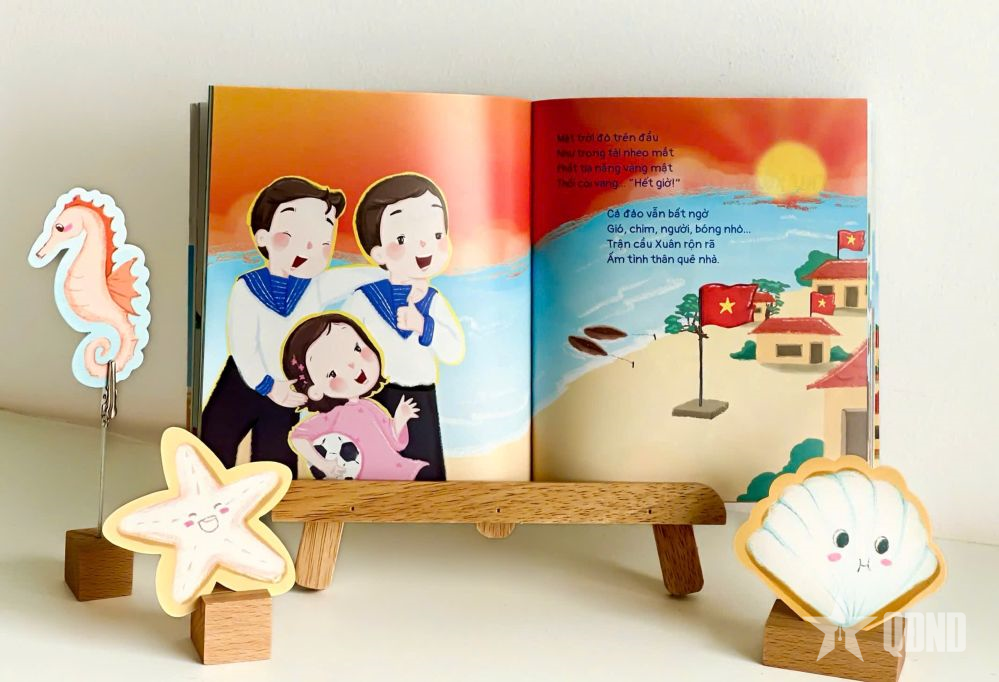 |
| Tet in Truong Sa, as depicted in Lu Mai's poetry, appears simple and peaceful. |
Tet in Truong Sa, as depicted in Lu Mai's poetry, appears simple, quiet, and warm, warmed by camaraderie, family, and unwavering faith in the beloved homeland.
The unique aspect of "Tet in Truong Sa, My Hometown" lies in its choice of narrative perspective. Poet Lu Mai doesn't take the position of an adult to "explain" Truong Sa to children, but instead adopts the role of a 6-year-old girl named Hat Dua as the narrator. Hat Dua recounts Tet on the island using childlike language: innocent, surprised, sometimes whimsical, and at many moments of poignant emotion. This is what makes Truong Sa feel so familiar, like a small, bustling hometown filled with laughter and nostalgia.
The clear, pure verses convey a message about the enduring flow of values, subtly embedded by poet Lữ Mai, perfectly suited to the receptive rhythm of children while still possessing enough depth to move adults. Love for the homeland is expressed through familiar imagery: the red flag fluttering in the sea breeze, the ship carrying spring from the mainland to the island, the small island shining brightly amidst the vast ocean... offering children a relatable perspective: the homeland is visible, recognizable, and deeply connected to – it is an integral part of daily life on the distant islands.
Alongside this is a naturally evoked feeling of gratitude for the soldiers on the front lines. The poems place the soldiers in the context of Tet (Vietnamese New Year): standing guard by the waves, celebrating New Year's Eve far from home, defending the island in spring, and mingling with the people. This simple beauty helps children understand the value of peace, thereby fostering appreciation and gratitude. Within this same setting, the warmth of family affection is always present.
Despite being far from the mainland, Tet (Lunar New Year) in Truong Sa (Spratly Islands) still features family reunions, the embrace of adults, and the laughter of children. The families in the poetry collection are intertwined with love for the homeland, serving as a spiritual anchor. Throughout the collection runs a sense of community, an awareness of the blood-related bond between the islands and the mainland. Springtime journeys to the islands, Tet gifts crossing the waves, New Year's greetings bridging geographical distances... all blend together, creating a clear feeling that each spring on these distant islands bears the image of the homeland.
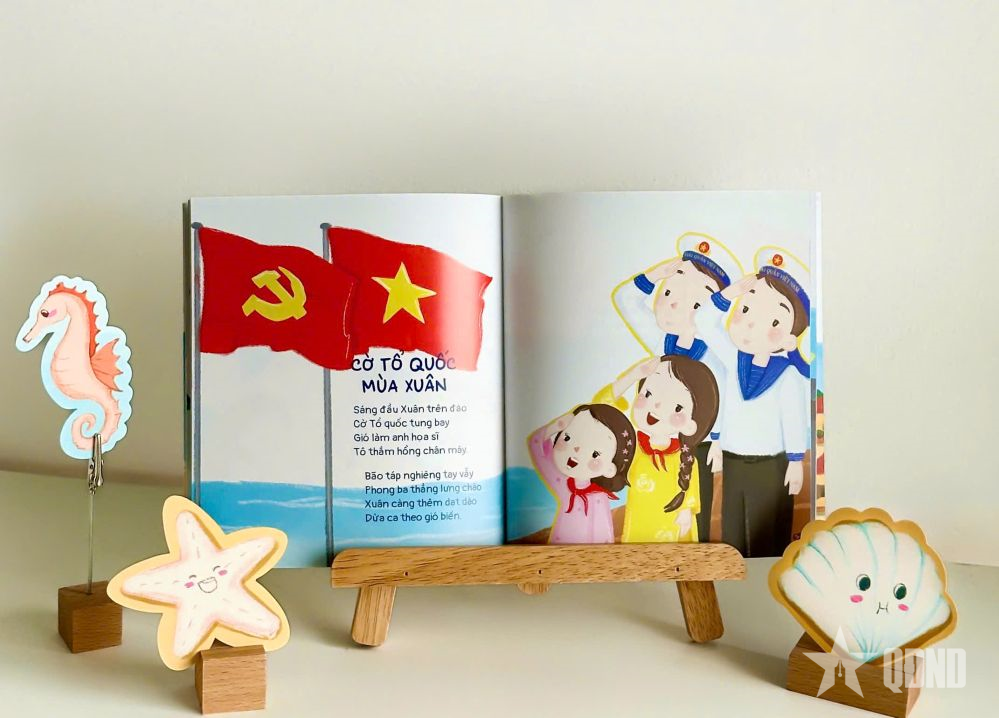 |
| In this collection of poems, family is intertwined with love for the homeland, serving as a source of spiritual support. |
Sharing her thoughts on the poetry collection, poet Lu Mai expressed: “I wrote this small book with the wish to portray Truong Sa as a beloved place, with children, families, spring, and Tet (Vietnamese New Year). When I think of children, I always believe that they perceive life through emotions. Therefore, from those small details, their faith and love will naturally sprout. The character of the little girl, Hat Dua (Watermelon Seed), was born from that wish.”
This character is also shaped by the prototypes of the children I met, talked to, and played with in Truong Sa. They grew up amidst the waves and winds, incredibly innocent and pure. Besides that, I always feel compassion for the Tet (Lunar New Year) celebrations of the soldiers on the remote islands. They "Guard the island so the people can celebrate Tet / Stand guard over the sea and sky so the Fatherland can enter spring," as the couplet for Tet at the forefront of the waves says. I hope readers can feel: To have a fulfilling Tet, there are those who silently stand guard amidst the spring."
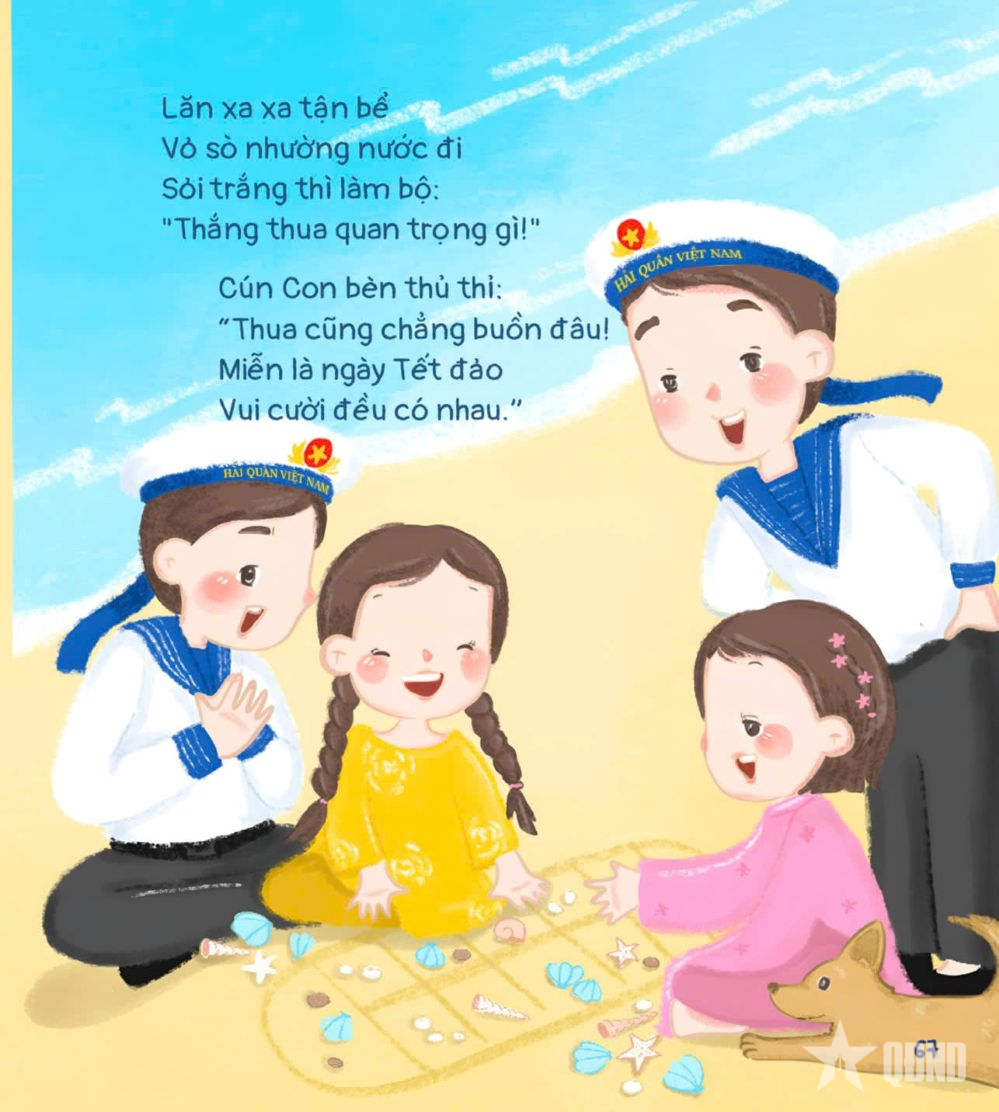 |
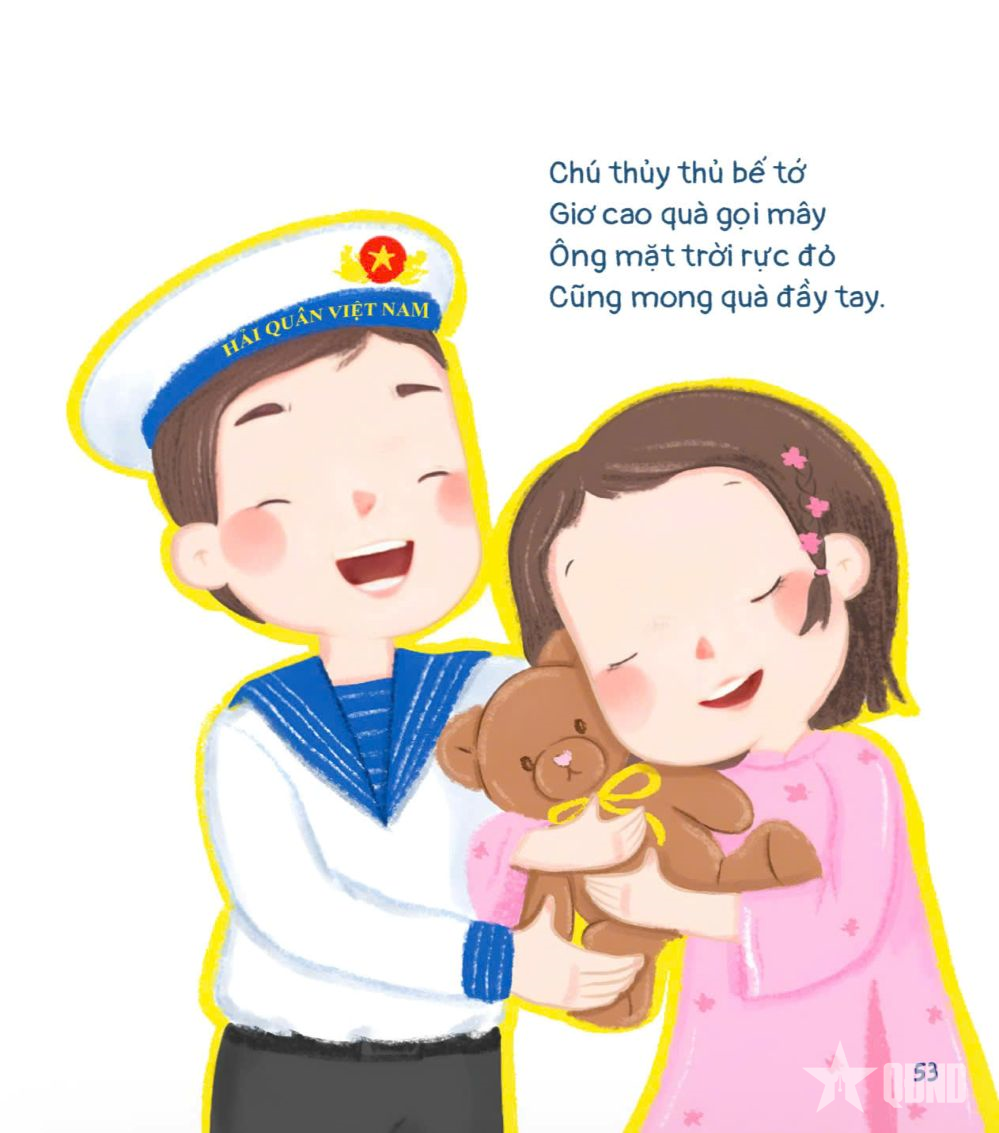 |
| The clear, pure verses subtly convey a message about the enduring flow of values, a message skillfully embedded by the poet Lữ Mai. |
Ms. Minh Man - Director of Communications at Thao Nguyen Culture and Communication Co., Ltd., and Production Director of the poetry collection project "Tet in Truong Sa, My Homeland," shared: "We hope that this book will truly become a lasting spiritual gift for children, helping them feel that Truong Sa is not far away, that Tet is Vietnamese Tet wherever they are, and that in today's peace there are countless people silently sacrificing and preserving it."
Carobooks chose to exclusively publish this work because of its high humanistic, educational , and aesthetic value, which also aligns with the company's direction of creating children's publications that are rich in depth and reflect Vietnamese identity.
Poet Lu Mai, born in 1988, currently works at Nhan Dan Newspaper and is a member of the Vietnam Writers Association, the Vietnam Linguistics Association, and the Hanoi Writers Association. She has published over 20 works covering diverse themes and genres. Among these, her writings on the sea, islands, and national sovereignty have always been a particular focus. Three of Lu Mai's representative works about Truong Sa (Spratly Islands) include: the epic poem "Crossing the Dawn," the collection of essays and notes "At the Forefront of the Waves," and "Eyes of the Open Sea." These works portray Truong Sa in its sacred sense of sovereignty and deeply reflect the lives of the people at the forefront of the waves, their silent sacrifices, and their yearning for peace . With these works, poet Lu Mai has won several awards: the Vietnam Writers Association's Award for Literature on Border and Island Themes from 1975 to the present; the Ministry of National Defense's Award for Literature, Arts, and Journalism on the Armed Forces and Revolutionary War Themes for the period 2020-2025; the Naval Command's Award for Literature, Arts, and Journalism for the period 2016-2020; and the General Political Department's Award. |
Source: https://www.qdnd.vn/van-hoa/van-hoc-nghe-thuat/tet-truong-sa-que-em-bai-hoc-ve-to-quoc-cho-tre-tho-1017044

![[Photo] Two flights successfully landed and took off at Long Thanh Airport.](/_next/image?url=https%3A%2F%2Fvphoto.vietnam.vn%2Fthumb%2F1200x675%2Fvietnam%2Fresource%2FIMAGE%2F2025%2F12%2F15%2F1765808718882_ndo_br_img-8897-resize-5807-jpg.webp&w=3840&q=75)





























































Comment (0)