

Halfway around the world from Hanoi , the Tet feast of Vietnamese people in Canada still includes pickled onions, chicken with lime leaves, and even coriander leaves for the end-of-year cleansing bath.
Tet, the Lunar New Year, is a time for warm family reunions. But for those who live far from home and cannot return due to studies or work, they are always searching for and preparing for the warmest and most fulfilling Tet possible for themselves and their families.
Remembering the "smell" of Tet
My first Tet holiday away from home was in 2000, when I was just 24 years old. Namur, the capital of the French-speaking region of Belgium, is a very small city with fewer than 500,000 inhabitants.
Twenty-five years ago, tourism was still underdeveloped here; Namur was primarily a university and industrial city. There were very few foreigners, no Asian markets or Vietnamese restaurants, and even Chinese restaurants were few and far between. In my first year away from home, the only Asians in the entire dorm were me and a friend from Shanghai; although we weren't studying the same major, we were quite close. In our free time, we often took the train to Brussels to buy Asian food.
The Asian New Year coincides with exam season, the time for postgraduate essay submissions. Eating bread and boiled eggs to get through the day is commonplace. However, on the afternoon of the 30th of the lunar year, I still felt a pang of loneliness and longing for the New Year's meal with my family, for the lingering scent of incense mingled with the aroma of fried spring rolls, bamboo shoot soup, and stir-fried pineapple... To satisfy this longing, for my first New Year away from home, my Chinese friend and I went to the city to call our families and then had a Chinese-style New Year's meal at a restaurant.
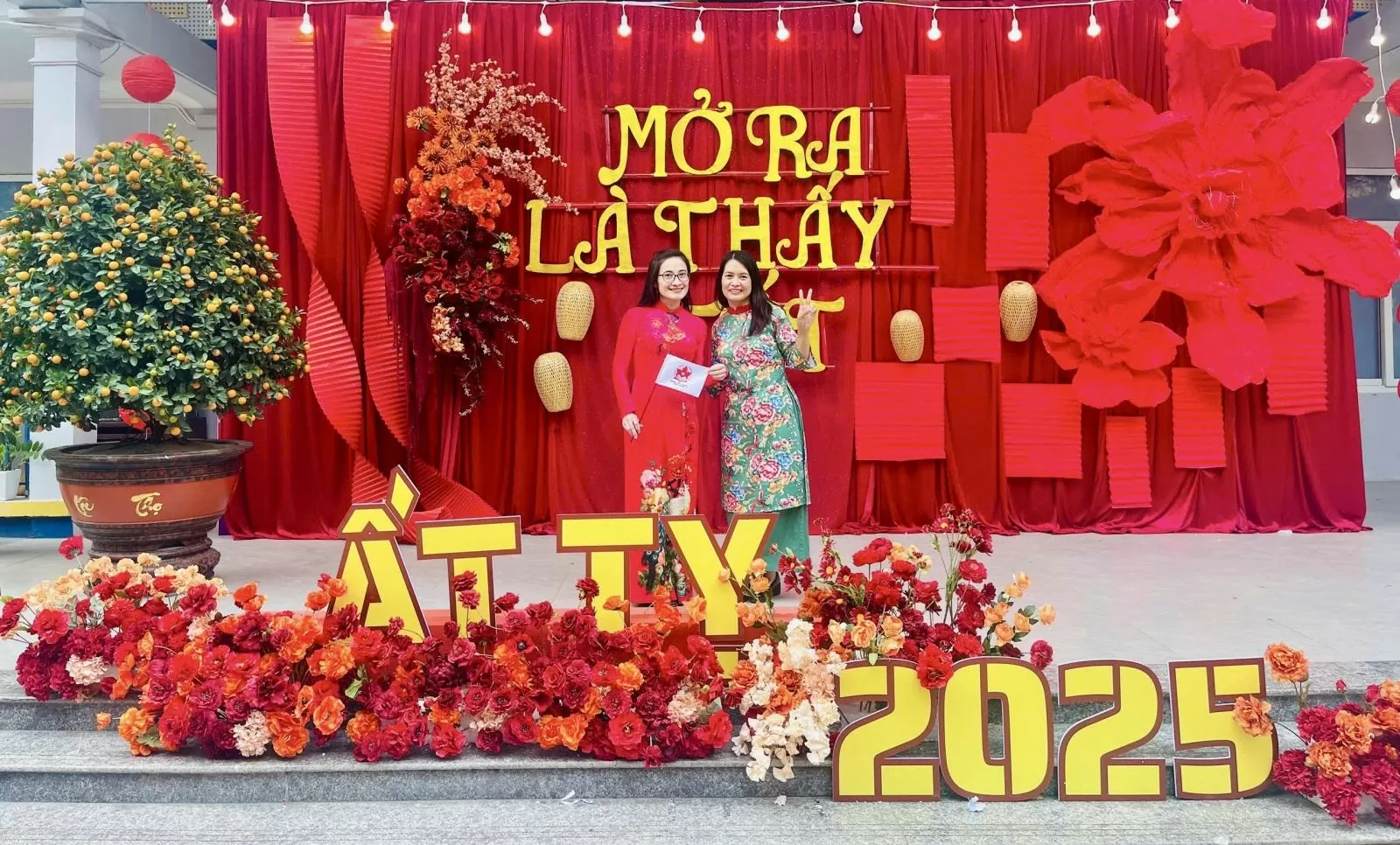 |
| Recreating scenes of the Vietnamese Lunar New Year in Canada. Photo: VNA |
Back then, mobile phones weren't common, and internet calls had to be made at internet cafes. On the afternoon of the 30th of Tet (Lunar New Year's Eve), the cafes were packed. For just 500 Belgian francs (about 300,000 VND), you could chat for about half an hour, so the two of us lined up and took a booth. Talking to my mother on the phone, I heard her saying I was craving fried sticky rice cakes, sweet soup, pickled onions, etc. My mother felt sorry for me and told me to make jellied meat to add a little Tet flavor and also to keep it longer. Leaving the booth, we hugged each other and cried. At this time, everyone at home was celebrating New Year's Eve, watching fireworks, while the shops and streets of Namur were quiet and deserted.
And we celebrated New Year's Eve in a foreign land with a Chinese-style New Year's meal at a restaurant. Upon entering, the owner, seeing that we were Asian, offered us a stack of red envelopes as a good luck gift. I didn't think twice and just pulled one out, while my friend hesitated before choosing. It turned out that, according to Chinese custom, each red envelope carried a special meaning. After dinner, my friend suggested we go to the train station to buy fireworks to enjoy the scent and set off some firecrackers on the edge of the ancient city wall. It wasn't just the two of us; many other Asians had gathered there. Being expats ourselves, we wished each other good fortune and shouted loudly to release the gloom of being alone in a foreign land.
No more sadness
The Lunar New Year of 2025 (Year of the Snake) will be a very special one for me in Canada. This is my third New Year's Eve in this multicultural country, but it's my first one abroad with all my family and loved ones by my side.
Lunar New Year is one of the most important festivals in Canada, where the Asian community makes up over 20% of the population. People of East Asian and Southeast Asian descent in Canada also celebrate the New Year with many similarities to the Vietnamese and other Asian ethnic groups according to the lunar calendar.
Every year, the Canadian Prime Minister delivers a televised address and sends New Year greetings to each Asian community in multiple languages: Vietnamese, Chinese, Korean, and more.
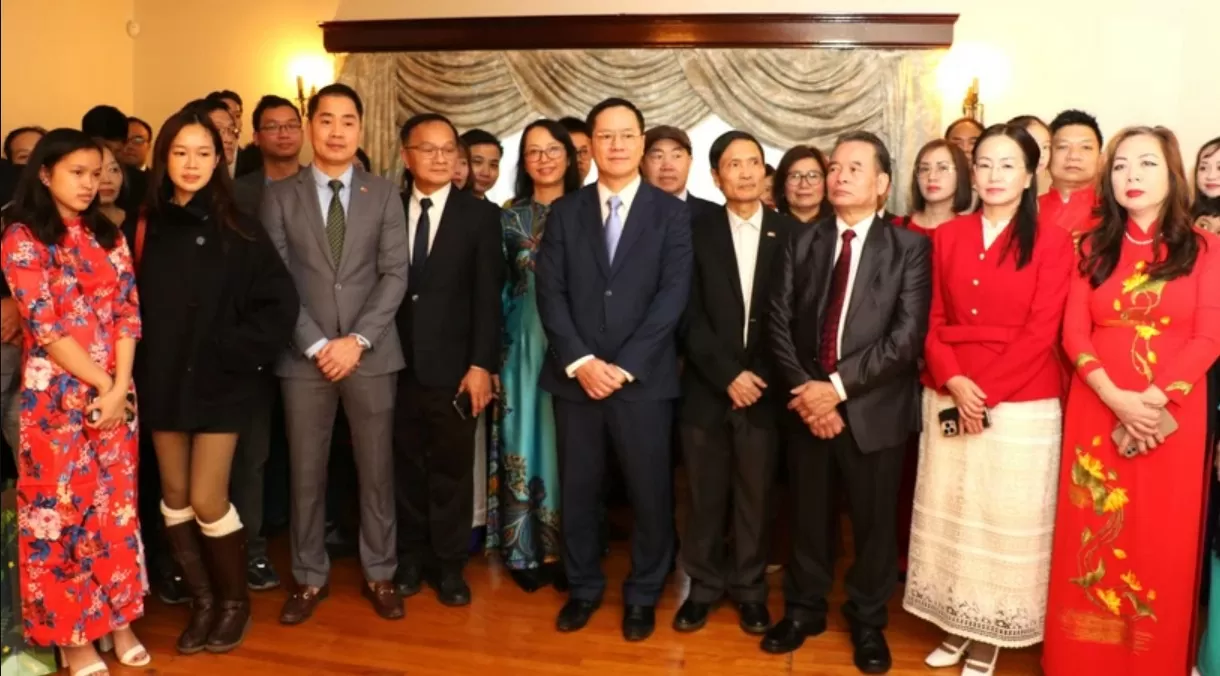 |
| Vietnamese Ambassador to Canada Pham Vinh Quang and Dr. Tran Thu Quynh - Commercial Counselor, Vietnam Trade Office in Canada (second from the right) and a large number of Vietnamese people attended the "Spring in the Homeland" event. (Photo: Trung Dung - VNA correspondent in Canada) |
From the beginning of the twelfth lunar month, people eagerly go shopping for plants, cleaning, and decorating their homes. The flower market here isn't as diverse as in Vietnam, but it still has plenty of apricot blossoms, peach blossoms, kumquats, orchids, and more.
In supermarkets, starting in early January, red-colored tableware, decorative lamps, couplets, red envelopes, and other Tet decorations are displayed in the most prominent sections. Many traditional Asian families also worship the Kitchen God, and from after the 23rd day of the 12th lunar month, offices, neighbors, and relatives begin to spend time giving Tet gifts.
Canadian friends and expatriates often send each other boxes of tangerines and pomelos, believing these fruits bring happiness, prosperity, and good fortune in the new year. The green-skinned pink pomelo from Vietnam, in particular, holds great significance during the Lunar New Year, symbolizing family reunion, well-being, and happiness in the coming year.
In response to the gifts our neighbors and partners often send us during Christmas, and also to promote Vietnamese culture, cuisine, and products, every year my children and I prepare Vietnamese specialties well in advance to send as gifts to teachers, neighbors, and friends.
Every Tet holiday, my mother and I sit together and wrap several hundred frozen spring rolls to send as gifts. For close Canadian friends, I also send sticky rice cakes with coconut jam, to introduce them to Vietnamese Tet specialties.
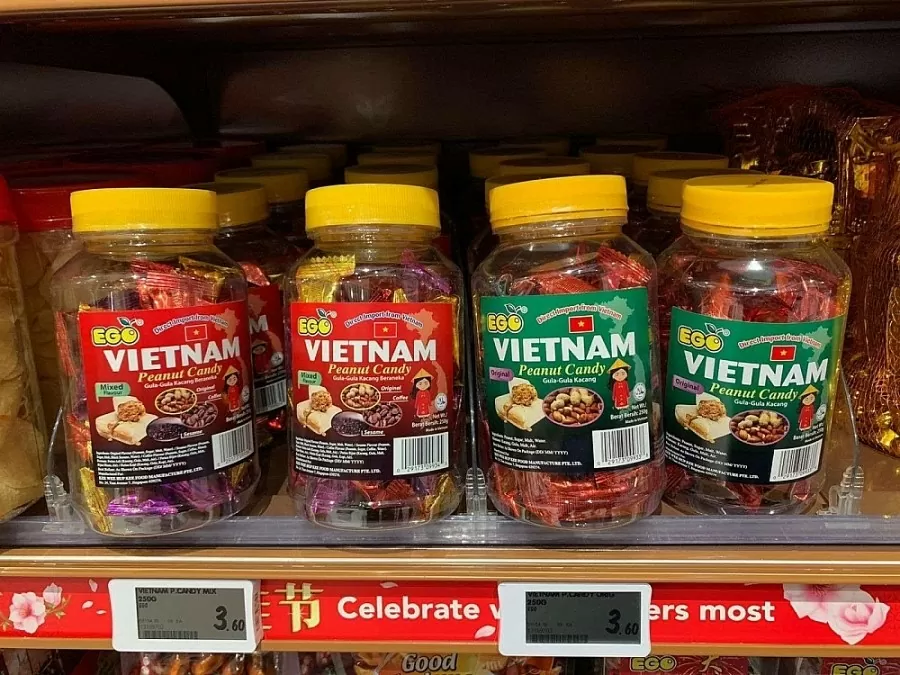 |
| Vietnamese peanut candy at a supermarket in Canada is on sale to celebrate Tet (Vietnamese Lunar New Year). |
For those of us working in overseas market development, the Lunar New Year is also a "suitable" opportunity to promote and introduce Vietnamese culinary products to government ministries, import associations, and diplomatic missions in Canada. In the Lunar New Year gift bags provided by the Vietnamese Trade Office in Canada, fish sauce, rice paper, shiitake mushrooms, peanut candy, cashews, dried fruit preserves, and coffee are always top choices.
Being half a world away from Hanoi, we are fortunate to celebrate New Year's Eve twice every year: first with wishes from family, colleagues, and friends back home, and then with colleagues and friends here. This year's Lunar New Year falls on a Canadian workday, so families usually hold their year-end gatherings and New Year's get-togethers on the weekend to wish each other a prosperous new year.
When in Rome, do as the Romans do. The family meals I host for friends and neighbors in Canada still include all the traditional Vietnamese New Year dishes, but they are prepared with Canadian ingredients, such as lobster pho, salmon spring rolls, grapefruit salad with Canadian beef jerky, and grilled scallops with maple syrup...
Canada is a multi-ethnic country with a large Asian population, so there's no shortage of things to celebrate the Vietnamese Lunar New Year. Even far from home, my family still has plenty of pickled onions, chicken with lime leaves, and even coriander leaves for the end-of-year cleansing bath. The most enjoyable aspect of the Lunar New Year for Vietnamese expatriates in Canada is probably the community gatherings. This is an opportunity for people from all over the country to come together and enjoy traditional Vietnamese New Year dishes: spring rolls, sticky rice with lotus seeds, banh chung (rice cakes), boiled chicken, and more.
This year, in particular, with the first-ever import of lychees into Canadian supermarkets, people can also enjoy lychee and coconut jelly dessert, evoking the flavors of home. Overseas Vietnamese groups and students are encouraged to participate in cultural performances and traditional ao dai fashion shows. Walking the catwalk in traditional attire to Vietnamese music will undoubtedly create unforgettable Tet memories for those living abroad.
Celebrating Tet (Vietnamese Lunar New Year) away from home is no longer a lonely and somber experience for me and many overseas Vietnamese. For twenty-five years, telecommunications technology and internet communication tools have become convenient and affordable. Direct flights between Vietnam and the world have also become increasingly common. International integration and Vietnam's position on the export map are becoming clearer. The spread of Vietnamese products has helped bridge the gap, fostering love and connection with the homeland among generations of overseas Vietnamese, filled with pride.
Dr. Tran Thu Quynh - Commercial Counselor, Vietnam Trade Office in Canada
Source: https://congthuong.vn/tet-tu-mot-noi-cach-viet-nam-nua-vong-trai-dat-371590.html
























































Comment (0)