

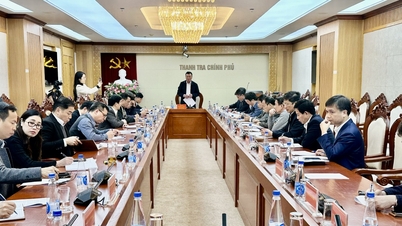
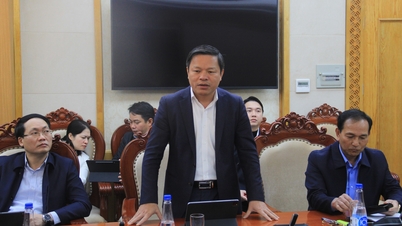
At the press conference, Mr. Ngo Dinh Long, Deputy Director of Department III and Head of the inspection team, presented the full text of Inspection Conclusion No. 528/KL-TTCP regarding the inspection of the new construction investment project for the second facility of Bach Mai Hospital and the new construction investment project for the second facility of Viet Duc Hospital.
According to the inspection report, the Government Inspectorate recommends that the Prime Minister direct the Minister of Health to conduct a review of responsibilities and take strict disciplinary action in accordance with the law against the Minister and Deputy Ministers assigned to oversee the two projects during different periods related to the violations and irregularities mentioned in the inspection report, and report to the Prime Minister. The Government Inspectorate transferred files and documents regarding cases with signs of violations of bidding regulations causing serious consequences as stipulated in Article 222 of the 2015 Penal Code to the Ministry of Public Security for consideration, investigation and handling according to regulations on 02 contents: (1) Regarding 04 consulting packages, there was intentional violation of the law on construction bidding in submitting for approval the policy of hiring a foreign consulting unit to prepare the project when the ability of domestic consulting units to meet the requirements was unclear, using the financial proposal and consulting costs for architectural project preparation prepared by the designated contractor for verification is contrary to regulations… (2) The bidding process for signing the contract for the Bach Mai 01 medical equipment package had many violations, especially signs of violations of prohibited acts in bidding, and discrepancies in the content of the bidding documents…
The Government Inspectorate has forwarded information to the Ministry of Public Security for consideration, investigation, and handling in accordance with the law regarding numerous violations of bidding and construction laws and related regulations…
In addition, the Government Inspectorate also made several recommendations related to the Ministry of Health, the Ministry of Construction , and the Ministry of Finance.
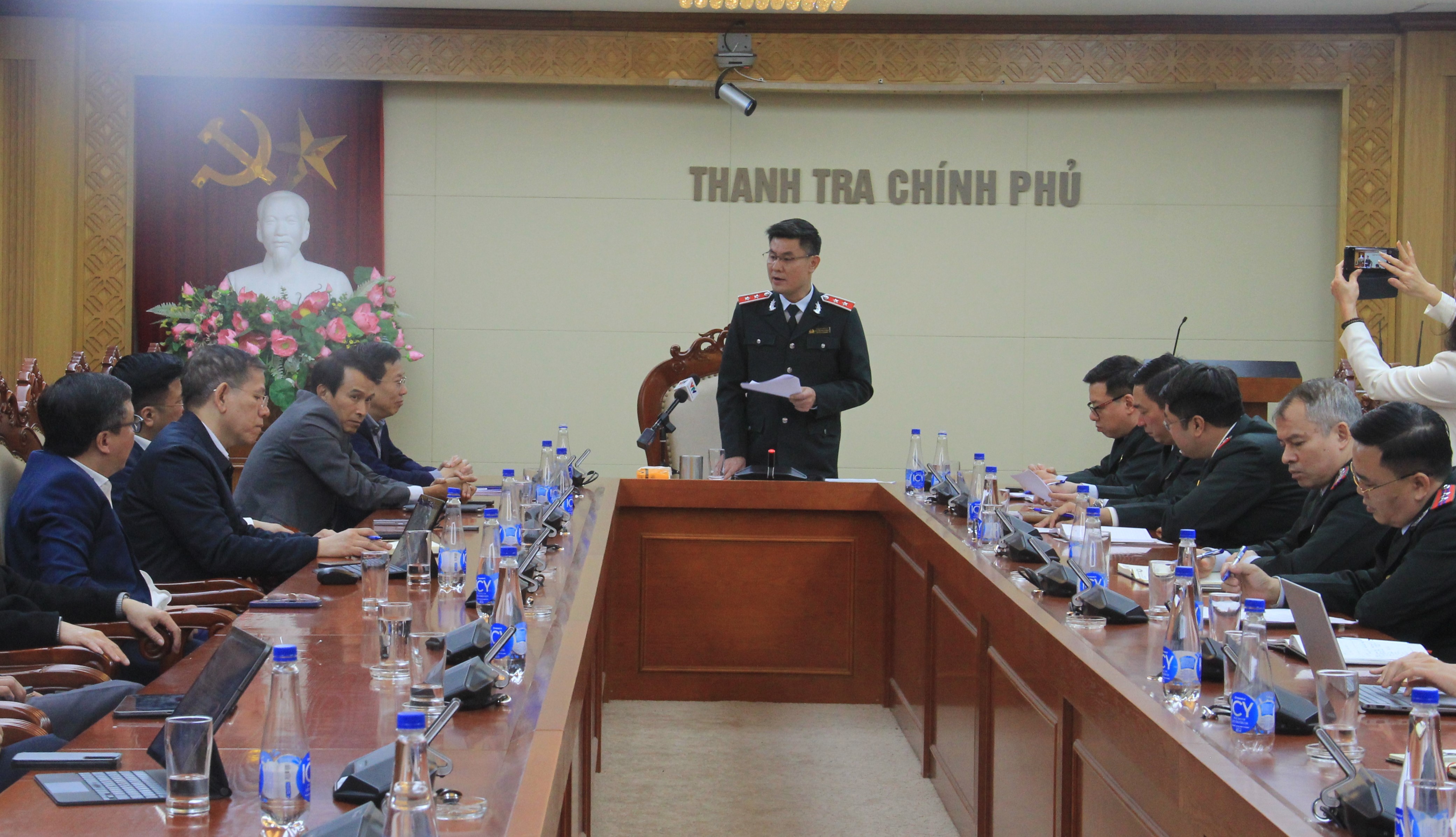
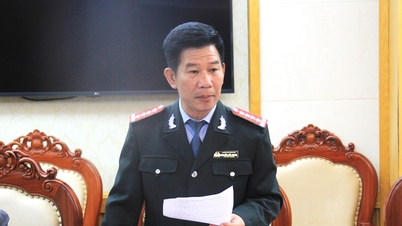
In his concluding remarks, Deputy Inspector General of the Government Nguyen Van Cuong stated that this was an unscheduled inspection conducted at the direction of the Central Steering Committee on preventing and combating corruption, waste, and negative phenomena; and specifically, General Secretary To Lam requested the Government Inspectorate to issue the inspection report before March 31, 2025, with high progress and quality.
Recognizing the importance of the assigned task, the Government Inspectorate promptly announced the inspection decision. The inspection period was short but very long (2014-2024); during this period, the legal system underwent many changes, with many regulations being repealed, amended, supplemented, or applied transitionally.
The inspection team had to undertake a massive amount of work, including examining and evaluating nearly 3,000 documents and comparing them with thousands of different old and new regulations. Given the nature of inspection work, this was a significant challenge.
The inspection took place before, during, and after the Lunar New Year of the Year of the Snake (2015), so all members of the inspection team had to set aside their family affairs and dedicate themselves wholeheartedly to their assigned tasks, demonstrating a very high sense of responsibility. Thanks to the efforts of the Inspection Team and the leadership of Department III, a high-quality inspection report was issued after only 59 working days.
Deputy Inspector General of the Government Nguyen Van Cuong shared that the image of two massive, imposing hospitals, which the State invested tens of thousands of billions of dong in but have been left abandoned and overgrown with weeds for the past 10 years, is a heartbreaking sight for the entire political system and society, and is a prime example of wasteful public investment.
In his article on combating waste, General Secretary To Lam clearly stated: “ Waste has been and is causing many serious consequences for development. Moreover, waste erodes people's trust in the Party and the State, creates invisible barriers to socio-economic development, and misses opportunities for national development .”
General Secretary To Lam's guiding viewpoint on the issue of waste is an extremely correct theoretical and practical basis. Recognizing the significance and importance of this issue, the Government Inspectorate leadership has requested the inspection team to achieve 5 clear points: (1) clear cause, (2) clear violation, (3) clear responsibility, (4) clear damage, and (5) clear waste .
According to Deputy Inspector General of the Government Nguyen Van Cuong, clarifying the value of waste is a very new requirement in the inspection of basic construction investment projects today, but it is an urgent requirement of society in the new situation, aiming to break down barriers to socio-economic development, so that our country can enter a new era, an era of national progress.
And the inspection team provided thorough and legally sound answers to the five points mentioned above, as evidenced in the inspection report.
The Deputy Chief Inspector affirmed that the inspection results showed systemic violations in the implementation of the two projects, with subsequent violations stemming from previous ones; subjective factors occurred in almost all stages, from investment preparation to investment implementation; from approving the policy and plan for selecting contractors; organizing bidding; selecting, signing, and implementing the contract packages. The signed construction contracts were unclear and did not comply with any regulations in legal documents on contracts in construction activities. Just eight days after signing the contract, a request for adjustment of the basic design was made. Construction began without technical design, construction drawings, or even cost estimates.
In particular, the value of waste discovered through inspections at the two projects amounted to trillions of dong, many times higher than the estimated loss of approximately 100 billion dong. This shows that the Party leader had accurately identified this problem early on and warned the entire political system and all levels of the people about it through an article titled "Combating Waste" in October 2024.
The phenomenon of "wastefulness" in these two projects is widespread, occurring in various forms, causing many particularly serious consequences. These include material consequences such as resource depletion and increased cost burdens due to inefficient management and use of public assets; and non-material consequences such as wasted opportunities for people to receive medical treatment; causing public concern; and eroding public trust in the Party and State's commitment to protecting and caring for people's health.
In its inspection report, the Government Inspectorate transferred the case file, which showed signs of criminal activity, to the Ministry of Public Security for investigation and handling in accordance with the law. Simultaneously, it analyzed the legal and scientific basis, compared it with practical realities to determine the value of the waste, and recommended that combating waste be given higher priority, changing ingrained perceptions and habits, so that this spirit spreads widely throughout the political system and among all segments of the population, aiming to prevent and deter this problem from an early stage and from afar.
In particular, it is necessary to revise and supplement the legal system to be truly complete and synchronized, from defining the consequences and value of waste to mechanisms for inspection, supervision, detection, and appropriate handling with high deterrent effect against acts of waste, as General Secretary To Lam affirmed: "To thoroughly address the causes of waste of public assets, the focus must be on strongly reforming the work of building, perfecting, and enforcing laws."
The inspection report incorporated feedback from relevant units, underwent rigorous review, received input from the Standing Committee of the Party Committee of the Government Inspectorate, and was approved by the Prime Minister. The report truthfully, accurately, and objectively reflected the content of the inspection and was issued in accordance with the provisions of the Law on Inspection.
Deputy Inspector General of the Government Nguyen Van Cuong requested that during the implementation of the inspection conclusions, the inspected units, in addition to their assigned tasks, should proactively coordinate with relevant agencies and units to fully implement the conclusions and report the results to the Prime Minister as required.
The Deputy Chief Inspector requested Department 5 of the Government Inspectorate, the unit assigned to perform the functions of monitoring, inspecting, and handling post-inspection matters, to proactively carry out its duties in accordance with regulations.
Finally, Deputy Inspector General Nguyen Van Cuong expressed his hope that after the inspection, the Ministry of Health and related agencies and units would draw valuable lessons to serve their management and operation, alongside the process of implementing the inspection conclusions. Deputy Inspector General Nguyen Van Cuong requested the Ministry of Health and related units to continue to enhance their sense of responsibility and resolutely implement measures to bring the two hospitals into operation as soon as possible, meeting the expectations of the Party, Government leaders, and all sectors of the population.
Thanh Loan
Source: https://thanhtra.gov.vn/web/guest/rss/-/asset_publisher/9o9NiJxEaxfK/content/id/6606653



![[Image] Vietnam's colorful journey of innovation](/_next/image?url=https%3A%2F%2Fvphoto.vietnam.vn%2Fthumb%2F1200x675%2Fvietnam%2Fresource%2FIMAGE%2F2025%2F12%2F14%2F1765703036409_image-1.jpeg&w=3840&q=75)













































![[Image] Vietnam's colorful journey of innovation](https://vphoto.vietnam.vn/thumb/402x226/vietnam/resource/IMAGE/2025/12/14/1765703036409_image-1.jpeg)



















Comment (0)