

 |
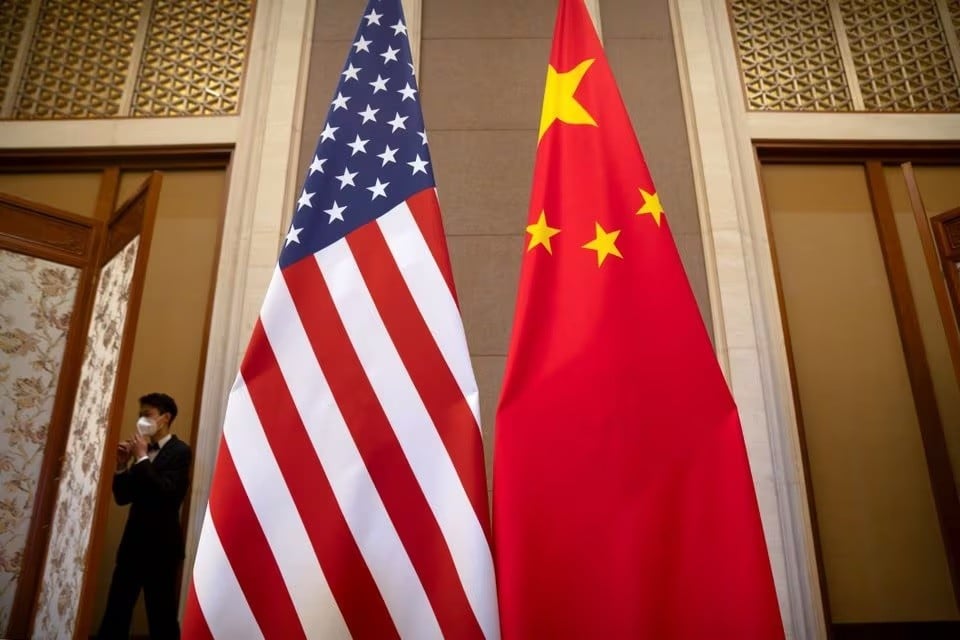
| Chinese companies have found their way into the US market by directing investments to countries with good relations with Washington. (Source: Reuters) |
US-China trade tensions and rising protectionism are harming foreign direct investment (FDI). While some countries are benefiting from the decline in Chinese FDI, overall cross-border investment is decreasing.
The possibility of former President Donald Trump becoming the occupant of the White House again is predicted to have further impacts on the trajectory of FDI.
According to the World Bank (WB), in 2022, long-term FDI flows globally decreased by 1.7%. In 2007, just before the global financial crisis, this rate was 5.3%. According to the United Nations Conference on Trade and Development (UNCTAD), FDI into developing countries also decreased by 9% in 2023.
China has witnessed a significant decline in FDI inflows. According to the State Administration of Foreign Exchange, FDI into the country reached only $16 billion in the first nine months of last year, a sharp decrease from the $344 billion recorded for the whole of 2021. The outflow of foreign companies has almost outpaced the inflow of new investment.
Geopolitical tensions are not the only factor reducing investment flows and altering their trajectory. Higher interest rates and slower economic growth, partly caused by global conflicts, have been key drivers of the sharp decline in FDI in recent years.
A more expensive currency has had a particularly severe impact on developing economies. Higher capital costs have led to a loss of investment opportunities. According to UNCTAD, worryingly, the number of new renewable energy projects in developing countries fell by a quarter last year.
Meanwhile, Jacob Kirkegaard, a fellow at the Peterson Institute for International Economics (PIIE), said that China's rapid transition from a fast-growing to a slower-growing economy is one reason for the sharp decline in investment in the country. The fact that the Northeast Asian nation's population is declining for the second consecutive year through 2023 indicates a weak economic outlook.
However, restrictions on high-tech investment in China by the US and its allies, as well as growing concerns among multinational companies about getting entangled in geopolitical conflicts, have also contributed to the decline in FDI flows.
The trend of "making friends" and "reducing risk"
Companies generally prefer to invest in friendly countries. This trend is also growing as geopolitical tensions increase, especially in the context of Russia launching a special military operation in Ukraine (February 2022) and greater friction between the US and China.
Washington and its allies have responded by launching initiatives such as “friendship” and “risk reduction,” aimed at reducing dependence on Beijing for strategic goods and building supply chains in friendly countries.
The West is also more wary of Beijing's investment in strategic industries, exemplified by the UK's acquisition of a Chinese investor's stake in a nuclear power plant in 2022. Companies from Asia's number one economy have sought entry into the US market by directing investments to countries with good relations with Washington. For example, Lingong Machinery Group is establishing an industrial park in Mexico near the US border, with a $5 billion investment.
The Group of 7 leading industrial nations (G7) has also begun competing with Beijing's $1.3 trillion Belt and Road Initiative (BRI). The G7 aims to mobilize up to $600 billion, opening up new opportunities for developing countries by 2027 to help them build infrastructure, for example by accelerating the green transition.
Meanwhile, the US is pouring $369 billion into decarbonizing its economy through the Inflation Reduction Act. This act is partly protectionist, as it supports domestic production and sanctions production in China.
Who benefits?
Hung Tran of the Atlantic Council stated that the biggest beneficiaries of these trends are emerging economies that can attract investment from both China and Western countries. A prime example is Vietnam and Mexico, where FDI growth has been relatively stable, opening up new opportunities over the past decade at 4.6% and 2.9% of GDP respectively – defying the global downward trend.
But other developing economies are not performing so well. Many African countries face governance problems and are mired in debt – factors that discourage global investors. According to UNCTAD, FDI inflows into the continent totaled only $48 billion last year.
This could change because Africa is home to crucial minerals essential for the green transition. Tim Pictures of the Boston Consulting Group (USA) stated that as Western countries and China compete for supply, African nations have the opportunity to compete with each other and secure investment – not only for resource extraction but also for processing raw materials domestically.
India is a rather special case. The country has attracted some significant investment – especially from Foxconn, the Taiwanese (China) company that assembles most of Apple's products. However, according to UNCTAD, FDI accounted for only 1.5% of GDP in 2022, and this figure had fallen by 47% last year.
One of the South Asian nation's weaknesses is its high tariffs, meaning manufacturers pay more for imported components, deterring foreign investors from using the country as an export hub. Another factor is China's less-than-friendly attitude toward investment following military clashes on the border between the two countries, although New Delhi has indicated it may ease investment restrictions if the border is peaceful.
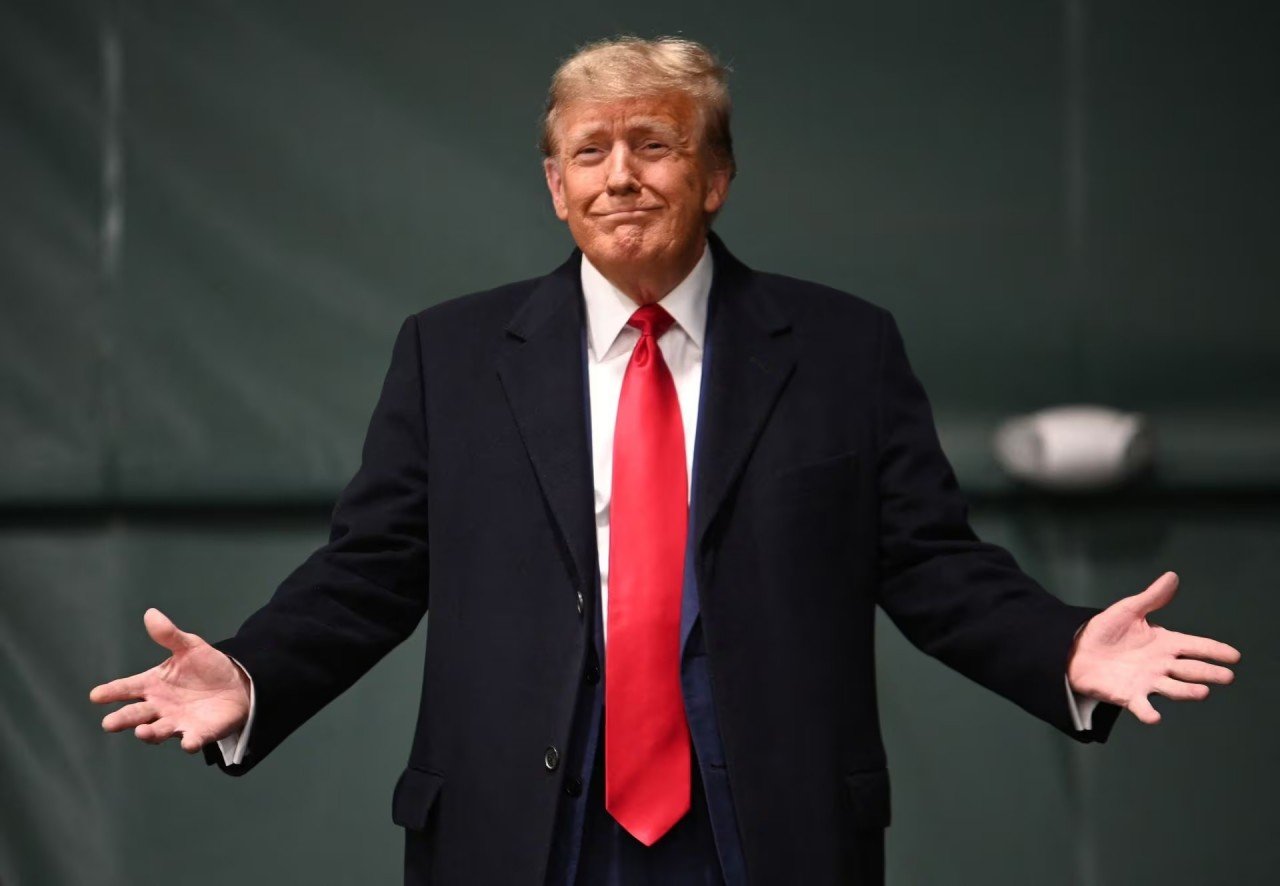 |
| Republican presidential candidate and former U.S. President Donald Trump visits a closed-door meeting at the Horizon Event Center in Clive, Iowa, on January 15. (Source: Reuters) |
What was the impact of Trump?
Investment flows will change as both governments and companies continue to respond to the evolving geopolitical landscape. But if Trump wins this year's US presidential election, the change could happen more quickly.
The billionaire pledged to impose a 10% tariff on all imports into the U.S., taking a particularly tough stance against goods from China by revoking Washington's most favorable national trade status.
It remains unclear what Trump would actually do if he were to become US president again. But if he harms global trade, global investment would be similarly severely impacted. Even some countries that have benefited from recent trends could be hurt if they violate protectionism.
Regardless of what happens in the US election, political considerations are increasingly driving investment decisions worldwide. If that distorts trade logic, that's another reason to be pessimistic about global growth.
Source


![[Photo] Prime Minister Pham Minh Chinh holds a phone call with the CEO of Russia's Rosatom Corporation.](/_next/image?url=https%3A%2F%2Fvphoto.vietnam.vn%2Fthumb%2F1200x675%2Fvietnam%2Fresource%2FIMAGE%2F2025%2F12%2F11%2F1765464552365_dsc-5295-jpg.webp&w=3840&q=75)








































































Comment (0)