

Promoting interdisciplinary knowledge, international dialogue, and innovation.
In his opening remarks at the workshop, Associate Professor Dr. Dao Thanh Truong, Vice Director of Vietnam National University, Hanoi, stated: The development experiences of many countries around the world have shown that technology is the driving force of national innovation, knowledge is the foundation of development, but culture and art are the spaces that nurture creative thinking, while the creative industry becomes the bridge between knowledge, technology, and the market, between basic sciences and applied fields. On the other hand, the reality of higher education development worldwide also shows that no modern multidisciplinary university lacks the presence of social sciences, humanities, arts, and creative fields. Conversely, these fields bring humanistic depth, cultural identity, and innovation to the entire science and technology system.

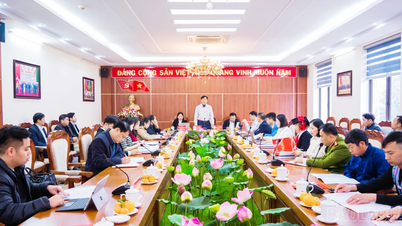
Delegates attending the Workshop
Therefore, although not officially included in the list of core science and technology fields, the cultural and creative arts industry still plays a particularly important role in the strategic areas of Hanoi National University because it is a field that creates new values based on identity, creativity, and technological capabilities. In fact, the strong development of fields such as creative design, digital art, film, media, digital content, heritage, and cultural tourism has been a driving force for the development of science and technology fields, bringing high value to the economy . Over the past period, Hanoi National University has been implementing many science and technology programs to develop the social sciences and humanities fields as well as to create a connection between creative and artistic fields and core science and technology. These efforts will create a model of the university of the future – where scientific, technological, and cultural knowledge converge.
"Organizing the 15th Vietnam Connect Conference is a vivid testament to the commitment of Vietnam National University, Hanoi to promoting interdisciplinary knowledge, international dialogue, and innovation. We believe that the discussions at today's forum – on creative industries, education, culture, data science , and AI – will make a significant contribution to shaping the future of Vietnamese higher education, while strengthening Vietnam National University, Hanoi's development strategy on its path to becoming an elite university – a national center of knowledge and innovation," said Assoc. Prof. Dr. Dao Thanh Truong.
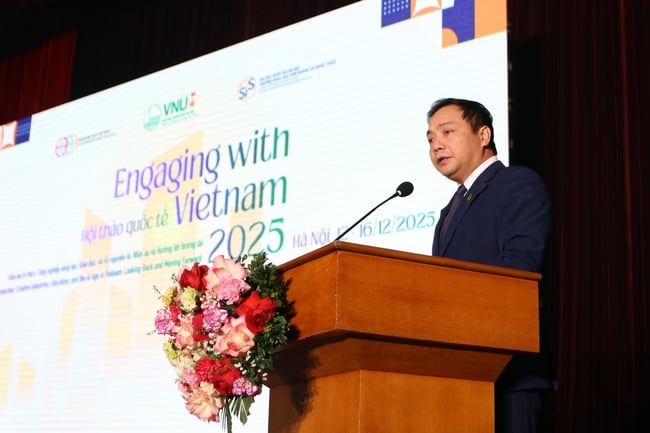
Assoc. Prof. Dr. Dao Thanh Truong, Vice Director of Vietnam National University, Hanoi, delivered the opening remarks at the conference.
In his welcoming remarks at the conference, Deputy Minister of Culture, Sports and Tourism Ta Quang Dong emphasized that culture has always been the spiritual foundation of society and is increasingly demonstrating its role as a driving force for innovation in the country's development process. The cultural industry – especially in the context of AI – presents an opportunity for Vietnam to create high added value, elevate its national standing, and promote Vietnamese identity to the world.
Deputy Minister Ta Quang Dong stated: The Party and State have always identified the cultural industry as one of the new drivers of growth. The strategy for developing cultural industries until 2030 aims for this sector to contribute 7% of GDP, strongly develop key cultural industry sectors, expand the market to a scale of tens of billions of USD, while attracting high-quality human resources and promoting digital content businesses.
To achieve these goals, digital transformation must be a central pillar. Strategic tasks such as digitizing heritage, developing open cultural data, expanding digital content distribution platforms, building creative centers, and developing digital art platforms are key to enhancing the competitiveness of Vietnam's cultural industry.

Deputy Minister of Culture, Sports and Tourism Ta Quang Dong delivered a welcoming speech at the conference.
In this context, artificial intelligence (AI) is opening up unprecedented opportunities for creativity and cultural development. AI is not just a technical tool but has become an infrastructure for innovation and is also: (1) Automating content production processes; (2) Increasing productivity in design, film, music, advertising, and video games; (3) Opening up new ways of enjoying culture such as virtual exhibitions, digital museums, AI art, and especially helping Vietnamese creative products access the global market.
AI and digital transformation also play a crucial role in heritage preservation, big data analysis of markets, audiences, and trends, thereby creating a competitive advantage for Vietnamese creative businesses. However, for the cultural industry to truly break through, we need an interdisciplinary knowledge ecosystem that closely integrates culture, art, technology, economics, and media. This requires open-ended, innovative education programs that equip the new generation with digital and AI skills. Simultaneously, it is necessary to strengthen public-private partnerships and international collaborations to learn advanced technologies, management practices, and expand markets.
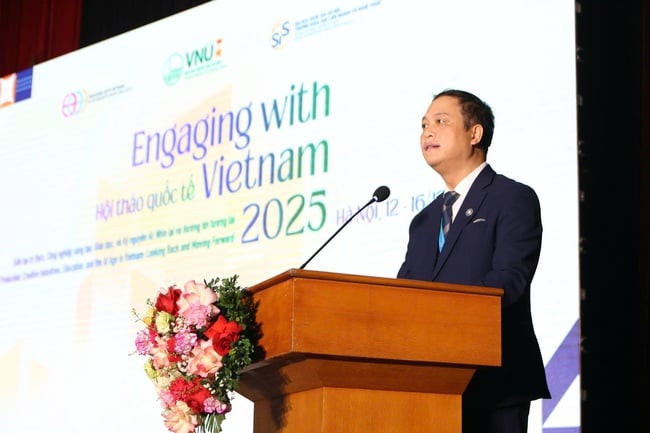
Assoc. Prof. Dr. Nguyen Van Hieu, Rector of the School of Interdisciplinary Sciences and Arts, Vietnam National University, Hanoi, presented the introductory report at the Conference.
"The Vietnam Connectivity Workshop, with its in-depth and multidisciplinary discussions, is a practical and meaningful activity that contributes to promoting new thinking, creating knowledge connections, and supporting the implementation of the National Cultural Industry Development Strategy. I believe that the ideas, research results, and recommendations shared at the Workshop will make a practical contribution to policy planning, the development of creative businesses, and the cultivation of cultural, artistic, and technological human resources for the future," said Deputy Minister Ta Quang Dong.
Opening up avenues for the development of creative arts fields in Vietnam.
In his introductory report to the workshop, Assoc. Prof. Dr. Nguyen Van Hieu, Rector of the School of Interdisciplinary Sciences and Arts, Vietnam National University, Hanoi, stated: Knowledge creation, creative industries, and education are becoming closely intertwined in the era of AI. This is also the intersection for the development of creative fields in Vietnam today, as recent government policies have consistently emphasized the position and contribution of the creative cultural industry to the national economy. However, to achieve the goal of having creative industries contribute 7% of GDP by 2030, the creative community in Vietnam will certainly have to think and discuss deeply about adaptation and new development strategies for building creative capacity, promoting the economy, and education in the AI era.

Delegates shared their experiences at the workshop.
One characteristic that gives the Vietnam Connect Conferences their unique value is that they are not only academic forums but also spaces for connection. The organizers have strived to incorporate a relatively diverse range of content, including art performances, interactions with artists, roundtable discussions, and many practical side activities aimed at the community and society. These elements play a crucial role in building the Vietnam Connect Conference 2025 into a truly multi-dimensional networking space, a forum that can inspire and foster the development of creativity, art, and the creative economy in Vietnam.
"Through this, we expect that the presentations at this conference will provide initial insights for new understandings, opening the way for the development of creative and artistic fields in Vietnam in the future," said Assoc. Prof. Dr. Nguyen Van Hieu.
The workshop aims to promote in-depth, open, and highly critical academic dialogues on topics related to knowledge, education, culture, technology, innovation, and development in the context of Vietnam's integration with the world. It seeks to open new approaches to creating and sharing knowledge about Vietnam, encompassing both traditional fields such as social sciences and humanities, as well as interdisciplinary areas like arts, creative industries, education, media, digital transformation, and sustainable development. It also aims to strengthen connections and collaboration between domestic and international academic communities, thereby building a deep, sustainable, and intergenerational network of research and innovation.

The workshop attracted a large number of experts, researchers, and students.
The conference attracted contributions from experts with nearly 200 papers from 280 scholars through discussions in more than 50 plenary and parallel sessions. The papers presented at the conference clarified many important topics including: the current state and challenges in knowledge building in the AI era; new growth drivers for Vietnam based on the cultural industry; design, digital content and the creative economy; the future of Vietnamese higher education in the context of institutional and technological innovation; culture, heritage and identity in the digital environment; and discussions on development policies and international integration in the cultural industry.
Source: https://bvhttdl.gov.vn/hoi-thao-ket-noi-viet-nam-kien-tao-tri-thuc-ho-tro-phat-trien-nganh-cong-nghiep-van-hoa-20251212120804145.htm




























































Comment (0)