

Vietnam is facing a serious shortage of nursing staff, with the ratio projected to be only about 18 nurses per 10,000 people by 2024.
This figure is significantly lower than the global average, where a doctor typically has 3-4 nurses assisting, while in Vietnam, the ratio is less than 2 nurses per doctor.
This shortage is putting immense pressure on nursing staff, especially in tertiary hospitals, where the demand for comprehensive patient care is increasingly high. This requires nurses not only to improve their professional knowledge but also to meet patient satisfaction standards.
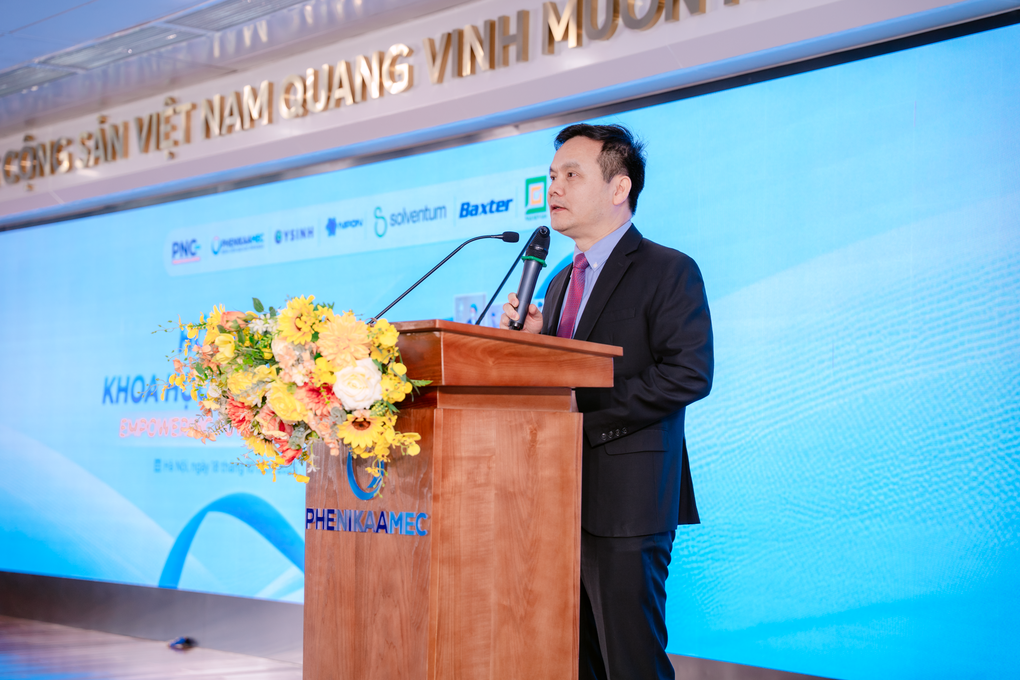
Associate Professor Dr. Nguyen Thanh Hoi, General Director of Phenikaa Hospital, shared his insights at the conference (photo: Organizing Committee).
Speaking at the Nursing Science Conference 2025 held on October 18th in Hanoi, Assoc. Prof. Dr. Nguyen Thanh Hoi, General Director of Phenikaa Hospital, emphasized the crucial role of nurses in the entire treatment process of patients.
"Nurses are present at almost every stage of a patient's treatment journey, from the moment they enter the hospital until they leave. They welcome, guide, assist with examinations, carry out medical orders, provide post-operative care, handle procedures, and answer patients' questions," Associate Professor Hoi said.
He also pointed out that patients' concerns and dissatisfaction often stem from not having their questions answered promptly or not receiving adequate care.
Therefore, nurses today are not just people who carry out medical orders, but also need to have solid expertise, good communication skills, and be always ready to meet the needs of patients. With sufficient professional nursing staff, patients will feel cared for, thereby increasing satisfaction and minimizing conflicts.

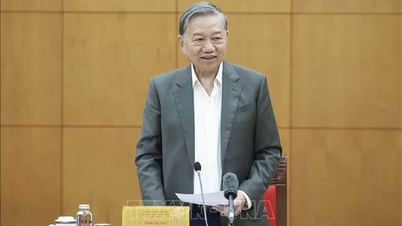
Dr. Tran Quang Huy, Vice President of the Vietnam Nurses Association (Photo: Phuong Trang).
Dr. Tran Quang Huy, Vice President of the Vietnam Nurses Association, emphasized the significance of the workshop's theme, "empowering nurses," which is not only about assigning responsibilities but also about granting autonomy.
"When equipped with sufficient knowledge, nurses can design individualized care plans that meet the specific physical and mental needs of each patient. This is also an inevitable trend in modern medicine worldwide, and an effort by many healthcare facilities to strive for patient satisfaction," Dr. Huy stated.
Strengthening nursing capacity is considered a crucial link in improving the effectiveness of comprehensive patient care in Vietnam. The conference presented 13 scientific reports, including 6 in Vietnamese and 5 in English, with the participation of 3 international speakers from the United States, Taiwan (China), and Thailand.
Experts collaborated to update on the latest trends and knowledge in nursing care and management, encouraging scientific research, innovation in clinical practice, and the application of technology to improve the quality of care.
Commenting on the trend of individualization in treatment, Associate Professor Hoi stated that this is an inevitable trend worldwide . Treatment and care are individualized, based on the patient's medical condition, age, gender, and emotions.
"Each patient is a unique individual, and the care and pain relief provided must be tailored to achieve optimal treatment effectiveness. When nurses understand these differences, they can work closely with doctors to improve the quality of treatment," Associate Professor Hoi shared.
Source: https://dantri.com.vn/suc-khoe/thieu-hut-nhan-luc-lam-tang-nguy-co-xung-dot-trong-moi-truong-benh-vien-20251018172142753.htm


![[Photo] Prime Minister Pham Minh Chinh receives the Governor of Tochigi Province (Japan)](/_next/image?url=https%3A%2F%2Fvphoto.vietnam.vn%2Fthumb%2F1200x675%2Fvietnam%2Fresource%2FIMAGE%2F2025%2F12%2F16%2F1765892133176_dsc-8082-6425-jpg.webp&w=3840&q=75)
![[Live] 2025 Community Action Awards Gala](/_next/image?url=https%3A%2F%2Fvphoto.vietnam.vn%2Fthumb%2F1200x675%2Fvietnam%2Fresource%2FIMAGE%2F2025%2F12%2F16%2F1765899631650_ndo_tr_z7334013144784-9f9fe10a6d63584c85aff40f2957c250-jpg.webp&w=3840&q=75)
![[Image] Leaked images ahead of the 2025 Community Action Awards gala.](/_next/image?url=https%3A%2F%2Fvphoto.vietnam.vn%2Fthumb%2F1200x675%2Fvietnam%2Fresource%2FIMAGE%2F2025%2F12%2F16%2F1765882828720_ndo_br_thiet-ke-chua-co-ten-45-png.webp&w=3840&q=75)
![[Photo] Prime Minister Pham Minh Chinh receives Lao Minister of Education and Sports Thongsalith Mangnormek](/_next/image?url=https%3A%2F%2Fvphoto.vietnam.vn%2Fthumb%2F1200x675%2Fvietnam%2Fresource%2FIMAGE%2F2025%2F12%2F16%2F1765876834721_dsc-7519-jpg.webp&w=3840&q=75)





































































Comment (0)