

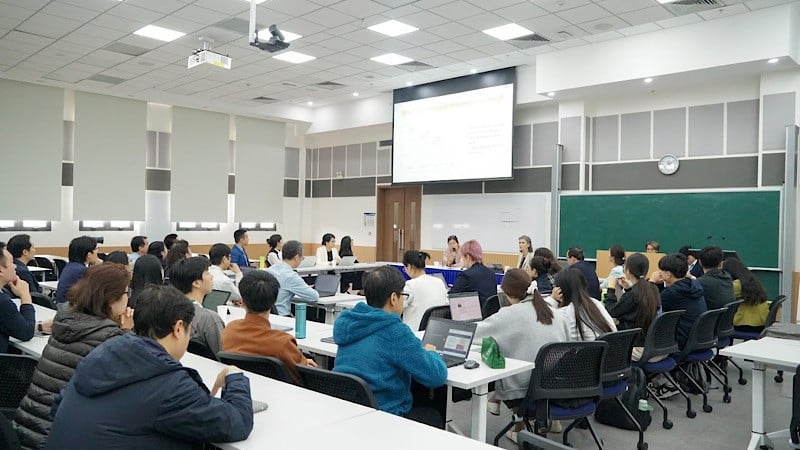
Artificial intelligence (AI) has the potential to transform economies , governance and public services, but if left unregulated, AI could also widen the development gap between countries, according to a new report by the United Nations Development Programme.
The risk of widening the gap between countries
The report highlights that: While AI opens up significant development opportunities, countries have very different starting points in the transition to capture the benefits and manage the risks. Without strong policies, these gaps could widen, reversing decades of progress in reducing development inequality.
Today, Asia -Pacific , home to more than 55% of the world’s population, is at the center of the AI transformation. The region now has more than half of global AI users, with a rapidly expanding innovation footprint, from China’s growth to account for nearly 70% of global AI patents to more than 3,100 newly funded AI companies across six economies.
AI could boost the region’s annual GDP growth by about 2 percentage points and boost productivity by up to 5% in sectors like healthcare and finance. ASEAN economies alone could see nearly $1 trillion in additional GDP over the next decade.
Vietnam also stands out in the region thanks to its ambitious national strategy to become a leading AI country by 2030, with the goal of being in the top three in Southeast Asia and top 50 globally in AI research and development.
Resident Representative of the United Nations Development Programme in Vietnam, Ms. Ramla Khalidi said: Inclusive policies, targeted investments and responsible AI governance are essential to ensure AI becomes a resource for equitable development.
“Vietnam is well-positioned to leverage AI for sustainable and inclusive growth, if it continues to address challenges such as the digital skills gap, data quality, and digital inclusion for women, rural communities, and vulnerable groups,” Ms. Ramla Khalidi emphasized.
Information from the report “Artificial Intelligence Landscape Assessment” by the United Nations Development Programme in Vietnam shows that the Government has demonstrated strong political will, implementing policies and investments to promote digital transformation and AI application in key areas.
Rapid development of digital infrastructure, including near-nationwide 4G coverage, ongoing 5G deployment, and significant improvement in Vietnam’s global e-government ranking, is supporting this progress.
Turn risks into opportunities...
The report also notes the potential risks posed by AI. Millions of jobs, especially those of women and young people, are at risk of being automated, and gaps in skills, data, and AI governance could limit the benefits of AI. Across Asia-Pacific, countries that invest in skills, computing power, and effective governance systems will likely benefit most from AI, while others risk falling behind.
At the same time, digital readiness varies significantly across the region. Countries such as Singapore, South Korea and China are investing heavily in AI infrastructure and skills, while others are still strengthening basic digital access and literacy.
Limited infrastructure, skills, computing power, and governance capacity reduce the potential benefits from AI while increasing risks, including job losses, data exclusion, and indirect impacts such as increased global energy and water demand from AI-intensive systems.
AI is also transforming governance and public services in the region. For example, the Traffy Fondue platform in Bangkok has processed nearly 600,000 citizen reports, enabling faster responses.
Moments of Life in Singapore has reduced paperwork for new parents from about 120 minutes to 15 minutes. In Beijing, digital twins support urban planning and flood management...
An AI-powered support platform is being piloted in Vietnam to help citizens access 15 essential online public administrative services. These examples demonstrate the potential of AI to improve governance and public service delivery.
However, only a handful of countries have comprehensive AI regulations, and by 2027, more than 40% of global AI-related data breaches could stem from the misuse of generative AI, highlighting the need for robust governance frameworks.
Source: https://nhandan.vn/artificial-intelligence-can-increase-the-gap-between-countries-post927444.html


![[Photo] Worshiping the Tuyet Son statue - a nearly 400-year-old treasure at Keo Pagoda](/_next/image?url=https%3A%2F%2Fvphoto.vietnam.vn%2Fthumb%2F1200x675%2Fvietnam%2Fresource%2FIMAGE%2F2025%2F12%2F02%2F1764679323086_ndo_br_tempimageomw0hi-4884-jpg.webp&w=3840&q=75)

![[Photo] Parade to celebrate the 50th anniversary of Laos' National Day](/_next/image?url=https%3A%2F%2Fvphoto.vietnam.vn%2Fthumb%2F1200x675%2Fvietnam%2Fresource%2FIMAGE%2F2025%2F12%2F02%2F1764691918289_ndo_br_0-jpg.webp&w=3840&q=75)



























![[Video] Protecting World Heritage from Extreme Climate Change](https://vphoto.vietnam.vn/thumb/402x226/vietnam/resource/IMAGE/2025/12/03/1764721929017_dung00-57-35-42982still012-jpg.webp)




























































Comment (0)