

 |
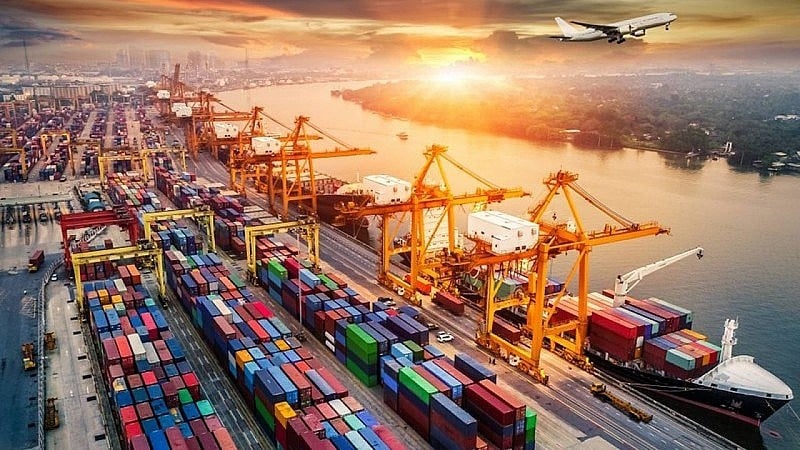
| Goods exports in July 2023 were estimated at US$29.68 billion, an increase of 0.8% compared to the previous month. (Source: Customs Newspaper) |
Export turnover increased for the third consecutive month.
According to a report recently released by the General Statistics Office, merchandise exports in July 2023 were estimated at US$29.68 billion, an increase of 0.8% compared to the previous month. Of this, the domestic economic sector accounted for US$7.76 billion, a decrease of 1.8%; while the foreign-invested sector (including crude oil) accounted for US$21.92 billion, an increase of 1.7%.
Compared to the same period last year, merchandise exports in July decreased by 3.5%, with the domestic economic sector declining by 4.2% and the foreign-invested sector (including crude oil) declining by 3.2%.
Overall, in the first seven months of 2023, merchandise exports are estimated at $194.73 billion, a decrease of 10.6% compared to the same period last year.
In the first seven months of 2023, 30 product categories achieved export turnover exceeding $1 billion, accounting for 91.6% of total export turnover (including 5 product categories with export turnover exceeding $10 billion, accounting for 57.6%).
Regarding the structure of export product groups in the first seven months of 2023, the fuel and mineral group is estimated at US$2.53 billion, accounting for 1.3%; the processed industrial goods group is estimated at US$171.5 billion, accounting for 88.1%; the agricultural and forestry products group is estimated at US$15.75 billion, accounting for 8.1%; and the aquatic products group is estimated at US$4.95 billion, accounting for 2.5%. Notably, many export items have shown positive signs of recovery.
The Ministry of Industry and Trade is actively implementing solutions to remove difficulties and create the greatest possible favorable conditions for import and export. For example, according to Circular 36/2023/TT-BTC of the Ministry of Finance , from July 21st, businesses applying for certificates of origin (C/O) must pay a fee. The organizations collecting the fee as stipulated in this Circular include: the Ministry of Industry and Trade and agencies and organizations authorized by the Ministry of Industry and Trade to issue certificates of origin as prescribed in Article 34 of the Law on Foreign Trade Management.
However, instead of having to go directly to the management agency to pay the fees, businesses can pay the C/O fees online. This method aims to provide maximum convenience for businesses, helping them save time and other related costs. After paying the C/O fees, businesses will receive a receipt via the email address registered with the management agency.
Having once required "rescue" efforts, this product could reach $5 billion in 2023.
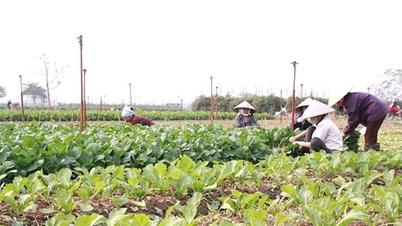
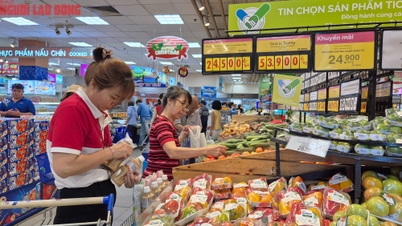
According to estimates from the General Department of Customs, as of July 15th, fruit and vegetable exports had brought in over 3 billion USD, and by the end of July, it is entirely possible to surpass the 3.3 billion USD mark of the whole year 2022. It is predicted that fruit and vegetable exports could reach 5-5.3 billion USD in 2023.
Fruit and vegetable exports started to boom from the end of 2022, when the Chinese market reopened. Since the Lunar New Year, many fruit products have continued to be well-received by the Chinese market, such as dragon fruit, durian, jackfruit, and mango.
Notably, the value of fruit and vegetable exports surged in the last two weeks of May 2023, reaching over $400 million; double the figure from the previous two weeks.
The Ministry of Industry and Trade explained that increased purchases from China, coupled with Vietnam entering the peak season for many types of fruit, were the main factors driving the surge in Vietnam's fruit and vegetable exports in the first months of 2023.
With abundant supply, the second half of 2023 will see very positive results for fruit and vegetable exports if they meet the requirements of the Chinese market in accordance with Good Agricultural Practices (GAP).
Besides the Chinese market, fruit and vegetable exports to other markets also showed positive growth, including South Korea, Japan, the Netherlands, the UAE, and Malaysia.
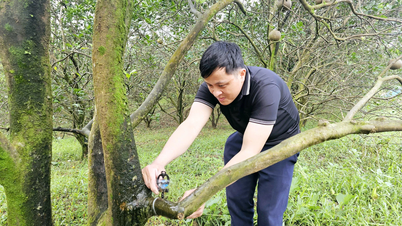
Furthermore, many types of Vietnamese fruits are entering their harvest season and have a staggered harvesting pattern, so the fruit and vegetable industry is considered to have significant potential for export. In particular, star apples and rambutan can be supplied almost year-round according to business orders, and export prices are also better than last year.
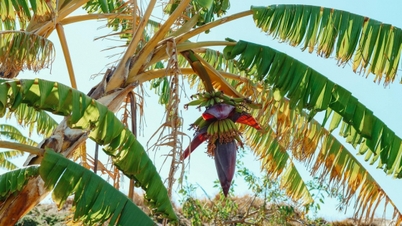
Exports of fruits and vegetables are experiencing favorable conditions as Vietnam signed protocols with China in 2022, facilitating the export of these products. Recently, Vietnam and China have signed numerous export protocols for various agricultural products, including bird's nests, durian, sweet potatoes, bananas, black jelly, and mangosteen. As a result, Vietnam's agricultural exports to China have become much easier.
In 2023, despite China's strict control over technical barriers and food safety and hygiene standards, Vietnamese fruits and vegetables, with their increasingly high quality and competitive prices, were favored by Chinese consumers.
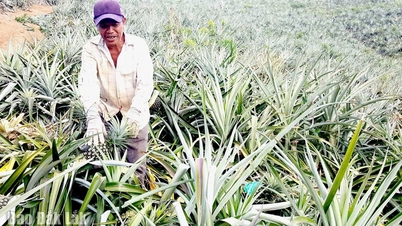
Vietnam is currently requesting that China open its market to other fruits and vegetables such as green pomelo, fresh coconut, avocado, lemon, pineapple, and star apple, in order to further boost fruit and vegetable exports to this market.
In the Project for the Development of Key Fruit Crops until 2025 and 2030, the Ministry of Agriculture and Rural Development aims for fruit and vegetable exports to reach US$5 billion by 2025. However, if the current export rate is maintained, the US$5 billion figure will be achieved this year, two years earlier than the set target.
Pangasius fish farmers are "hand-to-mouth" with each order.
According to the Vietnam Association of Seafood Processing and Export (VASEP), Vietnam's pangasius exports have increased in the first months of 2023, but are still relatively sluggish compared to 2022. Looking back at 2022, Vietnam's pangasius exports set many "records," with export value reaching US$2.4 billion, a 70% increase compared to the same period in 2021, surpassing the 2018 peak of US$2.26 billion.
According to VASEP, pangasius export turnover decreased quite sharply in the first six months of this year. The US market experienced the fastest, most significant, and continuous decline. The Chinese market also saw a decrease but is showing signs of improvement. In the context of the global economic difficulties, many businesses are trying to weather the storm, fulfilling even small orders to ensure employment for their workers.
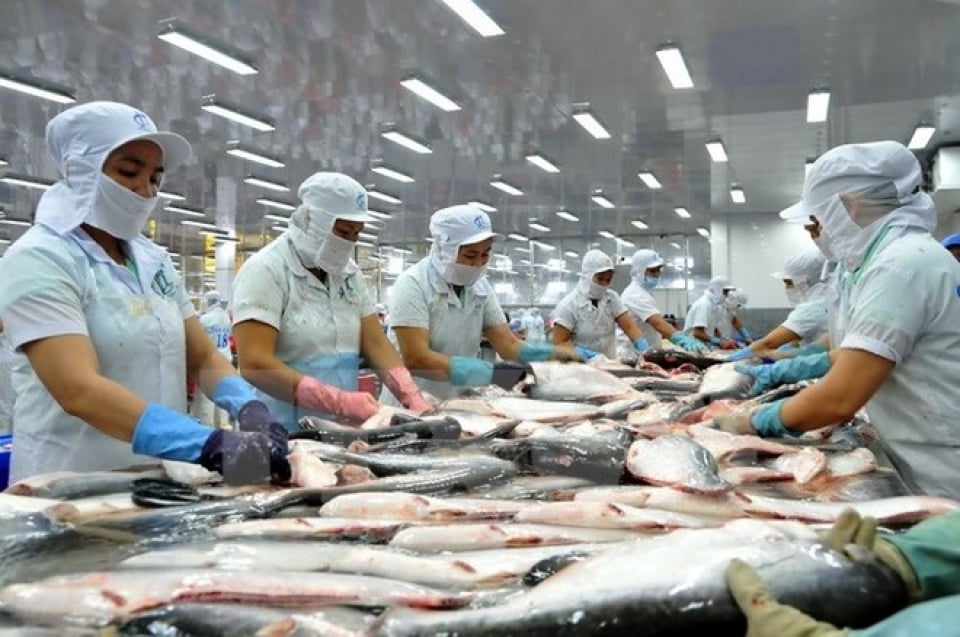 |
| Vietnam's pangasius exports increased in the first few months of 2023, but compared to 2022, they remain relatively sluggish. (Source: invivo) |
According to statistics from Vietnam Customs, as of the end of June 2023, Vietnam's pangasius exports to China and Hong Kong (China) reached US$281 million, a decrease of 34% compared to the same period last year.
In June 2023, China and Hong Kong imported $48 million worth of Vietnamese pangasius, a 4% decrease compared to May 2023 and a 15% decrease compared to the same period last year. The 15% decrease in June was lower than the decreases in previous months (April and May recorded decreases of 30% - 60%).
From 2020 to the present, China and Hong Kong (China) have consistently maintained the number one position in importing Vietnamese pangasius. Compared to other major markets, China and Hong Kong (China) have maintained the highest growth rate.
After a period of continuous decline from September 2022 to January 2023, the average export price of pangasius to this market stabilized in the following months. The average export price of Vietnamese pangasius to China in the first five months of this year ranged from US$2.11/kg to US$2.29/kg, a decrease of 10% compared to the same period in 2022. In May alone, the average price reached US$2.29/kg, an increase of 0.4% compared to the previous month.
With declining consumer demand, inflation remaining near zero, and Chinese businesses and consumers still expecting further price drops, spending has slowed down significantly. Consumer price and producer price indices indicate that the world's second-largest economy continued to weaken in May. These factors have negatively impacted pangasius exports to this market in the first half of this year.
The outlook for the fisheries and pangasius industry in the last six months of the year is expected to gradually recover as inventory levels decrease and the peak ordering season for year-end holidays approaches. This signals an improvement in pangasius prices in the coming months.
The target for 2023 is for pangasius farming to expand to 5,600 hectares; the expected production of commercial pangasius is 1.6 million tons; and export revenue is projected to reach 2.3 billion USD. However, these figures are highly unlikely to be achieved.
Source

![[Photo] Prime Minister Pham Minh Chinh receives the Governor of Tochigi Province (Japan)](/_next/image?url=https%3A%2F%2Fvphoto.vietnam.vn%2Fthumb%2F1200x675%2Fvietnam%2Fresource%2FIMAGE%2F2025%2F12%2F16%2F1765892133176_dsc-8082-6425-jpg.webp&w=3840&q=75)
![[Live] 2025 Community Action Awards Gala](/_next/image?url=https%3A%2F%2Fvphoto.vietnam.vn%2Fthumb%2F1200x675%2Fvietnam%2Fresource%2FIMAGE%2F2025%2F12%2F16%2F1765899631650_ndo_tr_z7334013144784-9f9fe10a6d63584c85aff40f2957c250-jpg.webp&w=3840&q=75)

![[Image] Leaked images ahead of the 2025 Community Action Awards gala.](/_next/image?url=https%3A%2F%2Fvphoto.vietnam.vn%2Fthumb%2F1200x675%2Fvietnam%2Fresource%2FIMAGE%2F2025%2F12%2F16%2F1765882828720_ndo_br_thiet-ke-chua-co-ten-45-png.webp&w=3840&q=75)
![[Photo] Prime Minister Pham Minh Chinh receives Lao Minister of Education and Sports Thongsalith Mangnormek](/_next/image?url=https%3A%2F%2Fvphoto.vietnam.vn%2Fthumb%2F1200x675%2Fvietnam%2Fresource%2FIMAGE%2F2025%2F12%2F16%2F1765876834721_dsc-7519-jpg.webp&w=3840&q=75)
































































































Comment (0)