

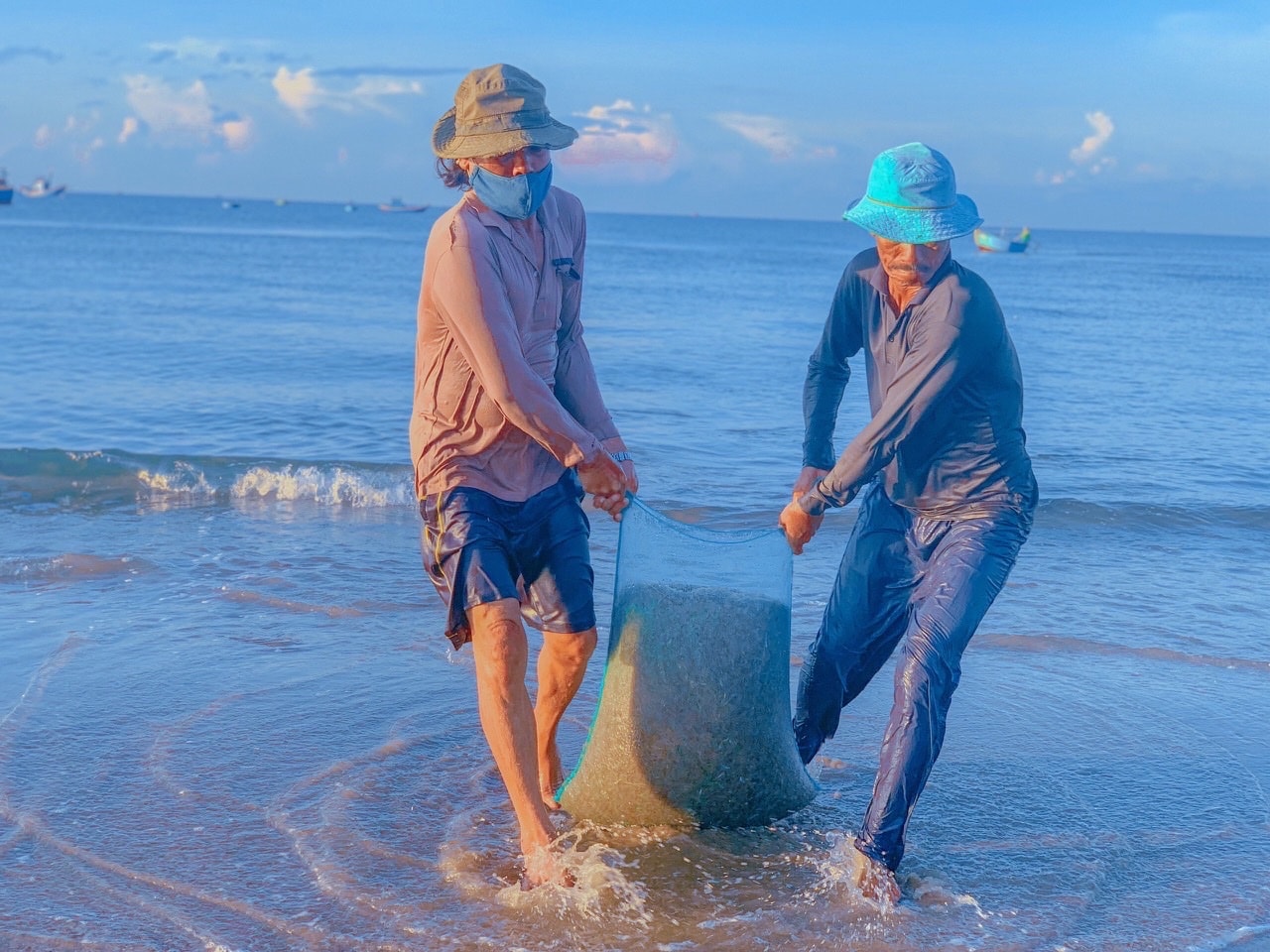
Shrimp harvesting profession
We visited Duong area (formerly Chi Cong commune, now part of Phan Ri Cua commune, Lam Dong province) during the days when krill began to appear. According to local fishermen, krill, also known as small shrimp, are only a few centimeters long and are available year-round, but are most abundant from September to December of the lunar calendar, depending on ocean currents and weather. In the Phan Ri Cua sea area, krill usually arrive in large numbers, helping fishermen who fish near the shore increase their income. This year, the krill arrived earlier than expected, making the atmosphere of work bustling from mid-October.
Early in the morning, before the sun had even risen, Mr. Nguyen Van Cu, a fisherman from Ha Thuy village, was busy preparing his nets to fish near the shore. He explained that local fishermen mainly catch krill manually, using trawling nets or rafts, immersing themselves in the water to "hunt" for schools of krill. "Krill are very sensitive and move quickly in schools. We usually stand on the shore observing; when we see a dark area of water, we know there are krill. Then we wade in about 10-20 meters, walking slowly, and when we feel the krill twitching, it's a sign of a school, and we have to cast our nets immediately," Mr. Cu shared.
In one morning, Mr. Cu and his group of fishermen caught several hundred kilograms of krill, averaging 50-70 kg per person per day. Fishermen with boats that go further out can get 300-500 kg per day. With a selling price of 10,000-15,000 VND/kg, they can earn millions of dong. Besides selling fresh krill to traders, the locals also dry it, selling it for 80,000-100,000 VND/kg. This year, there is a lot of krill, but it's not as abundant as before; the season only lasts about half a month before ending.
Shrimp paste specialty
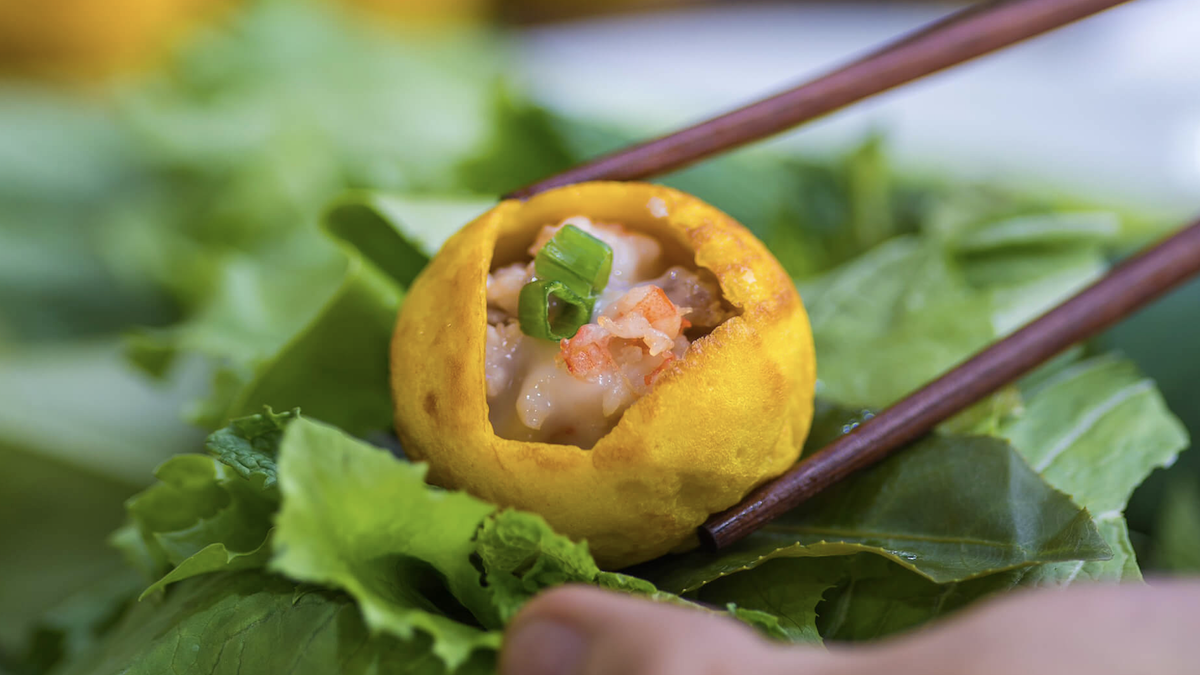
Shrimp paste is not only a source of income for fishermen, but also a valuable ingredient for local cuisine . In Duong region, fresh shrimp paste is processed into shrimp paste – a thick, fragrant paste often used to braise meat or eaten with rice paper. This dish, though simple, evokes fond memories for many.
Most women in Duong region know how to make shrimp paste because this craft has existed for a long time. However, to produce batches of fragrant, delicious shrimp paste, which has become a specialty of this coastal area, there are unique secrets. Ms. Phan Thi Chung, a shrimp paste maker for many years, said: Duong region has two types of shrimp: river shrimp and seasonal shrimp. However, fishermen only choose seasonal shrimp, as small as a toothpick, to make shrimp paste because they are delicious... Most of the steps in making shrimp paste are done manually, the most difficult being pounding the shrimp in a mortar, which takes an hour or more to make the shrimp finely ground while still retaining its sweetness. Fresh shrimp, after being harvested, are washed with seawater, dried in the sun for just one day to make them firm and not break, then sifted to remove sand to prevent a gritty texture when eaten. After that, the shrimp are pounded by hand, mixed with salt, sugar, garlic, chili... according to a specific ratio. The mixture is placed in a jar, covered with fresh banana leaves, and a heavy object is placed on top to prevent air from entering, helping the shrimp paste to ripen quickly. When the shrimp paste turns from dark purple to bright red and emits a characteristic aroma, it is ready to be eaten.
In recent years, those making shrimp paste have often used grinders to save time and effort, allowing for more batches, but the taste is not as good as hand-ground shrimp paste. Duong shrimp paste is typically thick, flavorful, not too sweet, and has a beautiful deep red color. Locals often eat it with rice paper, or use it to braise pork belly, adding a little lemongrass for a fragrant and appetizing dish. Therefore, many people, when they hear mention of Chi Cong, immediately think of this distinctive shrimp paste rice paper snack. Most people who leave their hometown bring a few jars of shrimp paste with them when working far from home, either as gifts or to store in the refrigerator for later use.
Hopefully, in the not too distant future, Duong shrimp paste will not only be consumed domestically but also exported abroad, contributing to promoting Vietnam's unique culinary culture.
Source: https://baolamdong.vn/vao-mua-ruoc-xu-duong-400564.html


























































































Comment (0)