

The bloody terrorist attack in Moscow on March 22nd could have a major impact on Russia's foreign policy, marking a turning point in the Russia-Ukraine conflict.
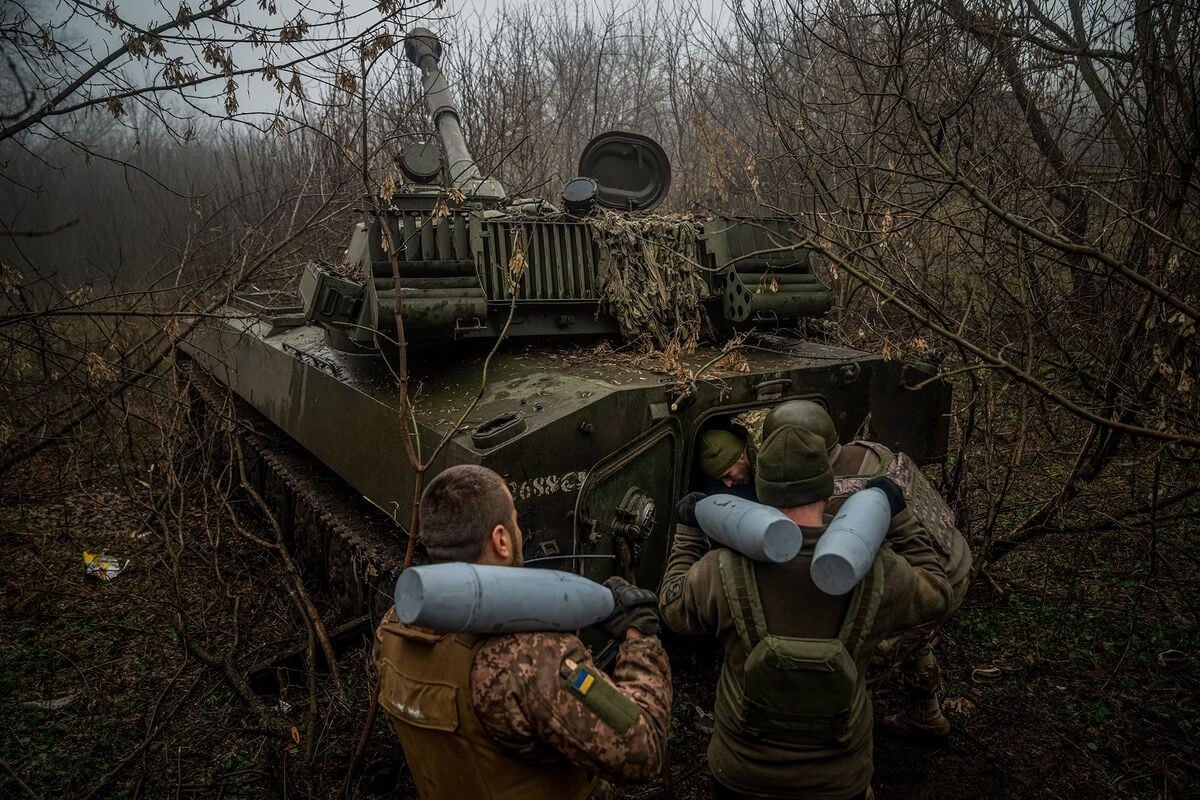 |
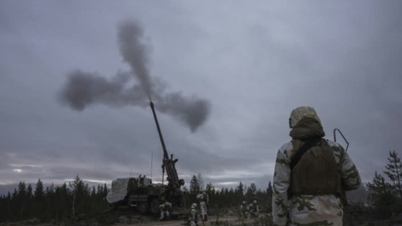
| The terrorist attack in Moscow occurred amidst the ongoing and stalemate in the Russia-Ukraine conflict. (Illustrative photo: Ukrainian artillerymen loading ammunition inside a 2S1 Gvozdika self-propelled artillery piece in the Donetsk region. Source: AFP) |
To this day, the Russian people remain shocked by the terrorist attack on March 22nd, which killed 144 people and injured more than 360. Of particular concern is that this attack occurred amidst a fierce, protracted, and potentially unproven conflict between Russia and Ukraine, with neither side able to gain the upper hand.
Potential for conflict escalation
French geographer Jean Radvanyi, an expert on Russia and the Caucasus region, warns that this serious event, which has shaken Russia, risks becoming a real turning point in the conflict between Russia and Ukraine, and even further, with the North Atlantic Treaty Organization (NATO).
The incident occurred precisely at a time when Ukrainian forces were intensifying their bombing of infrastructure, particularly energy facilities, deep within Russian territory. This also led to fierce retaliation from Russia. The day before the terrorist attack, Russian Defense Minister Sergei Shoigu announced plans to create two new army units and 30 new units (including 14 divisions and 16 brigades) this year.
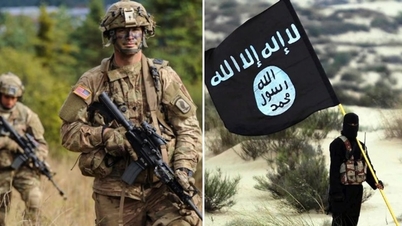
Although the self-proclaimed Islamic State (IS) has claimed responsibility, terrorist suspects have been arrested, and the case is still under investigation and trial, Russian President Vladimir Putin and many other officials have expressed doubts about Ukraine's role in the incident.
In a televised address on March 24, Putin announced that 11 people linked to the terrorist attack had been arrested, including four key suspects. According to the Russian president, the terrorists were apprehended while attempting to flee and move toward Ukraine, where "a door had been prepared for crossing the border."
On March 28, the Russian Investigative Committee announced that it had found evidence suggesting that the gunmen who carried out the massacre at Crocus City Hall were linked to "Ukrainian nationalists." The Investigative Committee report stated that the suspects received money from Ukraine in the form of cryptocurrency, which was then used to prepare for the attack.
Li Wei, an expert at the China Institute of Contemporary International Relations, believes the terrorist attack at the concert hall does not entirely fit the pattern of previous IS attacks. He argues: “Driven by religious extremism, IS members often carry out attacks in the style of ‘lone wolves’ or ‘suicide attacks’.”
At the same time, Li Wei noted that if IS changes the core characteristics of its religious extremism, it will no longer be IS.
According to Li Wei, the Ukrainian government is unlikely to be involved in terrorist activities, but if any extremist forces in Ukraine are found to be involved, it would put Ukraine at a disadvantage.
Meanwhile, Wang Xiaoquan, a researcher at the Institute of Russia, Eastern Europe and Central Asia under the Chinese Academy of Social Sciences , pointed out that the US and the West hope the perpetrators behind the incident are a terrorist organization because if Ukraine is involved, they will lose legitimacy in supporting Kyiv.
Some analysts note that the possibility of extremists in Ukraine being involved in the attack cannot be ruled out, given the pessimistic outlook on the conflict and the dwindling support from the West. However, it is still too early to assign blame for the attack, and the final conclusion will be determined by the ongoing investigation.
Analysts believe that the incident could have a major impact on Russia's foreign policy, creating a turning point in the Russia-Ukraine conflict and triggering a new phase of escalation, depending on the outcome of the Russian investigation.
The door to negotiations remains open.
On March 24, an underground gas storage facility in Ukraine was attacked in the latest wave of Russian missile strikes targeting power grid facilities. Kyiv reported that on the same day, Russia attacked critical infrastructure in the western Ukrainian region of Lviv with missiles in a major airstrike.
In an interview with CBS News on March 28, Ukrainian President Volodymyr Zelensky said that the country needs more help from its allies to respond to a major Russian attack, which could occur in late May or June. Ukrainian military officials warned that Moscow may be preparing for a new major offensive, mobilizing a force of 100,000 troops.
Expert Wang Xiaoquan assessed that these latest attacks show a changing situation on the battlefield. The escalation of the Russia-Ukraine conflict could also affect the security situation in other regions. Accordingly, terrorists may see geopolitical conflicts as opportunities to launch attacks, and many countries are warned to heighten their vigilance.
In a speech to Russian Air Force pilots on March 27, Putin rejected claims by some Western leaders that Russia was planning to invade NATO countries.
At the same time, the Russian leader also warned countries against assisting Ukraine with fighter jets. Putin emphasized that if the F-16 fighter jets supplied to Ukraine by Western allies were operating from airfields in other countries, those bases would be "legitimate targets" for Russian attack.
Despite all the tough statements, Russia is still leaving the door open for negotiations to end the conflict. In an article in the Izvestia newspaper on March 29, Russian Foreign Minister Sergei Lavrov affirmed that if Moscow's interests are respected, they are ready to guarantee the legitimate interests of other parties involved in the negotiations on the Ukraine issue.
Regarding China's proposed solution to the Ukraine issue, Lavrov emphasized the need to lift the unilateral Western sanctions imposed long before Moscow began its special military operation in Ukraine. According to the Russian Foreign Minister, this is crucial and will form the basis for negotiations aimed at ensuring the security of all parties involved in the process.
Foreign Minister Lavrov also stated that negotiations cannot be based on the peace formula proposed by Ukrainian President Zelensky and promoted by the West and the US, but must be based on a serious analysis of current security issues and ensuring Russia's legitimate security interests. At the same time, the Russian diplomat confirmed that he will meet with ambassadors from several countries to discuss the situation in Ukraine in early April.
It is clear that the terrorist attack in Moscow on March 22nd has had a significant impact on the Russia-Ukraine conflict and is likely to have even more effects once the official investigation results are released. Hopefully, strategists will recognize the unpredictable consequences of escalating instability and conflict, and appreciate the importance of unity in the fight against terrorism to make the right decisions.
(according to Reuters, Kyivindependent, NY Times, Global Times)
Source









































































Comment (0)