

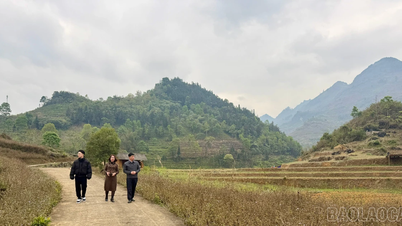
From the old city of Lao Cai , after traveling nearly 100 km along winding mountain roads, and after almost 3 hours of motorbike riding, we arrived in Y Ty commune. Fortunately, we arrived in Y Ty on a beautiful sunny day; it was cold but there was no rain or fog.
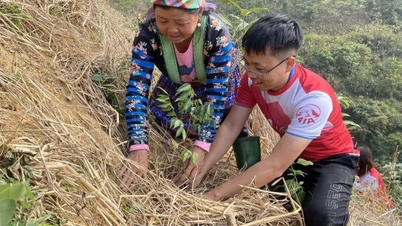
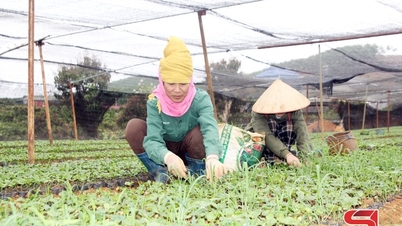
In the garden at the top of Mo Phu Chai slope, a young man in mud-stained work clothes is busy with some women from the village, tilling the soil and planting some kind of plant.
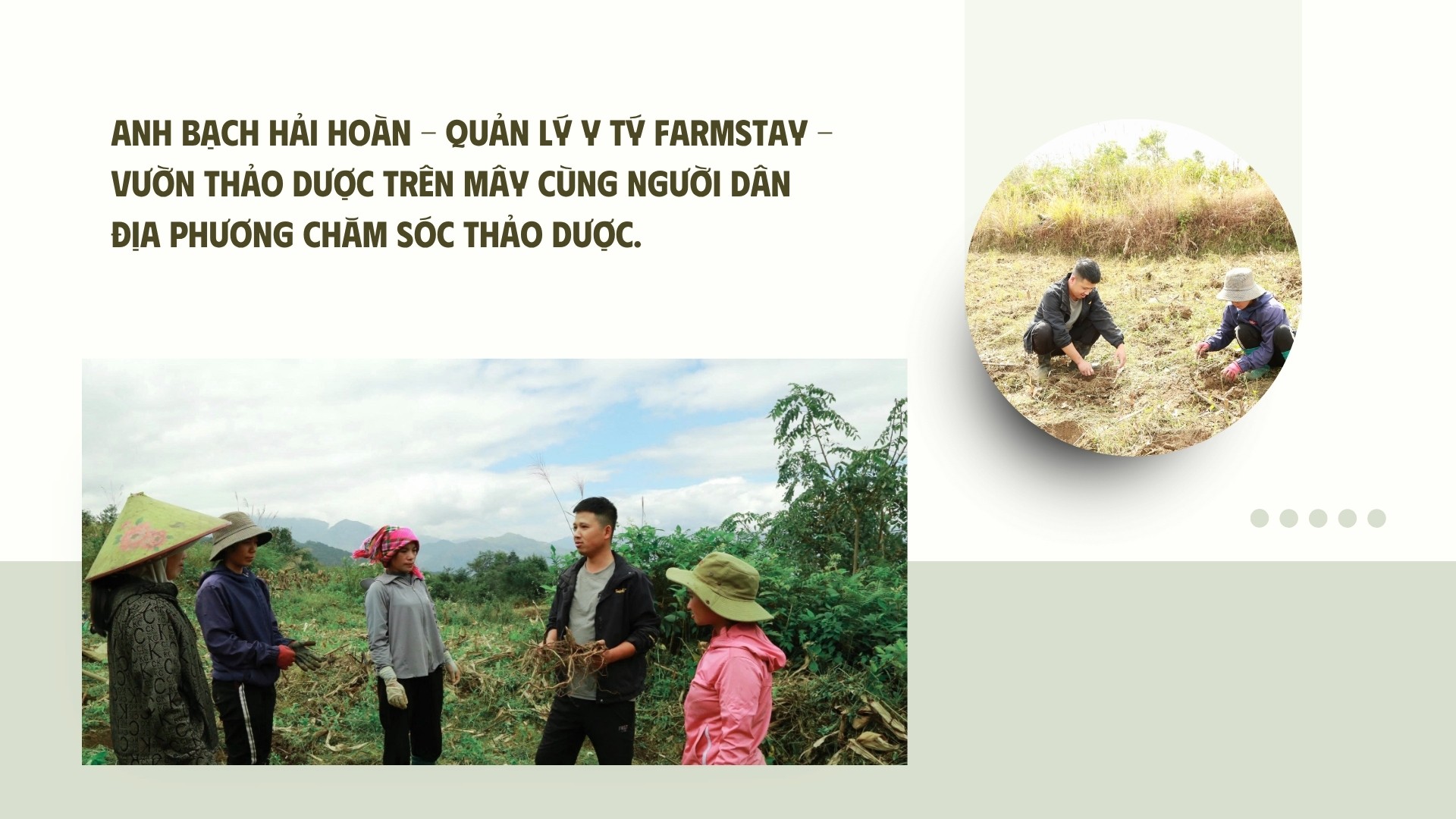
Everyone in the village knows him as Bach Hai Hoan - the manager of Y Ty Farmstay - The Herb Garden in the Clouds. However, few know that 10 years ago he was a graduate of the Faculty of Pharmaceutical Economics , Hanoi University of Pharmacy, before leaving his hometown to come to this border region.
Seeing me arrive, Bach Hai Hoan smiled and said, "I and my neighbors are growing trees in the temple garden to use as ingredients for making herbal bath remedies, to serve tourists who come to visit and relax at the farmstay."
Y Tý is a region with many wild medicinal herbs, and its climate and soil are suitable for their growth. However, in recent years, local people have been over-harvesting them to sell to traders, leading to the dwindling numbers of some medicinal herbs. Therefore, cultivation is necessary to conserve and expand the raw material area.”
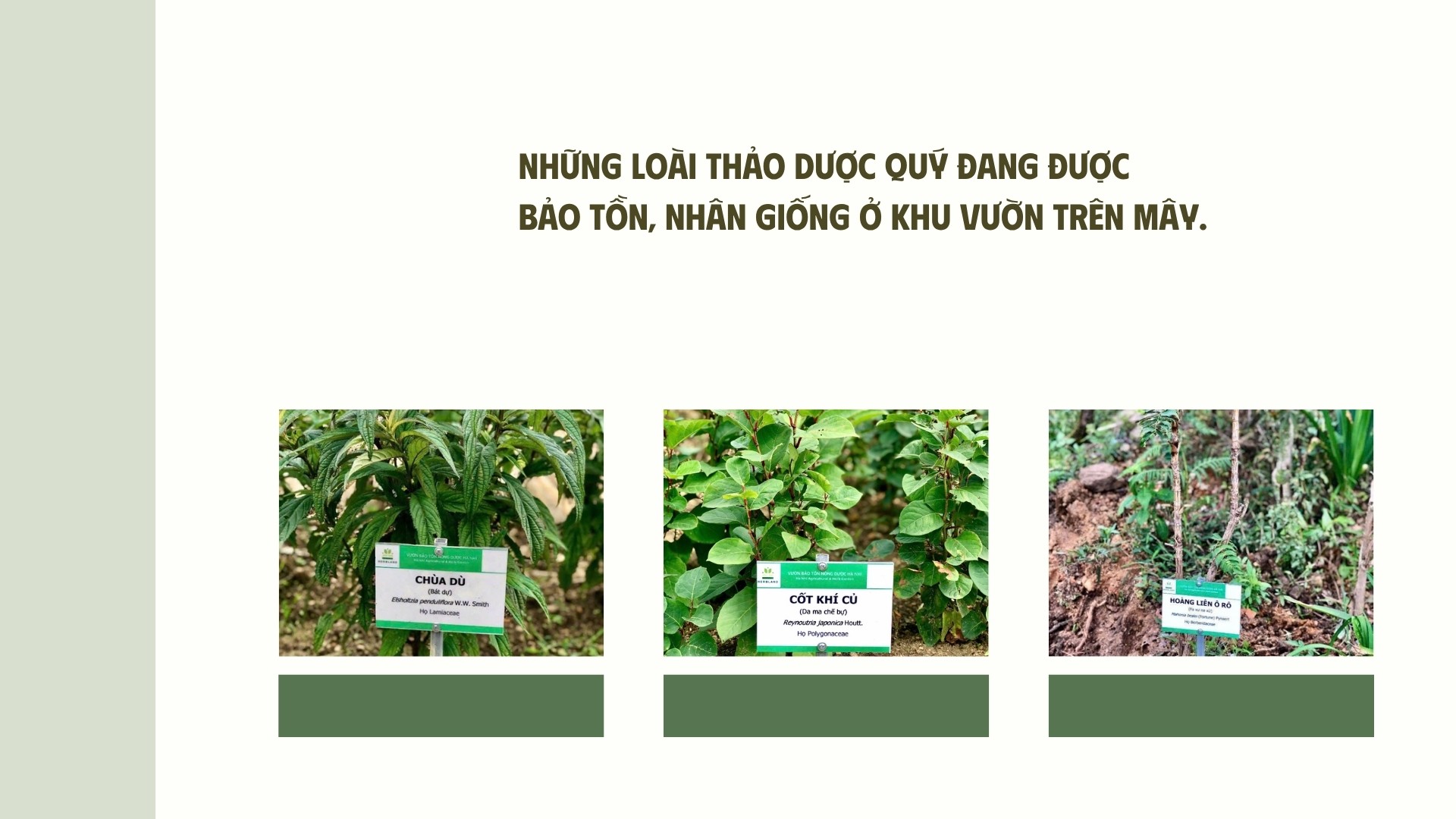
Taking me on a tour of his garden, the young man named Bach introduced me to many precious medicinal plants that he is preserving and propagating, including some very rare medicinal plants such as: Coptis chinensis, Coptis japonica, Polygonatum odoratum, Panax notoginseng, Panax notoginseng, and Prunus mume… In addition, the garden, which covers about 2 hectares, also contains dozens of other medicinal herbs such as honeysuckle, ivy, fan palm, Angelica sinensis, Coix lacryma-jobi, and others…
There were some herbs I'd never heard of or seen before, such as: devil's pepper, bone-strengthening root, dried grass, pepper flower petals... There were also some I'd heard of but never encountered in the garden, such as: burnt rice, hairy centella, dwarf dandelion... Despite this, Bach Hai Hoan could recite the names of each species perfectly, from their scientific names to their local names in the Ha Nhi language.
In a conversation with me, Bach Hai Hoan said: "Indeed, Y Ty is a treasure trove for those passionate about medicinal herbs. Because there are many rare and little-known medicinal plants here. There are small plants that few people pay attention to, but they are precious medicinal ingredients."
Then he recounted a recent memory from when he went to Choản Thèn village and accidentally discovered a clump of wild plants that the villagers had uprooted and thrown away by the roadside. Being a plant enthusiast and knowledgeable about medicinal plants, he was curious and went to examine them. He was overjoyed when he realized they were Guizhou prickly pear, also known as chestnut-seeded persimmon.
Prickly pear, a wild plant found in the mountains of Guizhou (China), has yellow fruit and is known as the "King of Vitamin C" because it contains many times more Vitamin C than other fruits. It is a valuable medicinal plant, beneficial for the digestive system, boosting immunity, preventing and supporting cancer treatment, fighting aging, and many other uses, making it highly sought after. He brought the prickly pear tree back to his garden, replanted it, and propagated it to preserve this rare species.
Sharing about how he came to Y Tý to build his herbal garden in the clouds, Mr. Bạch Hải Hoàn recalled: “Ten years ago, after graduating from Hanoi University of Pharmacy, I was still uncertain about where to find a job. My teacher, Associate Professor Dr. Trần Văn Ơn - former Head of the Botany Department, Hanoi University of Pharmacy - guided me to the mountainous provinces of Northwest Vietnam to learn about precious medicinal herbs such as Angelica sinensis, Ligusticum chuanxiong, and Panax notoginseng… When I came to Y Tý, the majestic beauty of the mountains and forests and the richness of the medicinal herbs in this land captivated me. I remember those early days here in winter, right when the snow covered the mountains and forests in white. We shivered from the cold, having to dig through the snow to find radishes to eat. The hardships were immeasurable, yet I have been attached to Y Tý for 10 years now…”
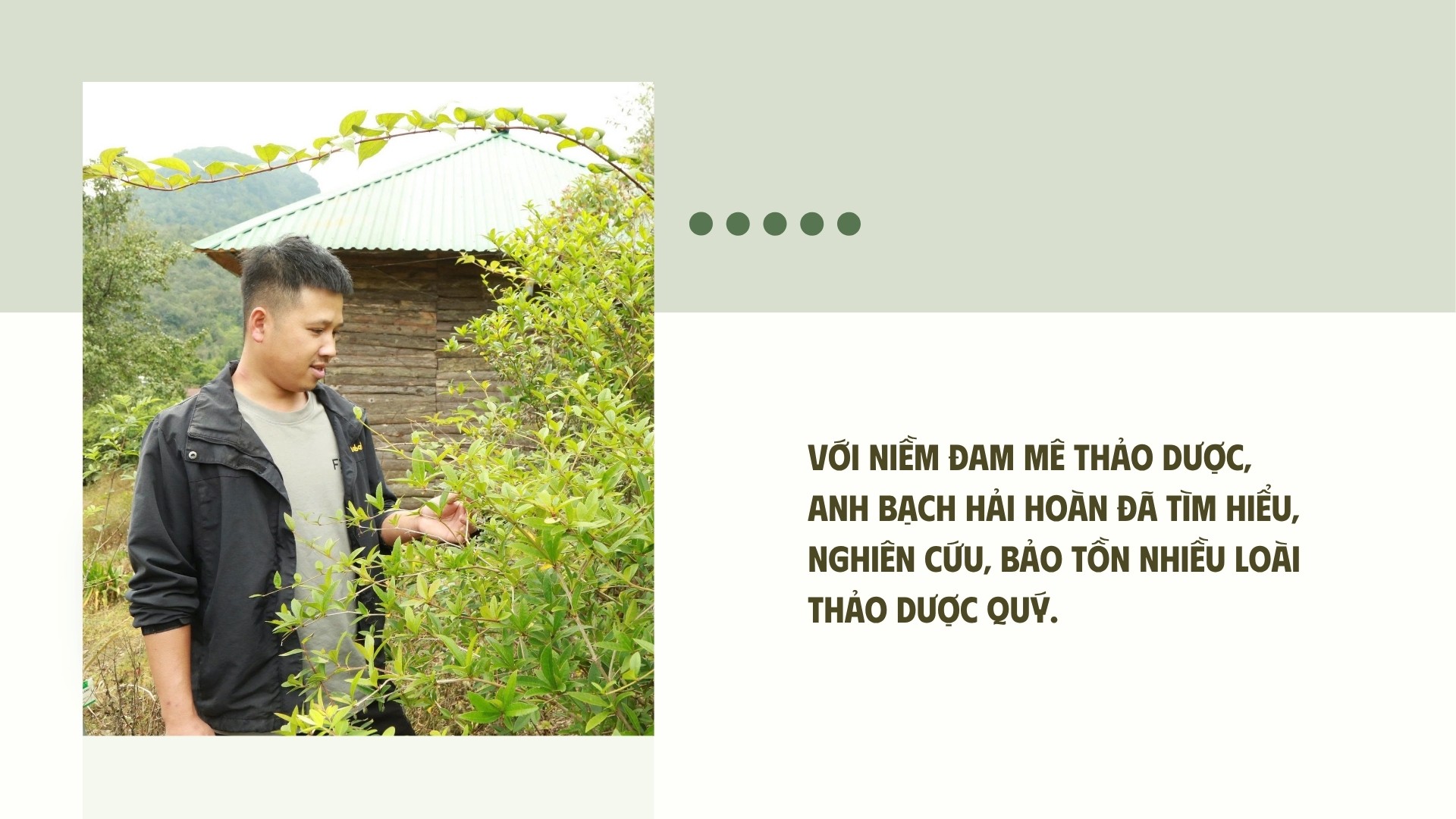
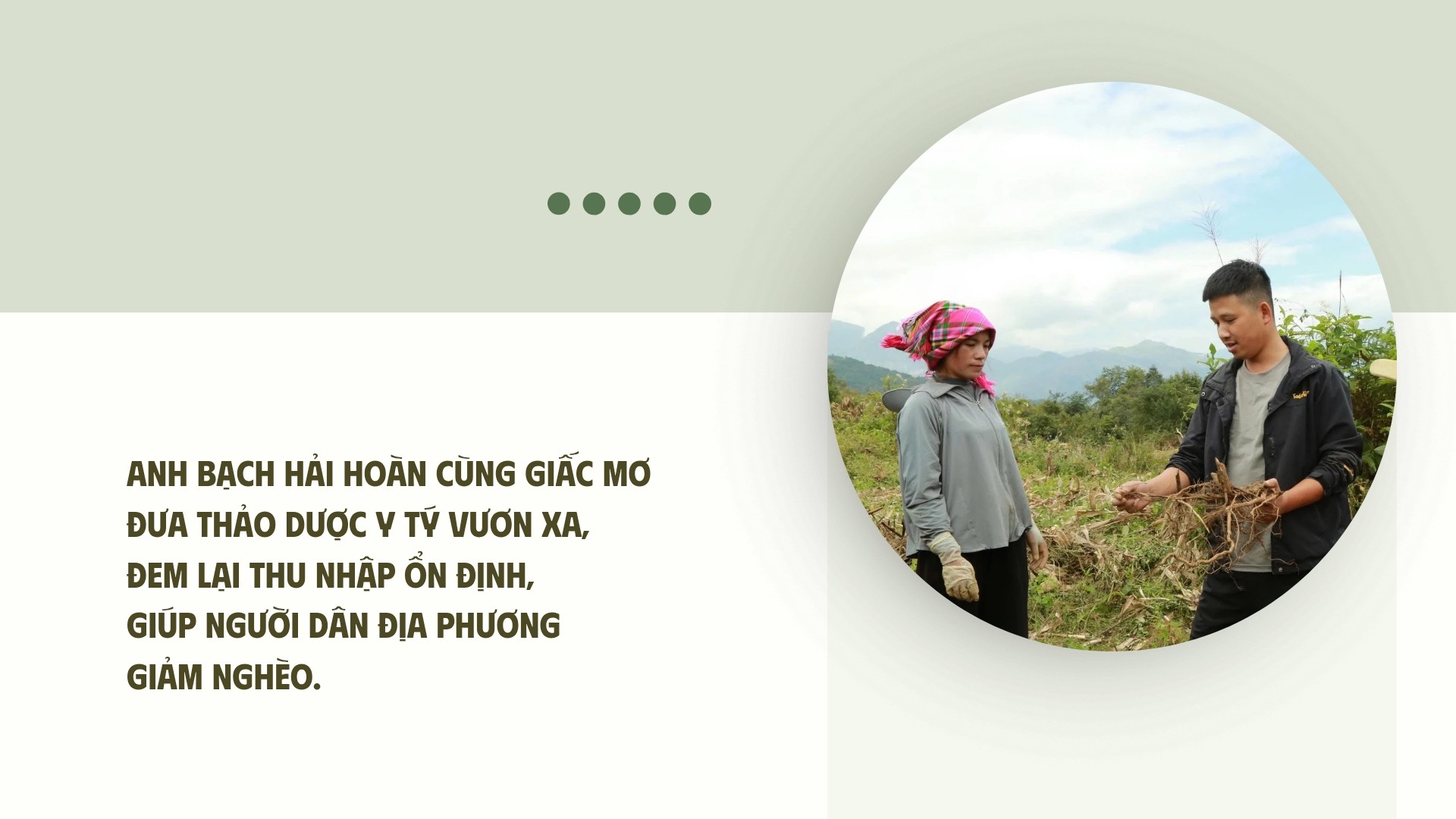
Driven by his passion for medicinal herbs, Bach Hai Hoan has diligently researched, studied, and collected dozens of plant species to preserve, propagate, and supply to like-minded individuals. Furthermore, he hopes to help local people reduce poverty and increase their income using the valuable medicinal plant resources of Y Ty.
In 2018, Bach Hai Hoan established the Y Ty Medicinal Herb Cooperative with the participation of 13 local members, through capital contributions or land contributions for production. The cooperative also leased 2 hectares of land from local people for 30 years to develop a medicinal herb growing area combined with a farmstay model to welcome tourists for accommodation, relaxation, and health care…
Along with preserving and propagating many native medicinal herbs, the Y Tý Medicinal Herb Cooperative also purchases and processes several types of medicinal herbs to serve market demand. Angelica sinensis is a valuable medicinal plant, rich in nutrients and very effective in boosting health. Previously, Angelica sinensis was widely cultivated in Y Tý under several projects. However, after the projects ended, Angelica sinensis faced difficulties in finding markets, so people were no longer enthusiastic about growing it. Recently, Bach Hai Hoan has successfully experimented with a process of drying Angelica sinensis roots into sliced form, which can be preserved for a long time and has an attractive flavor, favored by many customers.
Having visited Y Tý many times, I'm familiar with the Angelica sinensis plant that locals often bring to the market. The roots are delicious in bone broth, while the leaves and shoots are stir-fried with buffalo or beef, giving it a distinctive flavor. However, this is the first time I've seen dried Angelica sinensis roots. Each piece of dried Angelica sinensis is no longer white like fresh roots but turns a golden yellow, with a honey-like aroma. Bach Hai Hoan explained: "Because we don't have a large-scale drying facility, the Y Tý Medicinal Herbs Cooperative only manages to purchase about 6 tons of fresh Angelica sinensis each year, drying 1 ton to supply the market. In addition, the Cooperative also produces Angelica sinensis extract, which is very convenient for consumers as it only needs to be mixed with water to be enjoyed."
Walking around Y Tý Farmstay, I noticed that although the land is large, planning the farmstay still faces many difficulties. Bạch Hải Hoàn explained: The farmstay has several guest rooms and five herbal bath rooms to serve tourists. However, the road to Y Tý has been difficult recently, leading to a decrease in visitors and affecting the sustainability of operations. Although the garden has been planned into conservation areas for different types of plants (medicinal plants, agricultural plants, flowers, etc.), a lack of funding has limited investment in these areas. In the future, when the connecting roads to Y Tý are completed, the cooperative will re-plan the model garden for tourists to visit and experience.
Further conversation with the young man from Ninh Binh revealed that he had become a citizen of Y Ty, and this land had become his second home. It turned out that shortly after settling in Y Ty, this young man, passionate about herbal medicine, met his "other half"—a Ha Nhi girl named Trang Tha De. Knowing that De was also studying pharmacy at the Lao Cai Medical College, the two understood each other better and joined hands to build a home in the misty land of Y Ty. Now, Bach Hai Hoan spends his days tending his herbal garden in the clouds, while De runs a pharmacy in the Y Ty market. Although life is still difficult, they both strive to build a bright future.
Source: https://baolaocai.vn/vuon-thao-duoc-tren-may-post885919.html



![[Photo] Conference announcing the Politburo's Decision on organizational and personnel matters](https://vphoto.vietnam.vn/thumb/1200x675/vietnam/resource/IMAGE/2026/04/01/1775017881825_bnd-2410-1472-jpg.webp)























































Comment (0)