

The South China Morning Post noted that 2024 was a remarkably successful year for Vietnam-China economic cooperation, driven by trade and investment activities.
"What do durian, lobster, and snow have in common? They all bring significant economic benefits in a year of flourishing Vietnam-China relations," the South China Morning Post (SCMP) of Hong Kong (China) noted in a recent article.
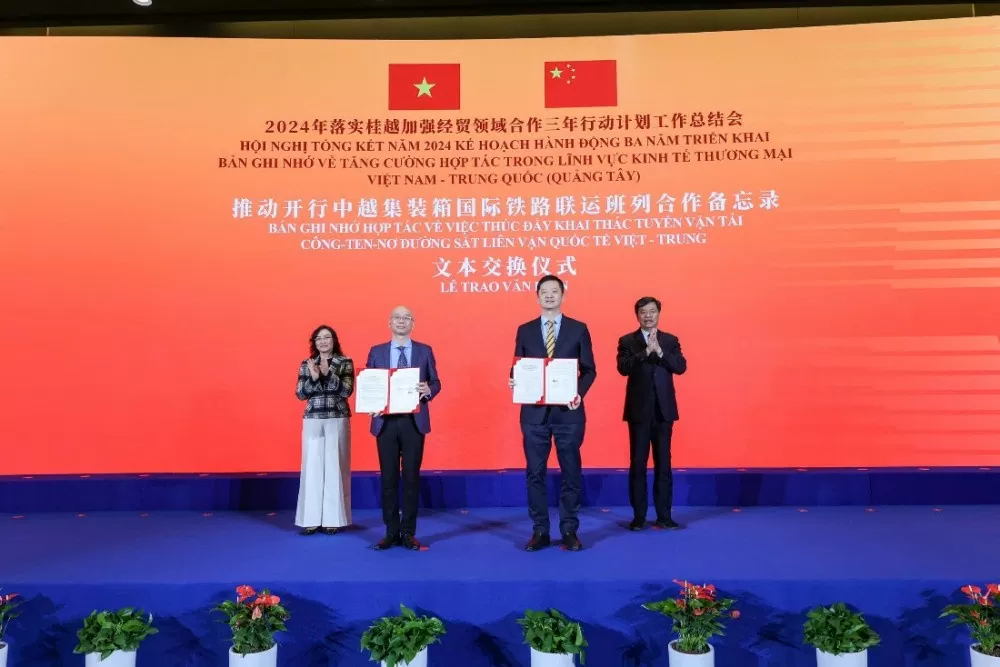 |
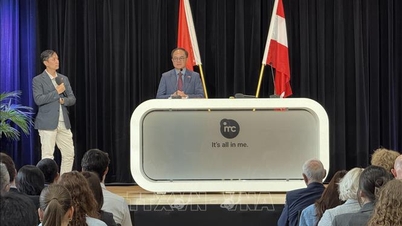
| Signing ceremony of the memorandum of cooperation at the 2024 year-end review conference of the 2024-2026 action plan to implement the Memorandum of Understanding on strengthening economic and trade cooperation between Vietnam and China (Guangxi). Photo: Dangcongsan.vn |
According to SCMP, economic relations between the two countries have made significant strides, thanks to high-level dialogues, vibrant trade, and direct investments in infrastructure and manufacturing.
According to data from China Customs, total bilateral trade turnover reached 212.9 billion USD in the first 10 months of 2024, a sharp increase compared to 183.9 billion USD in the same period last year. Notably, lobster exports from Vietnam to China increased sharply by 157% over the same period, reaching 298 million USD in the first 10 months of this year.
Durian also made its mark with a total export value of US$2.78 billion, a 42.6% increase compared to the previous year. Vietnam has now surpassed Thailand to become the largest supplier of durian to China, with an average price of 282 Yuan per fruit (approximately VND 635,000) in Chinese supermarkets.
In the tourism sector, China was Vietnam's second-largest source of tourists in the first 11 months of the year, with 1.8 million visitors, a significant increase compared to 557,000 in the same period last year. Conversely, Vietnam also recorded a strong increase in tourist arrivals to China. Zhangjiajie city in Hunan province alone welcomed over 42,000 Vietnamese visitors in the first half of this year.
In an interview with SCMP, Ms. Phuong Nguyen, Director of Communications at Fusion Hotel Group, said that Chinese tourists love Vietnam's long coastline, while Vietnamese tourists are increasingly eager to travel to China to see the snow. According to her, travel companies and key opinion leaders (KOLs) have fueled the trend of Vietnamese people traveling to China.
Great opportunities for bilateral investment.
The rise of the middle class in Vietnam is seen as a driving force for attracting investment from China. According to business consultancy Dezan Shira & Associates, the middle class will account for 26% of Vietnam’s population by 2024, becoming a potential market for Chinese businesses.
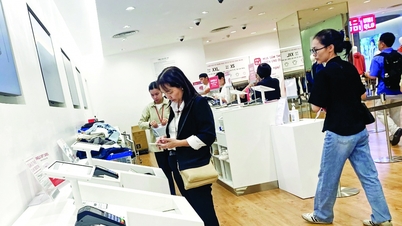
Brands like TCL, Xiaomi, and the Haidilao restaurant chain have spread throughout major cities like Ho Chi Minh City. In addition, many Chinese businesses are involved in logistics and supply chain management for agricultural exports, especially durian.
Mr. Ding Wei, Chairman of the Chinese Enterprise Association in Ho Chi Minh City, said that the increased purchasing power of Vietnamese people in the coming years will attract forward-thinking Chinese enterprises.
One of the businesses that has successfully capitalized on the wave of investment from Vietnam is Gotion. Last year, this Chinese electric vehicle battery developer agreed to invest $150 million in shares of VinFast, an electric vehicle manufacturer under Vingroup. Meanwhile, in November, Vingroup affirmed that Gotion is now a "key partner" in VinFast's supply chain and "part of our efforts to collaborate with potential partners globally to diversify our supply sources."
Strengthening cooperation on infrastructure
In addition to economic growth, infrastructure cooperation between Vietnam and China has also been continuously improved in recent times. In 2025, Vietnam and China are expected to start construction of the Lao Cai - Hanoi - Hai Phong railway, which will start at Lao Cai and be built in accordance with Chinese standards. Meanwhile, in October, China Railway Construction Corporation (CCCC) expressed its interest in investing in the $67 billion North-South high-speed railway project.
In an interview with the South China Morning Post, Professor Carl Thayer, of the University of New South Wales (Australia), said the growth in trade has increased the urgency of connecting the China-Vietnam railway lines. “In Beijing, officials want more rail connections across Southeast Asia to help expand economic cooperation,” Professor Thayer said.
The Australian professor also affirmed that the Lao Cai - Hanoi - Hai Phong high-speed railway project connects with the Kunming-Bangkok-Singapore railway system, allowing goods to travel from Vietnam to China and to the southernmost point of mainland Southeast Asia. He added that China's participation in the North-South high-speed railway project will "expand China's connectivity" from Ho Chi Minh City to Cambodia and Thailand.
According to Professor Thayer, the success in infrastructure development is particularly due to a series of high-level contacts between Vietnam and China. “Vietnam is pursuing a policy of diversifying and multilateralizing its foreign relations and is always open to all avenues related to large-scale infrastructure projects,” the Australian professor said.
Meanwhile, Chinese businesses are also optimistic about the prospects for economic cooperation between the two governments in the coming time. Mr. Ding Wei, Chairman of the Chinese Business Association in Ho Chi Minh City, said: “The Chinese government has maintained an open attitude. They are willing to invest in Vietnam and want to have economic relations with Vietnam.”
Source: https://congthuong.vn/2024-nam-thanh-cong-ruc-ro-cua-hop-tac-kinh-te-viet-nam-trung-quoc-364548.html















![[Infographic] Cross-exchange rates for determining taxable value from December 11-17](https://vphoto.vietnam.vn/thumb/402x226/vietnam/resource/IMAGE/2025/12/11/1765413245543_infographic-ty-gia-tinh-cheo-de-xac-dinh-tri-gia-tinh-thue-tu-11-1712-20251211021920.jpeg)









![[Video] The craft of making Dong Ho folk paintings has been inscribed by UNESCO on the List of Crafts in Need of Urgent Safeguarding.](https://vphoto.vietnam.vn/thumb/402x226/vietnam/resource/IMAGE/2025/12/10/1765350246533_tranh-dong-ho-734-jpg.webp)



















































Comment (0)