

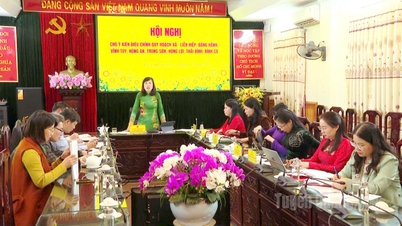
From 2026, the government will officially abolish the lump-sum tax payment system for household businesses, switching to tax declaration and payment based on actual revenue. At a seminar on the transition for household businesses organized by the Management Magazine on December 10th, Ms. Le Thi Duyen Hai, Deputy Secretary General of the Tax Consulting Association, stated that the tax calculation method for lump-sum and declaration-based businesses is essentially the same.
"The only difference lies in revenue, where households using the contract system rely on stable estimated revenue from the beginning of the year, while those using the declaration system rely on actual revenue generated," Ms. Duyen Hai explained.
Household businesses currently have to pay three types of taxes: business license fees, personal income tax, and value-added tax (VAT). However, the business license fee for household businesses will cease from January 1, 2026, according to Resolution 198 of the National Assembly on tax and fee support for the private economy .
In other words, from next year, households and individual businesses will only have to pay VAT and personal income tax if their annual revenue exceeds 500 million VND, according to the amended Personal Income Tax Law.
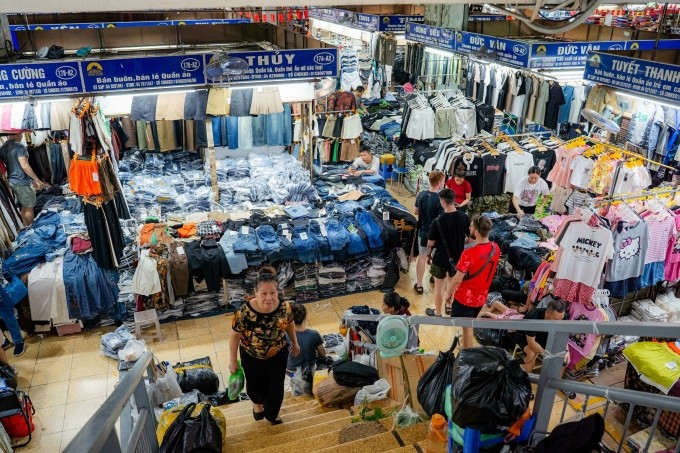
Regarding personal income tax, the authorities have added a method of calculating tax on profits (the difference between revenue and expenses) for household businesses. Specifically, households with annual revenue under 3 billion VND, where input costs can be determined, will be subject to a 15% tax rate on the profit. This rate corresponds to the preferential corporate income tax rate for micro-enterprises with equivalent revenue.
Household businesses with annual revenue of 3-50 billion VND will be subject to a tax rate of 17%, and 20% for revenue exceeding 50 billion VND.
In cases where households have revenue under 3 billion VND and their expenses cannot be determined, they will continue to pay taxes at the current rate of 0.5-2% of revenue, depending on the industry. However, they will be allowed to deduct the amount of income that falls within the tax-exempt threshold (500 million VND per year) before calculation.
Regarding VAT , according to Le Thi Duyen Hai, Deputy Secretary General of the Tax Consulting Association, business households, when switching to tax declaration, still pay VAT based on revenue, and the calculation rate remains unchanged from before. Business households with revenue ranging from 500 million to over 50 billion VND also apply this method.
Tax payable = VAT taxable revenue (x) industry-specific tax rate.
The Ministry of Finance 's plan to transform the tax management model and methods for household businesses once proposed allowing a portion of large-scale household businesses to apply the deduction method, meaning the VAT payable would equal output minus input. However, according to Ms. Duyen Hai, the authorities have not yet decided to amend this regulation.
Under the new policy, starting next year, retail businesses with annual revenue of 1 billion VND will have to pay personal income tax and VAT. The VAT payable will be at a fixed rate of 1% on total revenue, equivalent to 10 million VND per year.
Regarding personal income tax, if they cannot determine their input costs (a common situation for small households), the amount payable is 0.5% of revenue, after deducting the tax threshold of 500 million VND, which is 2.5 million VND. In total, this household has to pay 12.5 million VND in tax each year.
If they can determine the cost, let's say 800 million VND, and the personal income tax rate is 15% on a profit of 200 million VND, then this household would have to pay 30 million VND in personal income tax per year. The total tax they have to pay is 40 million VND.
According to the amended Tax Administration Law, from January 1, 2026, households and individual businesses can determine their annual revenue themselves for tax purposes. If they use electronic invoices with tax authority codes, the management system will determine the VAT and personal income tax payable. This data will be updated for taxpayers on eTax - the electronic tax application, the national public service portal. If they do not use electronic invoices, they will determine the tax payable themselves.
Specifically for individuals and households selling goods on e-commerce platforms, according to Decree 91/2022, the platforms declare and pay taxes on their behalf. This means that any incorrect or incomplete tax calculations are the responsibility of the platform management unit, not the business owner. Representatives of the Tax Consulting Association believe this significantly reduces administrative procedures for individuals and households selling goods on e-commerce platforms.
With platforms like Facebook, Zalo, and TikTok – where foreign providers don't charge buyers – they have to declare and pay taxes on their revenue themselves.
According to the amended Tax Administration Law, households and individuals conducting business with annual revenue of 1 billion VND or more must use electronic invoices with tax authority codes or invoices generated from cash registers. Households with annual revenue under 1 billion VND are not required to use this type of invoice.
By the end of 2024, the whole country had approximately 3.6 million households and individuals engaged in business. The number of households operating stably (those under contract and those declaring their income) was 2.2 million. In 2024, they contributed approximately 26,000 billion VND to the state budget, and this figure was 17,000 billion VND in the first half of this year.
Proposed tax calculation method for household businesses from 2026:
| Household business | Tax basis | Personal Income Tax Rate (%) | VAT rate (%) |
| Determine the cost | Revenue under 3 billion VND | 15 | Similarly to the group with undetermined costs. |
| Revenue over 3 - 50 billion VND | 17 | ||
| Revenue exceeding 50 billion VND | 20 | ||
| Costs cannot be determined (for revenue groups under 3 billion VND) | Distribution and supply of goods | 0.5 | 1 |
| Production, transportation, services related to goods, and construction with material procurement included. | 1.5 | 3 | |
| Services and construction without material procurement. | 2 | 5 | |
| Providing digital content products and services related to entertainment, video games, digital movies, digital photos, digital music, and digital advertising. | 5 | 5 | |
| Leasing of real estate, excluding accommodation business activities. | 5 | 5 | |
| Other sectors and fields | 1 | 2 |
Source: https://baohatinh.vn/bo-thue-khoan-ho-kinh-doanh-tinh-thue-the-nao-tu-2026-post300980.html




































![[Video] The craft of making Dong Ho folk paintings has been inscribed by UNESCO on the List of Crafts in Need of Urgent Safeguarding.](https://vphoto.vietnam.vn/thumb/402x226/vietnam/resource/IMAGE/2025/12/10/1765350246533_tranh-dong-ho-734-jpg.webp)






















































Comment (0)