

Standing member of the Secretariat Tran Cam Tu signed and issued Conclusion 224-KL/TW of the Politburo on continuing to implement Resolution 06-NQ/TW, dated January 24, 2022 of the Politburo on planning, construction, management and sustainable development of Vietnamese urban areas to 2030, with a vision to 2045.
The conclusion stated that after more than three years of implementing Resolution 06-NQ/TW, there are still many limitations and weaknesses that have not been completely overcome.
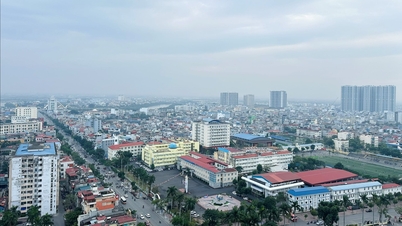
Specifically, urban planning is unstable and overlapping; implementation is inadequate; infrastructure has not kept pace with the rate of urbanization; and traffic congestion, flooding, and pollution are prevalent. In addition, the management, exploitation, and use of underground space are limited; low-level space and outer space have not received sufficient attention; and there is a lack of real connection to the need to increase resilience to natural disasters, extreme weather, and climate change.
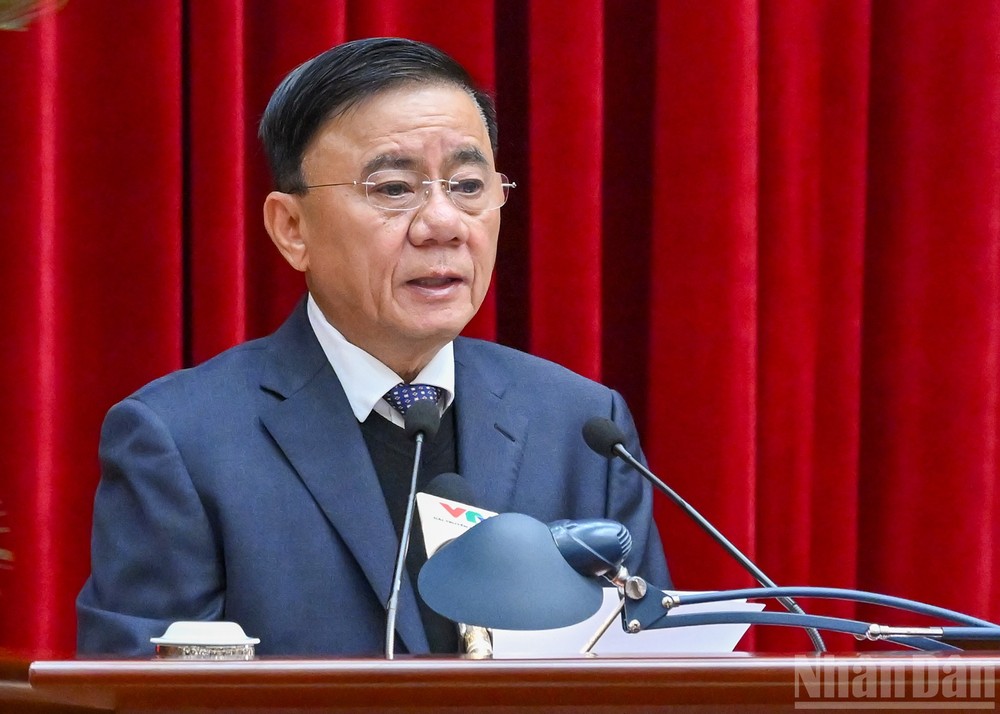
It is strictly forbidden to influence or influence planning for local interests.
To effectively implement urban planning, construction and development management in the coming time, the Politburo requires continuing to resolutely implement the viewpoints, goals, tasks and solutions stated in Resolution 06.
In particular, the Politburo requested a renewal of thinking on urban planning, ensuring consistency in implementation. Local authorities were urged to promptly review and adjust the overall urban and rural planning system, ensuring optimal spatial arrangement for development in accordance with the two-tiered local government model. This included connecting urban and rural areas, connecting cities with each other, and connecting urban areas with strategic transportation infrastructure (seaports, airports, highways, railways, waterways).
Cities play a central role in development, promoting regional and local connectivity and international integration, while maintaining traditional cultural identity. Perfecting the organization of the state management apparatus for urban planning...
Closely combine planning work with socio- economic development strategies, ensure national defense, security, environmental protection, and respond to climate change based on science, technology, innovation, and digital transformation, creating new growth drivers.
Promote the use of big data in planning and management; establish a real-time forecasting, warning and digital mapping system; replicate the green, ecological urban development model of "village in city - city in village".
The Politburo also requested to tighten discipline and order in planning construction and implementation. Focus on thoroughly handling the situation of "suspended planning"; urgently complete slow-progressing urban infrastructure projects.
At the same time, it is necessary to strengthen the management of urban order and construction order in cities and areas undergoing urbanization; synchronize planning, investment and operation; strictly control construction space; and strengthen the role of community supervision.
Strictly implement national technical standards and regulations on urban and rural planning.
"It is strictly forbidden for organizations, businesses, and individuals to influence or influence planning work for local interests" - the Politburo emphasized.

Expanding the scope of purchase, hire-purchase, and rental of social housing
Another task is to complete the revision and supplementation of legal regulations on urban and rural planning by 2026. This includes perfecting legal regulations in the areas of urban management, exploitation, use, and investment in development; water supply and drainage; land; planning; construction; technical infrastructure; underground space; low-level space; outer space; public space; green space; water surface; and sea surface…
Simultaneously, we will promote decentralization and delegation of power, reduce administrative procedures, synchronize with the two-tiered local government system, develop green and sustainable urban growth, be resilient to climate change, protect the environment, control air and waste pollution, combat traffic congestion, ensure energy security and water security, and develop some provinces that meet the criteria to become cities.
The Politburo also requested the continued effective implementation of the National Housing Development Strategy until 2030, with a vision to 2045; encouraging all economic sectors to participate in investment; completing the goal of building 1 million social housing units before 2030; and expanding the target groups for purchasing, lease-purchasing, and renting social housing.
There should be an appropriate mechanism to promote the development of commercial housing with prices suitable to people's incomes, housing for workers in industrial zones; establish and effectively use the National Housing Fund. Manage the development of the real estate market in a transparent, fair, sustainable and harmonious manner between segments, avoiding large-scale speculation and collapse.
“There are strict sanctions for investors who do not synchronously invest in technical infrastructure, social infrastructure, etc. in urban areas and residential areas” – The conclusion clearly stated.

Building a comprehensive program to handle pollution in large cities
In particular, the Politburo requested the vigorous implementation of solutions to protect the urban environment. This includes developing a comprehensive program to address air pollution, drinking water pollution, and wastewater in major cities, especially Hanoi and Ho Chi Minh City. It also calls for enhancing the responsibility and capacity of urban authorities in responding to natural disasters and handling emergencies and crises.
Focus on developing Hanoi and Ho Chi Minh City into global civilized urban centers. Expeditiously conduct a preliminary review and assessment of the implementation of Resolution 15 of the Politburo on the direction and tasks for the development of Hanoi until 2030, with a vision to 2045, and Resolution 31 of the Politburo on the direction and tasks for the development of Ho Chi Minh City until 2030, with a vision to 2045. Simultaneously, propose policies and solutions for the development of Hanoi and Ho Chi Minh City that are appropriate to the new situation.
"Review, amend, and supplement specific mechanisms and policies to create conditions for major cities such as Hanoi, Ho Chi Minh City, and neighboring localities to maximize the mobilization of public and private resources to implement large-scale infrastructure projects that ensure synchronous connectivity within urban areas and key economic regions," the Politburo emphasized.
The Politburo also emphasized the management and development of urban areas and the development of urban economies in depth, based on science, technology, innovation, and digital transformation. It stressed the need to mobilize diverse social resources to develop key and urgent infrastructure projects in transportation, environment, and other areas.
Building digital government and smart cities, ensuring the principle of people-centeredness, data and smart infrastructure as the foundation; researching and developing mega-urban models in the direction of integrated, multi-center planning, closely linked with regional infrastructure and satellite cities.
Prioritize investment in modern strategic infrastructure, mass public transport and financial, service, innovation, digital economy, logistics and high-tech centers...
Source: https://ttbc-hcm.gov.vn/bo-chinh-tri-phat-trien-ha-noi-va-tp-hcm-thanh-do-thi-van-minh-toan-cau-1020174.html
















![[Video] The craft of making Dong Ho folk paintings has been inscribed by UNESCO on the List of Crafts in Need of Urgent Safeguarding.](https://vphoto.vietnam.vn/thumb/402x226/vietnam/resource/IMAGE/2025/12/10/1765350246533_tranh-dong-ho-734-jpg.webp)

















































Comment (0)