

Facing the risk of electricity shortages in the North during the summer, Mr. Nguyen Hong Dien requested that all units do everything possible to ensure there is no shortage of coal and fuel for electricity production.
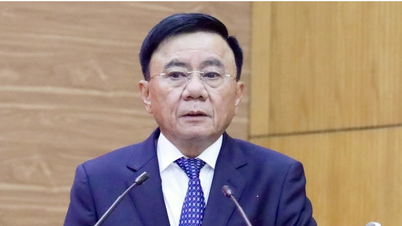
Minister of Industry and Trade Nguyen Hong Dien recently chaired a meeting with the State Capital Management Committee at Enterprises, Vietnam Electricity Group (EVN), Vietnam National Oil and Gas Group (PVN), Vietnam Coal and Mineral Industry Group (TKV), and the Northeast Corporation regarding the plan for electricity supply and operation of the national power system during the peak hot months of 2023.
EVN leaders stated that operating the power system during the peak hot months (May, June, and July) will be very difficult, especially the power system in the North, which will face a situation where it cannot meet the peak load demand, with a power deficit ranging from 1,600 MW to 4,900 MW.
In response to this situation, the Minister of Industry and Trade requested that all units seriously implement the plan for supplying electricity and coal for power generation. "Under no circumstances should there be a shortage of coal or fuel for electricity production," Mr. Dien said.
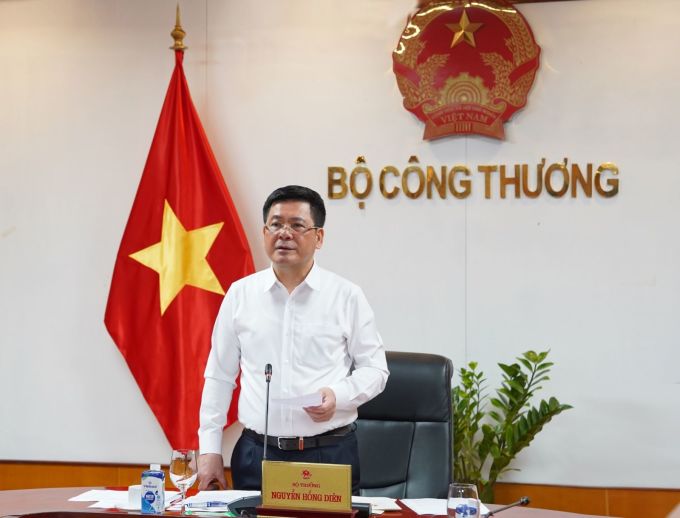
Minister of Industry and Trade Nguyen Hong Dien at a meeting on the electricity supply plan during the peak hot months on May 13. Photo: Moit
Units within the industry must also proactively address objective causes related to weather conditions. The Ministry of Industry and Trade leadership will seriously consider and handle individuals and organizations that are irresponsible and cause power shortages due to subjective reasons.
Regarding EVN, the Minister of Industry and Trade requested that all efforts be focused on ensuring the national power system is secure under any circumstances. The corporation was urged to promptly negotiate and mobilize power plants that are ready to generate electricity, including renewable energy plants, to increase the system's capacity. At the same time, EVN also needs to expedite the purchase and sale of electricity with existing electricity import projects.
Regarding PVN and TKV, Mr. Dien requested close coordination with EVN and other gas and coal suppliers for power plants according to the signed plans and contracts. At the same time, these units must also develop appropriate repair and maintenance plans, increase exploitation and import to prevent gas and coal shortages for electricity production.
Representatives from PVN, TKV, and the Northeast Corporation also pledged to create the best possible conditions for supplying coal and gas to ensure electricity supply.
Previously, according to EVN, there was a risk of electricity shortages during the hot season, but sources such as hydropower, fuel supply (coal, gas) for electricity production, and energy imports all faced difficulties. This year, hydrological conditions are not as favorable as in 2022. Currently, water levels in hydropower reservoirs are low, at only 70-90% of the multi-year average.
Regarding coal supply for electricity generation (domestically produced and blended), the supply capacity of TKV and the Northeast Corporation is 46 million tons, 6 million tons lower than the approved plan. EVN's power plants alone are short 1.3 million tons of coal for operation. Purchasing additional coal to cover the shortfall is also difficult due to market limitations and inadequate coal receiving infrastructure, resulting in coal shortages at power plants at certain times.
Similarly to gas, gas supply capacity this year remains lower than in previous years due to several major fields entering a decline phase. The projected production for 2023 is 5.6 billion m3 (of which 4.3 billion m3 is from the Southeast region and 1.3 billion m3 from the Southwest region), approximately 1.3 billion m3 lower than in 2022. Furthermore, some gas fields have been in operation for a long time and frequently experience incidents, making gas supply for electricity generation difficult.
Anh Tú
Source link























![[Image] Close-up of the newly discovered "sacred road" at My Son Sanctuary](/_next/image?url=https%3A%2F%2Fvphoto.vietnam.vn%2Fthumb%2F1200x675%2Fvietnam%2Fresource%2FIMAGE%2F2025%2F12%2F13%2F1765587881240_ndo_br_ms5-jpg.webp&w=3840&q=75)













































Comment (0)