

Reforestation of barren fields
Due to labor restructuring and a shortage of manpower, some families in Lien Son village, Tan Dinh commune (Lang Giang district) are not enthusiastic about farming. They rent out, borrow, or leave their fields fallow. One of the people who contributed to reforesting these barren fields and transforming them into fertile land is Mr. Ha Minh Nam (born in 1995), from Xuan Huong commune (Lang Giang district). In 2017, Mr. Nam graduated from the National Economics University. While working, he saw many places where the value of the land was not being fully exploited, with many fields left fallow and overgrown with weeds, which was a great waste.
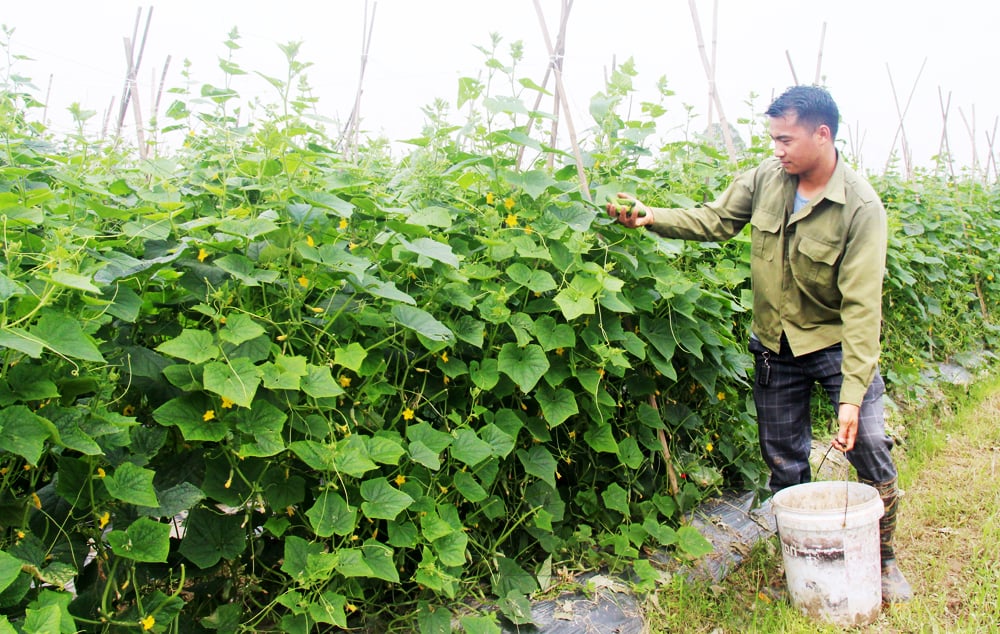 |
Mr. Ha Minh Nam is harvesting baby melons. |
In 2020, he decided to return to his hometown to implement his idea of clean agriculture . On a scale of over 6 hectares, rented or borrowed from local people, he planned and improved the land, implementing the motto "one production area, one crop variety" to help manage and control pests effectively, and to facilitate the application of mechanized equipment. While producing, Mr. Nam proactively connected with businesses and cooperatives to receive support in terms of seedlings and livestock, and to find markets for his products.
To date, all of his vegetables and fruits are sold under contract to GOC Export Food Processing Joint Stock Company (Lang Giang) and several supermarkets inside and outside the province; fresh flowers are sold to small traders at wholesale markets in Hanoi . With this method, Mr. Nam earns over 1 billion VND in revenue each year, with a profit of 200-300 million VND after deducting expenses, which is then reinvested. "This season, I planted 20,000 dahlia plants. Because they are cared for using the right techniques, the plants are growing well, and I expect to be able to sell them in 20 days," Mr. Nam said.
| After leasing or borrowing land, most landowners organize efficient farming practices, forming high-tech agricultural models that create a highlight in the local economic development. |
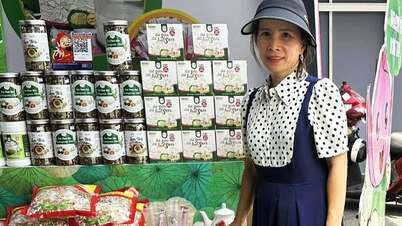
Following the same idea as Mr. Ha Minh Nam, Ms. Nghiem Thi Huong, Director of Toan Thang Agricultural Production and Service Cooperative (Bac Giang City), leased 2,600 square meters of rice paddies and greenhouses from local people in Ca village, My Thai commune (Lang Giang district) to produce high-tech agricultural products, mainly: cantaloupe, baby melons, pumpkin buds, and seasonal vegetables and fruits. In addition to the above area, she also collaborated with several engineers to lease a barren pond to grow lotus, combining it with the development of experiential tourism and the purchase of characteristic agricultural products from her hometown of Bac Giang.
In the province, there are currently many models of renting or borrowing farmland for cultivation, ranging in scale from nearly one acre to tens of hectares. With the goal of sustainable agricultural production, some organizations and individuals, after renting land, have invested in constructing greenhouses and net houses, installing automatic irrigation systems, temperature control equipment, and applying VietGAP standards… generating billions of dong in revenue per year.
Strengthening connections
Bac Giang is promoting the production of commercial agricultural products and the application of high technology. To attract organizations and individuals to invest in this sector, the province has issued many support mechanisms in recent years. Most recently, Resolution No. 26 dated July 14, 2023, of the Provincial People's Council promulgated regulations on policies to support the development of agriculture, forestry, and fisheries in Bac Giang province, for the period 2023-2030.
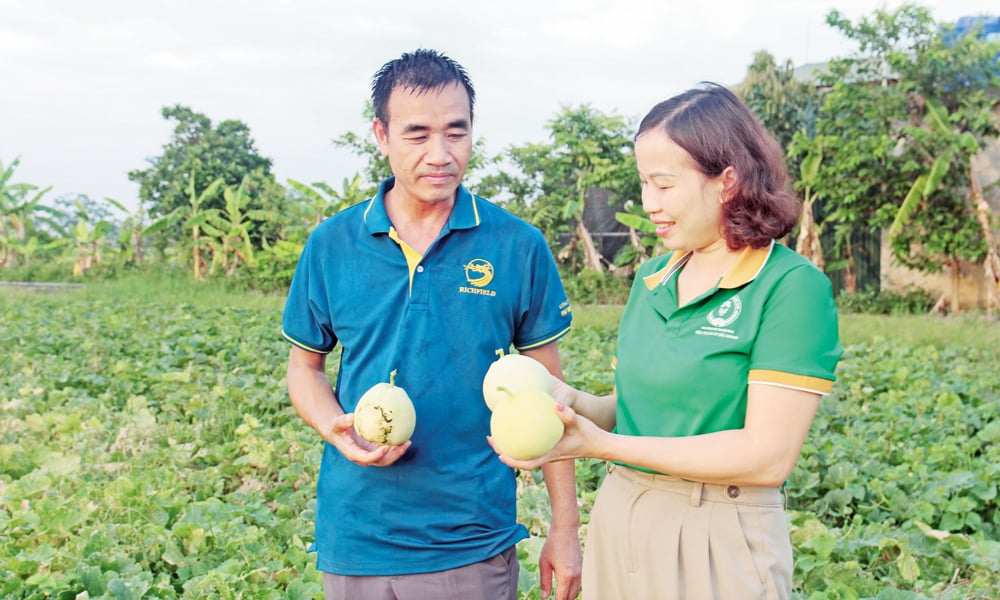 |
Ms. Nghiem Thi Huong, Director of Toan Thang Agricultural Production and Service Cooperative, shared her experience in caring for cantaloupe melons. |
According to the Department of Agriculture and Environment, in 2024, the provincial budget spent nearly 50 billion VND to assist businesses, cooperatives, production groups, and individuals, including expenditures for land consolidation, leasing production space, and supporting the purchase of machinery and equipment for production. For example, in Hiep Hoa district, from the provincial and district budgets, the locality supported farmers in consolidating over 33 hectares of land; subsidized the cost of purchasing 32 plows, one processing and preservation system; and developed 51 hectares of concentrated commercial agricultural production.
The Dai Dong 2 Village Agricultural Service Cooperative in Danh Thang Commune (Hiep Hoa District) received over 1.1 billion VND in government support. The cooperative mobilized its members to consolidate small, scattered plots of land into a large 13-hectare field for commercial potato production. Concentrated production offers several advantages, such as the application of mechanization in cultivation and harvesting, reducing labor costs. "With an average selling price of 9,000 VND/kg, after deducting expenses, we earned a profit of 320 million VND this past winter," shared Mr. Luong Van Kiem, a representative of the cooperative.
Despite its high economic efficiency, investigations in various localities reveal that farmland remains fragmented, small-scale, and even abandoned by farmers. Some people do not cultivate the land but still want to retain it. This hinders the land consolidation goals of businesses, cooperatives, and production groups, making it difficult to meet the criteria of a minimum lease term of 5 years and a minimum area of 2 hectares for the districts of Son Dong, Luc Ngan, Luc Nam, and Yen The, and a minimum of 5 hectares for other areas.
According to Mr. Le Ba Thanh, Deputy Director of the Department of Agriculture and Environment, the province is focusing on developing commercial agricultural production, thus requiring land consolidation and expansion of production scale from a few hectares to several tens of hectares. Therefore, in the context of economic restructuring, a shortage of agricultural labor, and the availability of more stable income sources, farmers should consider leasing or lending their land when not in use. This will both generate economic value for the family and improve the soil, preventing it from becoming barren and infertile. However, the lease or loan contract must ensure clear legal validity between the user and the lessee. Priority should be given to implementing advanced investment projects and models that ensure sustainability, environmental friendliness, and job creation for local workers.
Businesses, cooperatives, and individuals need to carefully select production models that align with the local socio-economic development plan; and invest in infrastructure to ensure efficient cultivation. Increased linkages between models, from production to consumption, are crucial for sharing experiences and profits. The agricultural sector and local authorities should continue to direct specialized departments to expedite the assessment of project dossiers. Feasible projects that meet requirements will receive prompt disbursement of support funds, providing businesses, cooperatives, and individual producers with additional resources for production development.
Source: https://baobacgiang.vn/cho-dong-ruong-them-xanh-postid420125.bbg





























































































Comment (0)