

(NLĐO) – The State Bank of Vietnam's policy interest rate has not changed because inflation and risk factors remain under control.
This was the assessment of Mr. Suan Teck Kin, Director of Global Market and Economic Research at UOB Bank (Singapore), at a presentation on Vietnam's economic outlook for 2025 organized by UOB this afternoon, March 4th.
According to Mr. Suan Teck Kin, the State Bank of Vietnam's policy interest rate will not change in the near future, as inflation and other risk factors remain within acceptable limits for the banking sector to expand credit packages and support economic growth.
Currently, with the upward pressure on the USD/VND exchange rate and the US Federal Reserve (FED) not rushing to cut interest rates in the first half of 2025, the State Bank of Vietnam finds it difficult to lower its policy interest rate. Conversely, inflation is under control but remains at a high level, making it difficult for the central bank to cut the policy interest rate. Therefore, the State Bank's solution at this time is to flexibly manage interest rates, balancing them with the exchange rate to promote growth.
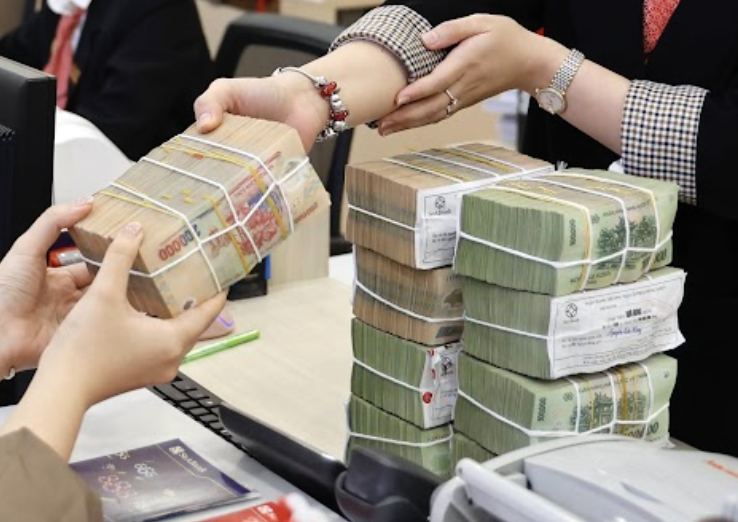
Deposit and lending interest rates remain stable.
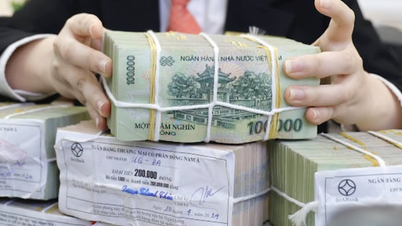
Mr. Dinh Duc Quang, Director of Currency Trading at UOB Vietnam, analyzed that in recent months, the market has seen some reports of commercial banks significantly increasing deposit interest rates. However, this is only a localized development at some banks. Many of the largest commercial banks continue to apply 12-month term savings interest rates around 4.8-5% per year; the group of joint-stock banks has maintained a stable 12-month interest rate of around 5.5% in recent months. This is a suitable interest rate in the context of the VND depreciating by about 5% against the USD in 2024.
"With the goal of achieving higher GDP growth, around 8% in 2025, along with solutions to accelerate public investment disbursement, expand export markets, and attract key FDI in technology, the authorities also mentioned solutions to expand credit strongly. This may put slight upward pressure on VND interest rates in 2025, but on the positive side, if USD interest rates in the international market decrease and the global economy grows better… this pressure will be balanced. Vietnam's economy has very positive opportunities to attract foreign investment in the medium and long term, which is a solid basis for stabilizing interest rates and exchange rates," said Mr. Dinh Duc Quang.
Previously, in its recently published macroeconomic report on Vietnam, Standard Chartered Bank projected that inflation would rise in the near future, increasing to 3.8% in February 2025, up from 3.6% in January 2025. This marks the seventh consecutive month that inflation has remained below 4% year-on-year.
The Vietnamese government has adjusted its 2025 GDP growth target to at least 8%, compared to 6.5-7%, with inflation expected at 4.5-5%, in order to create room for flexible monetary policy.
"The prospect of stronger growth could help maintain low interest rates in the short term. The State Bank of Vietnam is forecast to raise interest rates by another 0.5 percentage points in Q2 2025 to respond to rising inflation," said a Standard Chartered expert.
Regarding interest rate management, Deputy Governor of the State Bank of Vietnam, Dao Minh Tu, stated that over the past two years, the State Bank has consistently strived to maintain stable interest rates.
Recently, the State Bank of Vietnam issued a document requesting commercial banks to stabilize deposit interest rates while simultaneously reducing lending interest rates. This move aims to implement the directives of the Government and the Prime Minister on promoting economic growth of 8% or higher by 2025.
Source: https://nld.com.vn/chuyen-gia-nuoc-ngoai-du-bao-moi-nhat-ve-lai-suat-vnd-196250304174912461.htm



























































































Comment (0)