

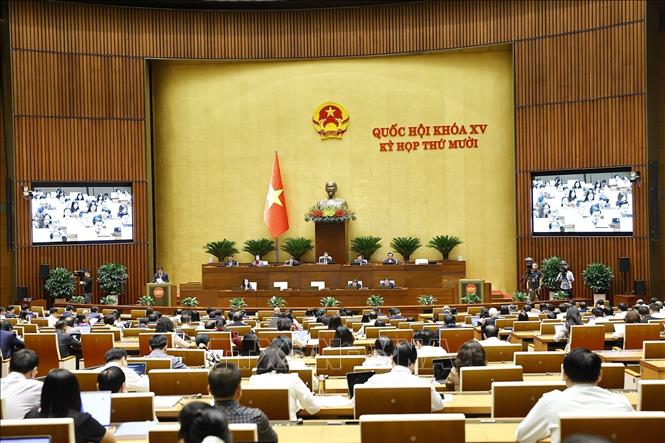
Ms. Nguyen Thi Lan, Deputy Director of the Department of Natural Resources and Environment of Khanh Hoa province, said that since the Environmental Protection Law of 2020 came into effect, the system of policies and laws on environmental protection has been perfected to be more comprehensive, transparent, and modern. The Government and the Ministry of Natural Resources and Environment (now the Ministry of Agriculture and Environment ) have issued important guiding documents such as Decree 08/2022/ND-CP and Circular 02/2022/TT-BTNMT, detailing regulations on environmental impact assessment, environmental permits, waste management, protection of water, soil, and natural heritage. These new adjustments have helped shift the approach to environmental management from "post-inspection" to "prevention and risk control".
According to Ms. Lan, the implementation of the Law in Khanh Hoa has yielded many tangible results. The province has proactively reviewed and issued 5 resolutions of the Provincial People's Council and 13 decisions of the Provincial People's Committee to concretize the provisions of the Law and guiding decrees and circulars. Environmental quality is stably controlled, and periodic monitoring results show that air, surface water, coastal seawater, and groundwater are all within permissible limits; there are no longer any facilities causing serious environmental pollution.
Currently, the rate of collection, transportation, and treatment of urban solid waste in Khanh Hoa reaches 99.5%, while in rural areas it exceeds 85%. 100% of industrial parks and over 85% of industrial clusters have centralized wastewater collection and treatment systems that meet standards before discharging into the environment. To date, 28 large production facilities have installed automatic, continuous monitoring systems for wastewater and exhaust gases, transmitting data directly to the Department of Agriculture and Environment for monitoring and control.
Furthermore, administrative reforms in the environmental sector have been accelerated with the implementation of full-process online public services for environmental permit applications and environmental impact assessment reports, shortening processing times and reducing costs for businesses. The province has also strengthened inter-agency coordination in inspecting, monitoring, and handling environmental violations, contributing to preventing pollution risks and environmental incidents.
Ms. Nguyen Thi Lan also pointed out that the implementation of the Law still faces difficulties such as a lack of investment resources for wastewater and solid waste treatment infrastructure, and limited capacity of environmental officials at the local level. She suggested that the Government continue to improve the financial mechanism, strengthen decentralization coupled with inspection, supervision and technical support to enable localities to implement it effectively, aiming for green and sustainable development.
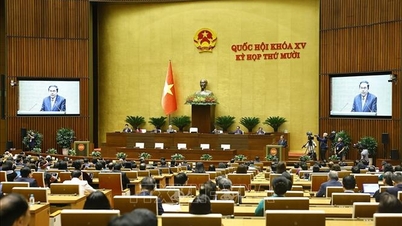
Dr. Phan Cong Kien, Deputy Director of the Nha Ho Cotton Research and Agricultural Development Institute (Do Vinh Ward, Khanh Hoa Province), commented that the chairman's management of the discussion session was very flexible, and the opinions expressed were concise, clear, and demonstrated a high sense of responsibility. He highly appreciated the quality of the explanations from National Assembly delegates and management agencies; stating that the explanations were specific, clear, and did not evade questions, reflecting a constructive spirit. The implementation of policies and laws on environmental protection has achieved many outstanding results. Many important indicators have improved, such as urban waste collection and treatment, waste sorting at source, and a focus on wastewater treatment systems in industrial and export processing zones; the forest cover rate has increased, contributing to ecosystem protection and climate change adaptation. He also stated that the focus on raising public awareness and promoting the green and circular economy is crucial for sustainable development.
However, Dr. Phan Cong Kien expressed concern that air pollution still persists in some major cities, localized pollution along rivers and canals passing through residential areas, and the rate of direct landfill waste disposal remains high. He expects that in the future, management agencies will continue to strengthen the application of science and technology, expand automated environmental monitoring, and promote international cooperation to control pollution more effectively.
Source: https://baotintuc.vn/thoi-su/cu-tri-khanh-hoa-danh-gia-cao-viec-thuc-hien-chinh-sach-phap-luat-ve-bao-ve-moi-truong-20251028132607581.htm


































































Comment (0)