

The National Assembly's supervisory delegation believes that the organization and human resources of the preventive health system are weak, and the policies for doctors and medical staff are inadequate.
This assessment was made by the National Assembly 's Supervisory Delegation in its report on the results of the thematic supervision of the mobilization, management, and use of resources for the prevention and control of the Covid-19 epidemic; and the implementation of policies and laws on grassroots healthcare and preventive medicine. This was the content reported to the National Assembly and discussed by delegates on May 29th.
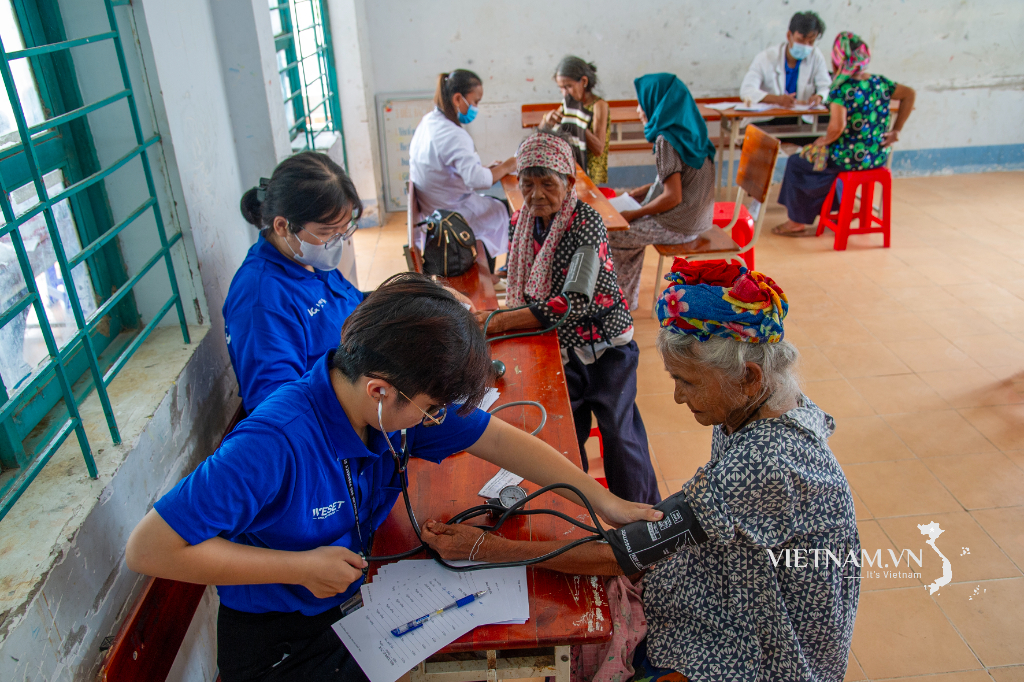
The monitoring team assessed that the pandemic "exposed the weaknesses of the primary healthcare and preventive health systems." The organization and structure of this system have changed significantly over the years, there is a shortage of human resources, and the quality is not guaranteed. Policies for doctors and medical staff are not commensurate with their responsibilities.
Investment in primary healthcare and preventive medicine has not received adequate attention. Conditions regarding medicines, medical equipment, and infrastructure are limited. The capacity to provide healthcare services at the district and commune levels does not meet the basic needs of the people; there are still inadequacies in financial mechanisms, autonomy mechanisms, and health insurance policies. The role of preventive medicine is still not fully and comprehensively understood.
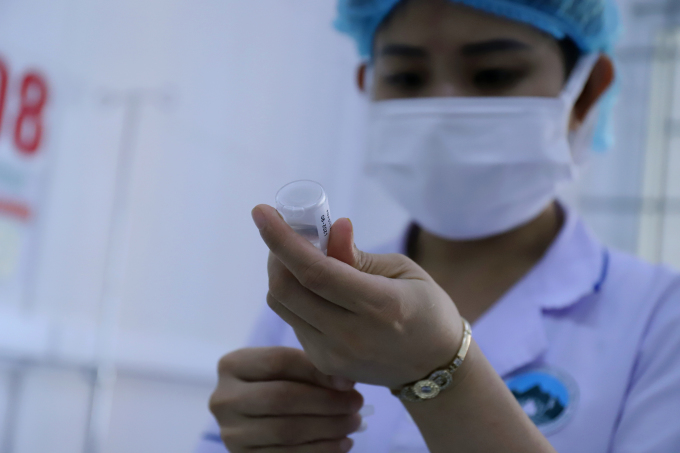
Medical staff in Ha Tinh province administer Covid-19 vaccines to residents, June 2021. Photo: Duc Hung
Regarding the reasons, the Supervisory Delegation pointed out that the proportion of spending on grassroots healthcare in the total social healthcare expenditure decreased from 32.4% in 2017 to 23.1% in 2019. The proportion of spending on medical examination and treatment under health insurance at the grassroots level reached 34.5% in 2022, while the commune level only reached 1.7%.
The allocation of non-salary recurrent expenditures for commune health stations is low, with some localities receiving only 10-20 million VND per station per year, barely enough to cover electricity, water, and administrative expenses. Commune health stations are not independent accounting units but depend on district-level health services, and there are no specific regulations regarding expenditures at commune health stations.
Furthermore, the total number of preventive health care personnel from the central to district levels only meets 42% of the human resource needs, resulting in a shortage of approximately 23,800 people. This includes a shortage of 8,075 preventive medicine doctors and nearly 4,000 public health graduates.
Low income and benefits, coupled with significant pressure during the pandemic, make it difficult for healthcare workers to focus on their work. The support provided to village health workers is only 0.3 and 0.5 times the basic salary (equivalent to 447,000 and 745,000 VND respectively), failing to encourage them to maintain their jobs and is the main reason for the increasing number of preventive healthcare workers transferring to other positions or resigning.
The supervisory delegation recommended that the National Assembly strengthen supervision of policy implementation and improve the legal system regarding primary healthcare and preventive medicine; and requested the Government to submit a draft law related to this field to the National Assembly no later than 2025.
The Ministry of Health is urgently finalizing and submitting to the Prime Minister for consideration and promulgation the plan for the network of medical facilities and the system of medical examination and treatment facilities to meet the medical examination and treatment needs of each region and locality, avoiding scattered investment that causes waste.
The Ministry of Health is prioritizing investment in developing and improving the quality of primary healthcare instead of focusing solely on building new hospitals; developing the family doctor model and mobilizing the participation of private healthcare to help reduce the burden on higher-level hospitals.
Source link




















































































Comment (0)