

Clear motion
In recent years, Tuyen Quang has focused on synchronously implementing key projects such as the pilot project to improve the quality of primary health care at commune health stations in the period of 2023 - 2025; the project to improve the capacity of the health sector in the period of 2022 - 2025; and the health check-up plan for people in border communes. These steps are considered important "leverages" to strengthen grassroots health care, building a foundation for preventive medicine.
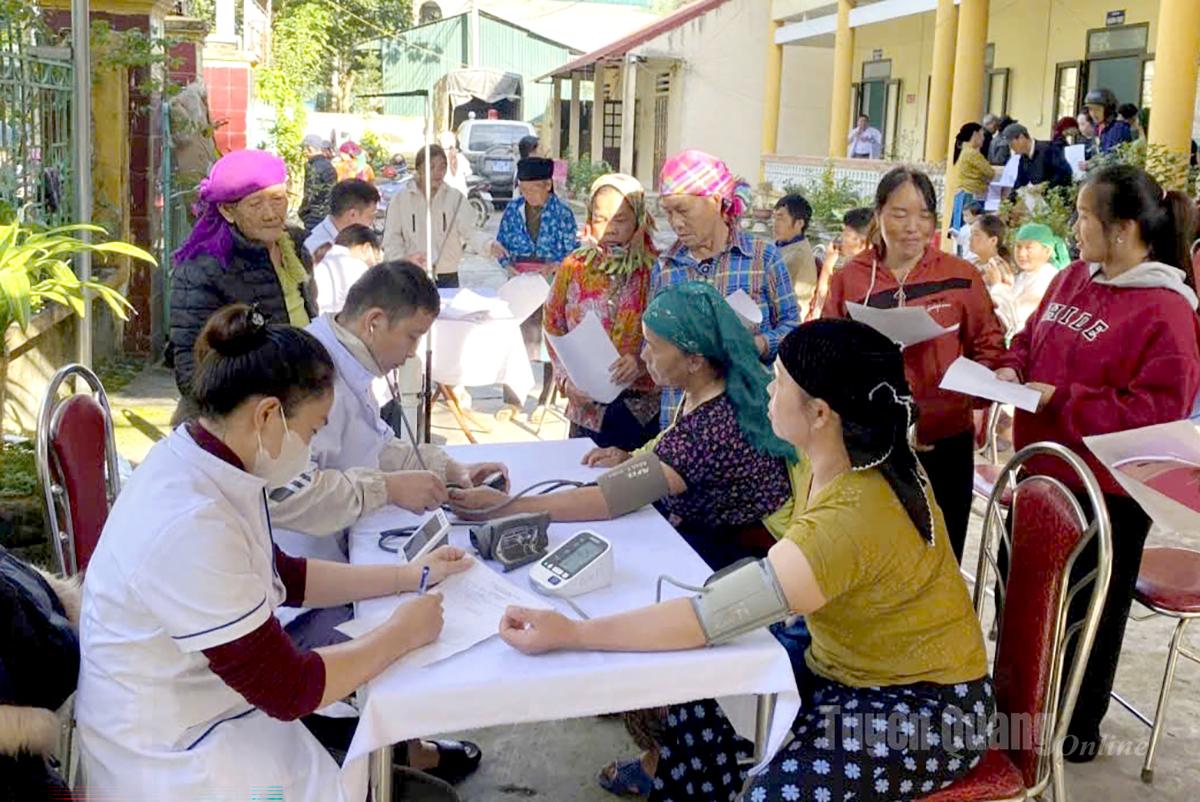 |
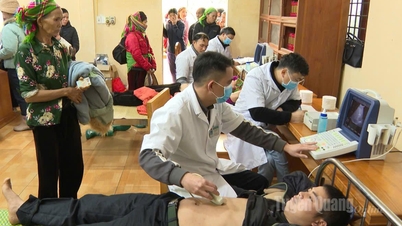
| Health station staff screen for tuberculosis for people in Can Ty commune. |
Thereby, the grassroots health network was strengthened. 100% of commune health stations were invested in and upgraded, many communes met national health standards. General hospitals and regional health centers continued to be equipped with modern machinery, technology transfer, and support communes in disease prevention and primary health care. Family doctor models, community management of hypertension and diabetes, and monitoring of chronic diseases using electronic health records were expanded, creating a clear change in the mindset of "prevention is better than cure".
Currently, all 17 border communes have working doctors, of which 11 stations have enough 2 doctors; the remaining communes are assigned doctors on rotation, helping to stabilize human resources and improve the quality of medical examination and treatment. The health sector coordinated with local authorities to organize 234 health check-ups for nearly 189 thousand people, reaching 96.8% coverage. Through mobile examinations, 44,401 cases of diseases were detected, including 26,286 internal diseases, 5,487 surgical diseases, and 12,268 cases of individual specialties. This is important data to help develop a plan to manage chronic diseases, especially in border and difficult areas.
Disease surveillance work is strictly implemented. According to the 2025 report of the Provincial Center for Disease Control (CDC), the 24/7 surveillance network is maintained, cases are investigated within 24 hours, and key surveillance of 5 common infectious disease groups is carried out. The full vaccination rate for children under 1 year old is 92.32%, the rate of DPT-VGB-Hib injection for the 4th dose is 93.75%, contributing to maintaining sustainable community immunity. In particular, 100% of preventive medical facilities have used infectious disease reporting software, facilitating fast data updates and timely zoning when the epidemic shows signs of increasing. Doctor Nguyen Van Thang, Director of Hoang Su Phi Regional Medical Center, shared: "Hoang Su Phi has more than 73 thousand households, most of whom are ethnic minorities, with limited awareness of health care, but thanks to increased vaccination, communication and screening, the expanded vaccination rate in the area has reached over 98%, with no major epidemics."
Following the implementation of projects to improve grassroots healthcare capacity, the preventive capacity of commune-level healthcare workers has significantly improved; their proactiveness and flexibility in handling outbreaks have increased; and people have more complete and regular access to healthcare services.
Challenges in difficult areas
Despite the positive results, preventive medicine in remote areas still faces many challenges. Economic hardship, backward customs and uneven educational levels make disease prevention propaganda difficult. In some border communes, people still have the mentality of "only going to the doctor when sick", leading to late detection of diseases and difficulty in treatment.
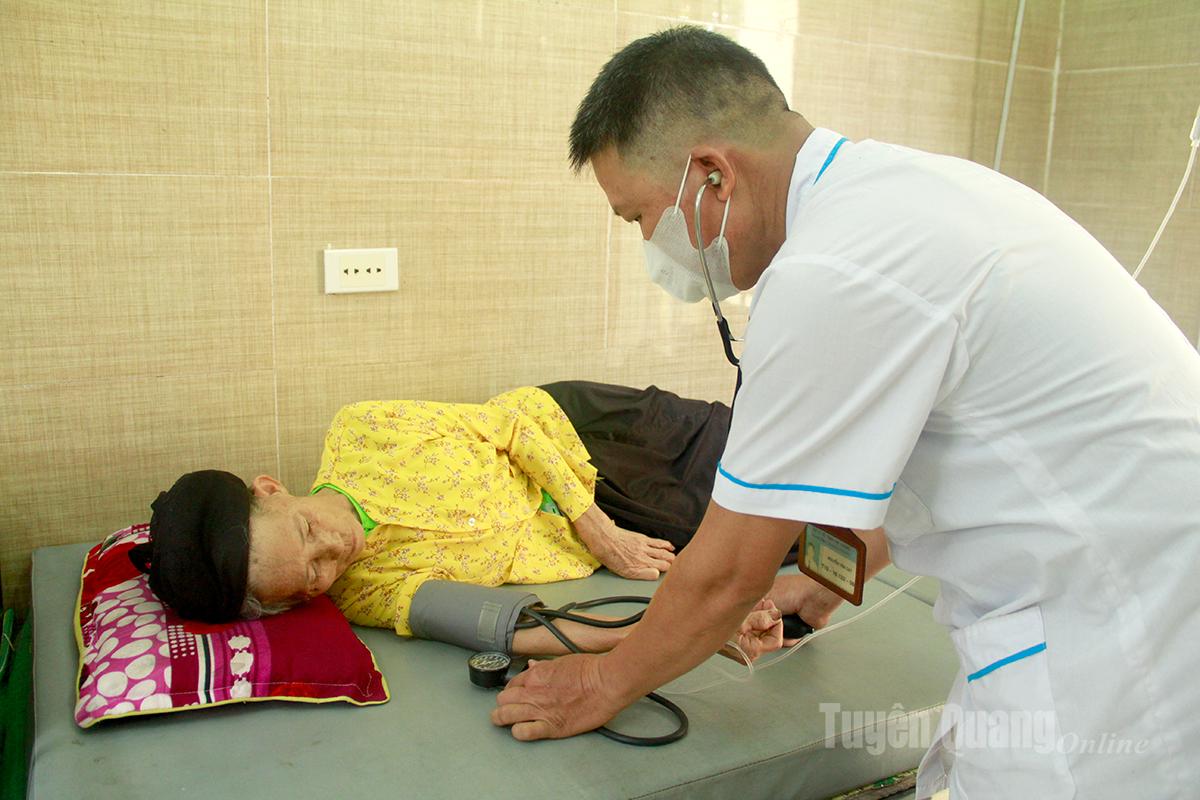 |
| Many commune health stations are only equipped with simple medical examination equipment, making it difficult to take care of people's health. |
The story in Can Ty and Duong Thuong communes is a clear example. In a recent screening, nearly 60 people were found to have suspected tuberculosis, pleural effusion, and chronic obstructive pulmonary disease. Mr. Chang Mi Su, Lung Vai village, Can Ty commune said: "The distance is long and the travel is difficult, so many people in the village only go to the doctor when they are seriously ill. They have a disease but do not know it and do not treat it early. We hope to have more health check-ups for the whole population so that people can be examined and prevent diseases early."
Lack of human resources and equipment is also a major bottleneck. Many remote commune health stations still lack doctors; village health workers are mainly part-time and lack specialized training. Infrastructure is degraded, isolation rooms, testing equipment, ultrasound, and emergency equipment are lacking, making it difficult for health stations to take on the role of frontline disease prevention. Some communes have not maintained good infectious disease surveillance; epidemic prevention supplies are scarce; while the impact of climate change causes infectious diseases to increase. During the rainy season, water sources are easily polluted, increasing the risk of diarrhea, hand, foot, and mouth disease; mosquitoes that transmit dengue fever tend to thrive.
Dr. Ly Sen Son, Head of the Bach Dich Regional Multi-Specialty Clinic, said: “Language barriers and limited awareness also make disease prevention and control difficult. Doctors have to conduct many mobile examinations, and people are not proactive in disease prevention, so the risk of infectious diseases remains high.”
In Hong Thai commune, Dr. CKI Dermatologist, Head of Ma Van Tieng Commune Health Station shared: "The commune has nearly 11,000 people but only one doctor; lacking basic equipment, examination, treatment, and disease prevention are very difficult. This year, there was a measles epidemic, so officials had to go to each village to propagate and isolate the area to control and prevent the epidemic from spreading."
In addition, undetected HIV infections remain high in remote areas; HIV infection rates among drug users are on the rise again. The non-communicable disease management system is not yet synchronized; many stations lack antihypertensive drugs; the rate of patients achieving treatment goals is low, and the rate of treatment dropouts is high. Diabetes screening in the community has not been implemented.
Motivation from Resolution 72
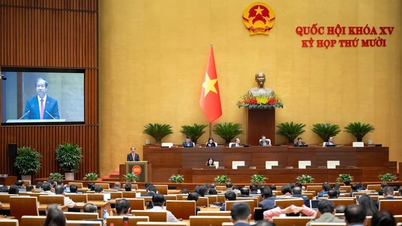
Speaking at the discussion group in the National Assembly session on the morning of November 25, General Secretary To Lam emphasized: "Current health care work still focuses on medical examination and treatment - handling consequences because of weak prevention; we must attach importance to primary health care and prevention as pillars of social development". Resolution 72 also opens up a fundamental direction for grassroots health care when determining a strong shift in thinking from "treatment" to "prevention", prioritizing prevention, early detection and lifelong health care. Accordingly, at least 1,000 doctors will be transferred to commune health stations each year. By 2027, each station will have 4-5 doctors. 100% of commune health stations will be invested in standard facilities, equipment and human resources. The disease surveillance system operates in real time. There are special preferential policies for medical staff in remote, isolated and disadvantaged areas.
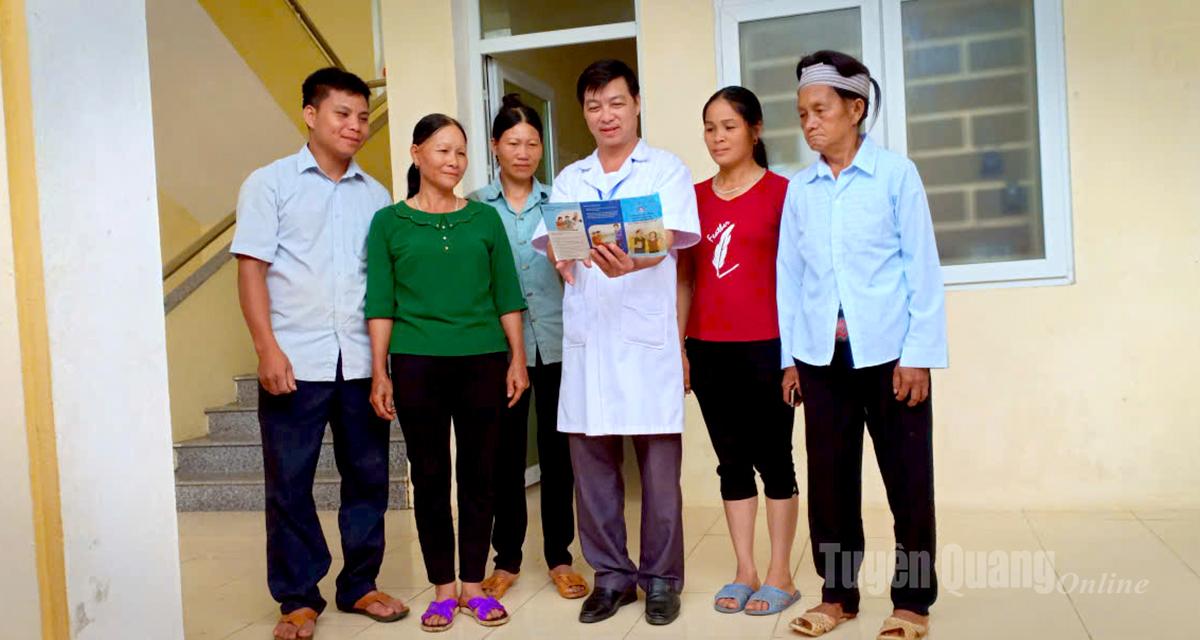 |
| Staff of Hong Thai commune health station propagate and raise awareness of disease prevention and control for people. |
Resolution 72 of the Politburo provides a strong impetus for the development of grassroots healthcare and preventive medicine. This includes gradually addressing difficulties related to infrastructure, equipment, human resources, and medical supplies for preventive work.
Along with that, the province will build a digital epidemiological map; connect medical data between CDC - regional health center - commune health station; promote chronic disease management with software; strengthen epidemic surveillance in the community; create epidemiological maps by commune. Communicate behavior change to people and train skills to identify infectious diseases for grassroots health workers. Promote socialization of people's health care, especially developing a vaccination service system. Strengthen inter-sectoral coordination to respond synchronously when an epidemic occurs.
In the villages with many difficulties, where the risk of epidemics is always lurking, the grassroots medical team still quietly stays with the village and the people. Each monitoring activity, each vaccination session, each free medical examination and treatment, or each time going to the village to propagate becomes an important piece to create a solid "shield", protecting the people's health early and from afar.
Article and photos: DISCUSSION
Source: https://baotuyenquang.com.vn/xa-hoi/202512/bao-ve-suc-khoe-nhan-dan-tu-som-tu-xa-a62149e/

![[Photo] The captivating scenery of the fragrant maple forest in Quang Tri](/_next/image?url=https%3A%2F%2Fvphoto.vietnam.vn%2Fthumb%2F1200x675%2Fvietnam%2Fresource%2FIMAGE%2F2025%2F12%2F10%2F1765353233198_lan09046-jpg.webp&w=3840&q=75)
![[Photo] Explore the US Navy's USS Robert Smalls warship](/_next/image?url=https%3A%2F%2Fvphoto.vietnam.vn%2Fthumb%2F1200x675%2Fvietnam%2Fresource%2FIMAGE%2F2025%2F12%2F10%2F1765341533272_11212121-8303-jpg.webp&w=3840&q=75)




















![[Video] The craft of making Dong Ho folk paintings has been inscribed by UNESCO on the List of Crafts in Need of Urgent Safeguarding.](https://vphoto.vietnam.vn/thumb/402x226/vietnam/resource/IMAGE/2025/12/10/1765350246533_tranh-dong-ho-734-jpg.webp)


























































Comment (0)