

The Population Law, comprising 8 chapters and 30 articles, will take effect from July 1, 2026.
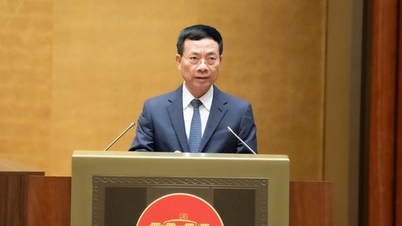
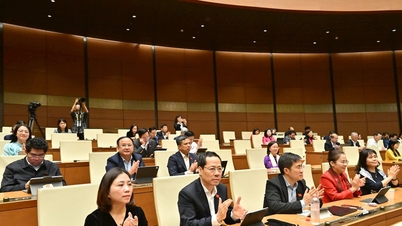
Before the National Assembly delegates voted, Minister of Health Dao Hong Lan presented a summary of the draft law after incorporating feedback and making revisions.
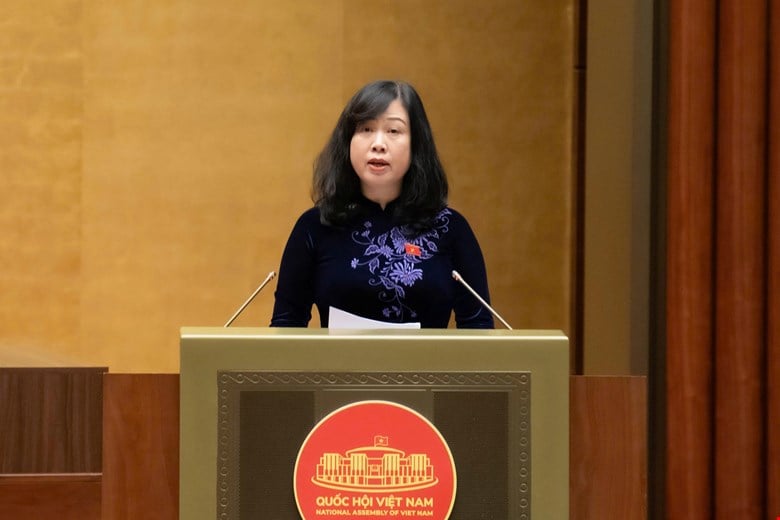
Minister of Health Dao Hong Lan. Photo: National Assembly Media
According to Minister Dao Hong Lan, this draft Population Law marks a fundamental change, shifting the focus of population policy from family planning to population and development.
These aspects have been reflected in the comprehensive approach to addressing issues related to population size, structure, adaptation to aging, and improving population quality in relation to economic and social development.
Regarding the policy of maintaining replacement fertility, the Population Law stipulates many measures. In case of giving birth to a second child, maternity leave for female workers is 7 months; for male workers, it is 10 working days when the wife gives birth.
Compared to current regulations, maternity leave for female workers is now one month longer.
The law also stipulates that there will be financial support for childbirth for women from very small ethnic minority groups; financial support for childbirth for women in provinces and cities with birth rates below the replacement level; and financial support for childbirth for women who have two children before the age of 35.
Specifically, according to the law, people with two or more children will be given priority to buy, lease-to-own, or rent social housing as stipulated by the law on housing.
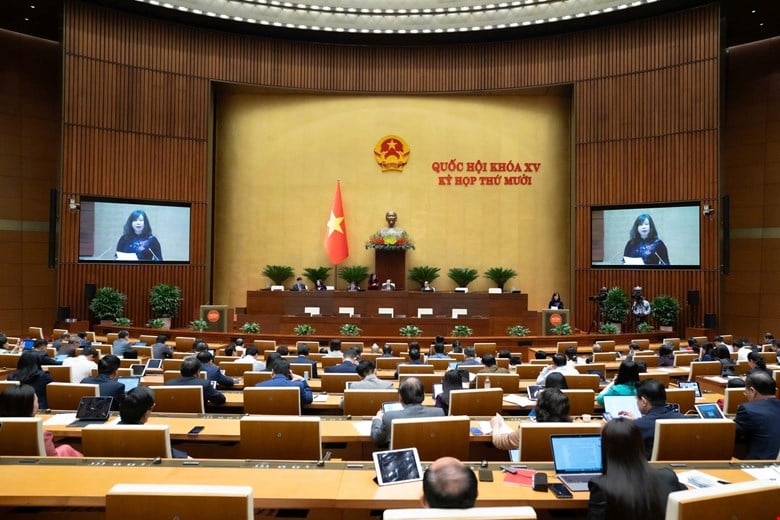
According to the provisions of the Population Law, female workers are entitled to 7 months of maternity leave, and women who give birth to 2 children before the age of 35 are given financial support and priority to buy social housing. Photo: National Assembly Media
The law also stipulates other measures decided by the Government. Based on the socio-economic conditions in each period, the Government prescribes the benefit levels, procedures, and processes for these policies.
Regarding policies related to population aging adaptation, the Draft Law has revised and supplemented regulations on proactive aging such as health, financial, and psychological preparation, participation in social insurance and health insurance, participation in learning to improve knowledge and skills to maintain physical and mental health, social functions, and participation in activities to support elderly care.
The draft law also revised and supplemented regulations on elderly care, developing diverse forms of elderly care at home and in the community; regulating the development of human resources for elderly care based on the separation of formal and informal care groups, thereby creating a mechanism to support training in elderly care skills suitable for each group.
According to Lao Dong Newspaper
Source: https://baotuyenquang.com.vn/xa-hoi/202512/tu-172026-phu-nu-sinh-con-duoc-huong-loat-chinh-sach-uu-dai-9926ead/





















![[Video] The craft of making Dong Ho folk paintings has been inscribed by UNESCO on the List of Crafts in Need of Urgent Safeguarding.](https://vphoto.vietnam.vn/thumb/402x226/vietnam/resource/IMAGE/2025/12/10/1765350246533_tranh-dong-ho-734-jpg.webp)





















































Comment (0)