

If the soil is healthy, food production will be safe, people will be healthy, and future generations will be healthy as well. Therefore, a strategy to enhance soil organic matter with a vision extending to 2050 and possibly beyond is needed.
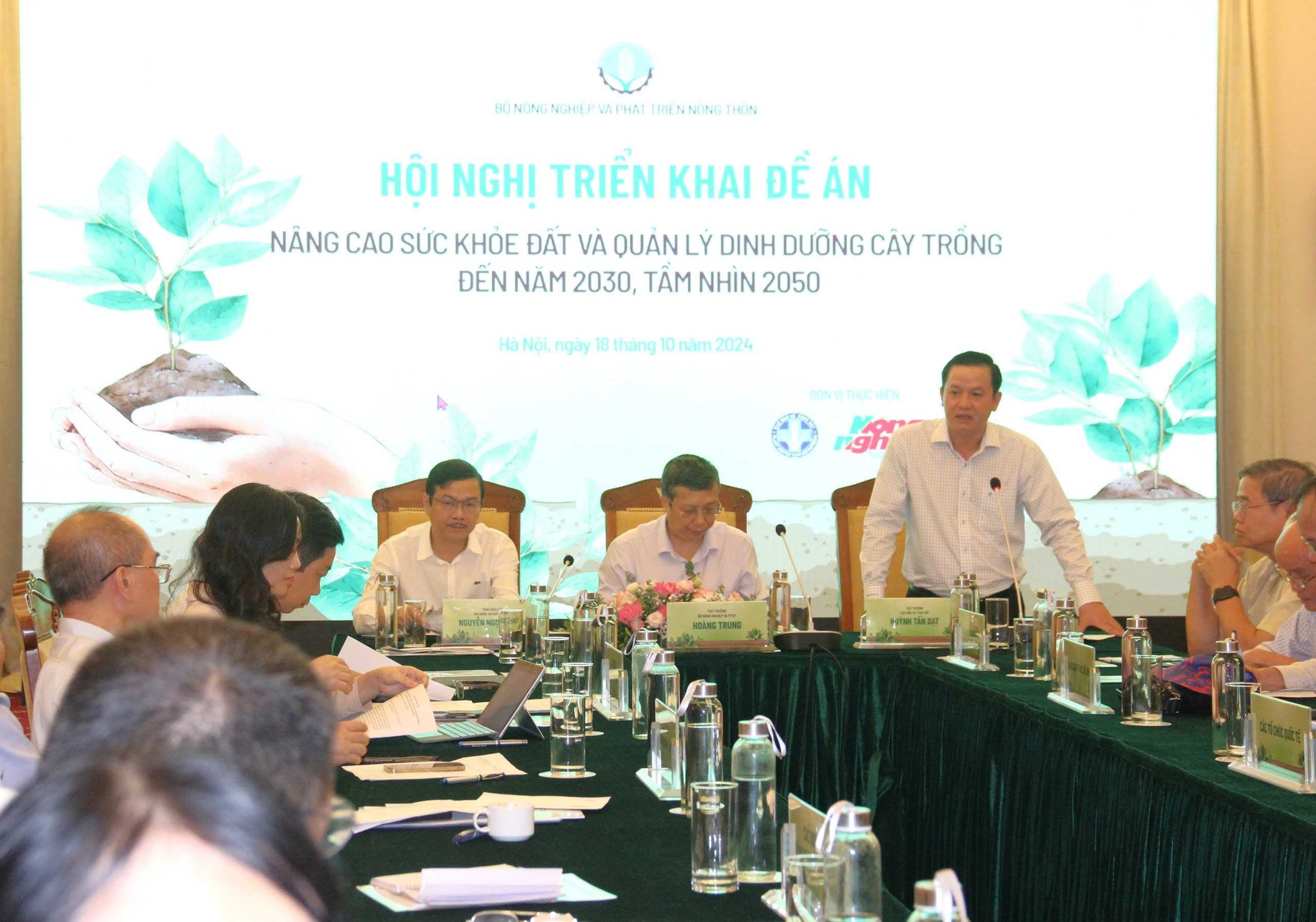 |
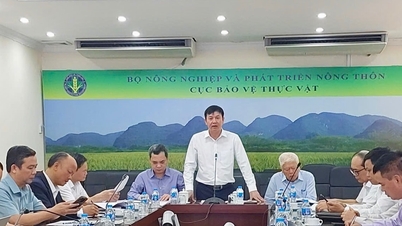
| Conference scene |
On October 18, 2024, the Ministry of Agriculture and Rural Development organized a conference to implement the project "Improving soil health and crop nutrition management by 2030, with a vision to 2050".
Mr. Vu Thang, Deputy Head of the Fertilizer Management Department of the Plant Protection Department, said that the project "Improving soil health and plant nutrition management by 2030, with a vision to 2050" aims to improve the effectiveness of state management of agricultural soil health and plant nutrition and build a database on the quality of major soil types, in parallel with the use of fertilizers for key crops.
However, Mr. Nguyen Quang Tin, Deputy Director of the Science and Technology Department (Ministry of Agriculture and Rural Development), believes that to have a complete database on agricultural land, it is necessary to reorganize and refine the system through further research. "We propose that by early 2025, the research institutes of the Ministry and the agencies participating in the Project should work together to complete the database," Mr. Tin said.
Regarding soil quality and soil health in general, Vietnam currently lacks sufficient data. Specific figures are needed for each crop and each land area to be useful, especially in the context of climate change. Furthermore, as Vietnam is steadily progressing towards organic farming and reduced greenhouse gas emissions, soil data becomes even more crucial.
According to a representative from the Department of Crop Production, the fact that 70% of Vietnam's arable land is located on sloping terrain leads to soil erosion, degradation, and nutrient depletion in areas with intensive farming; the excessive use of pesticides also affects soil and crop health.
Agricultural land has been severely degraded due to the practice of planting multiple crops per year; the overuse of fertilizers over a long period has led to soil hardening and loss of aeration. Monoculture farming practices deplete the soil's nutritional quality.
Associate Professor Vu Nang Dung - President of the Vietnam Soil Science Association, stated: "We hope to have a national program to improve soil health in conjunction with crop cultivation."
Talking about soil health is perhaps an unclear concept, not everyone understands it. Consider soil as a living organism with three main components: soil physics, soil science, and soil biology. A strategy to enhance soil organic matter with a vision extending to 2050 and possibly beyond is needed.
"If the soil is healthy, food production will be safe, people will be healthy, and future generations will also be healthy. This is a long-term, continuous effort," stated the Chairman of the Vietnam Soil Science Association.
Mr. Dung affirmed that, if approved by the Ministry, the Association will complete the task of compiling and classifying Vietnam's soil statistics in the first half of 2025; and by the end of 2025, it will complete the development of a set of criteria for assessing soil health in collaboration with agencies of the Ministry of Agriculture and Rural Development.
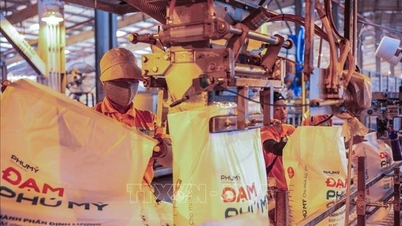
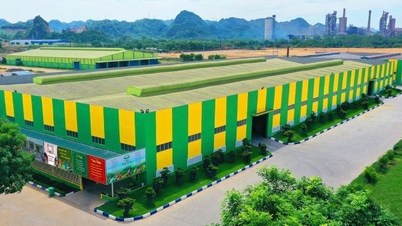
Dr. Nguyen Dang Nghia, former Director of the Southern Center for Soil, Fertilizer and Environment Research, said that the project needs to exploit the potential of dairy and fertilizer businesses, as these businesses have a large source of organic fertilizers and dedicate a lot of research to producing effective fertilizers.
Currently, Mr. Nguyen Dang Nghia has drafted six sets of organic fertilizer formulas. However, the testing procedures for organic fertilizer formulas in Vietnam are limited, time-consuming, costly, and complex. This makes businesses, especially small ones, hesitant and hinders the sustainable development of the organic fertilizer industry.
Therefore, Mr. Nghia hopes that the Ministry of Agriculture and Rural Development will strongly support the project by providing policy mechanisms and procedures to encourage more businesses to participate and contribute to the project.
According to Deputy Minister of Agriculture and Rural Development Hoang Trung, soil health is a matter of concern for both Vietnam and many countries around the world. Currently, intensive farming practices, monoculture, unbalanced use of fertilizers and pesticides, soil pollution due to the development of industrial zones and craft villages, and climate change have seriously degraded soil health.
Deputy Minister Hoang Trung assigned the Department of Crop Production, in coordination with the Department of Plant Protection, the task of thoroughly evaluating each type of soil in each locality, and then developing a set of criteria to assess which soil is suitable for which crops. This will also contribute to changing farming practices in a positive direction.
The National Agricultural Extension Center is tasked with coordinating with the Department of Crop Production to organize training for local officials. This is a key factor in bringing the project to life.
Source: https://thoibaonganhang.vn/dat-khoe-san-xuat-thuc-pham-se-an-toan-156870.html



![[Photo] National Assembly Chairman Tran Thanh Man attends the policy seminar to promote Vietnam-Türkiye cooperation.](https://vphoto.vietnam.vn/thumb/1200x675/vietnam/resource/IMAGE/2026/04/16/1776351415367_vna-potal-chu-tich-quoc-hoi-tran-thanh-man-du-toa-dam-chinh-sach-thuc-day-hop-tac-viet-nam-tho-nhi-ky-8705791-jpg.webp)

















![[Image] Bridges and roads connecting the eastern part of Ho Chi Minh City](https://vphoto.vietnam.vn/thumb/1200x675/vietnam/resource/IMAGE/2026/04/16/1776328595108_ndo_br_bh-vt5-jpg.webp)


























![[Infographic] Details of the Hanoi-Quang Ninh High-Speed Railway Project](https://vphoto.vietnam.vn/thumb/402x226/vietnam/resource/IMAGE/2026/04/16/1776338188424_anh-man-hinh-2026-04-16-luc-18-16-10.png)
![[Photo] National Assembly Chairman Tran Thanh Man meets with the Speaker of the Georgian Parliament](https://vphoto.vietnam.vn/thumb/402x226/vietnam/resource/IMAGE/2026/04/16/1776338494029_anh-man-hinh-2026-04-16-luc-18-21-21.png)











Comment (0)