

Nestled in the heart of the majestic plateau, the Di Linh region (Lam Dong province) still preserves profound historical imprints from over 100 years ago. Prominent among these legacies is the Dong Nai Thuong Provincial Town Hall, an ancient architectural structure that still stands today.
The first project in the Central Highlands
Going back in time, on November 1, 1899, the Governor-General of Indochina, Paul Doumer, signed a decree establishing the Upper Dong Nai province and two administrative stations at Tanh Linh ( Binh Thuan ) and the Lang Biang plateau (present-day Da Lat and its surrounding areas). At that time, the Upper Dong Nai province comprised the upper reaches of the Dong Nai River, bordering Cochinchina and Cambodia.
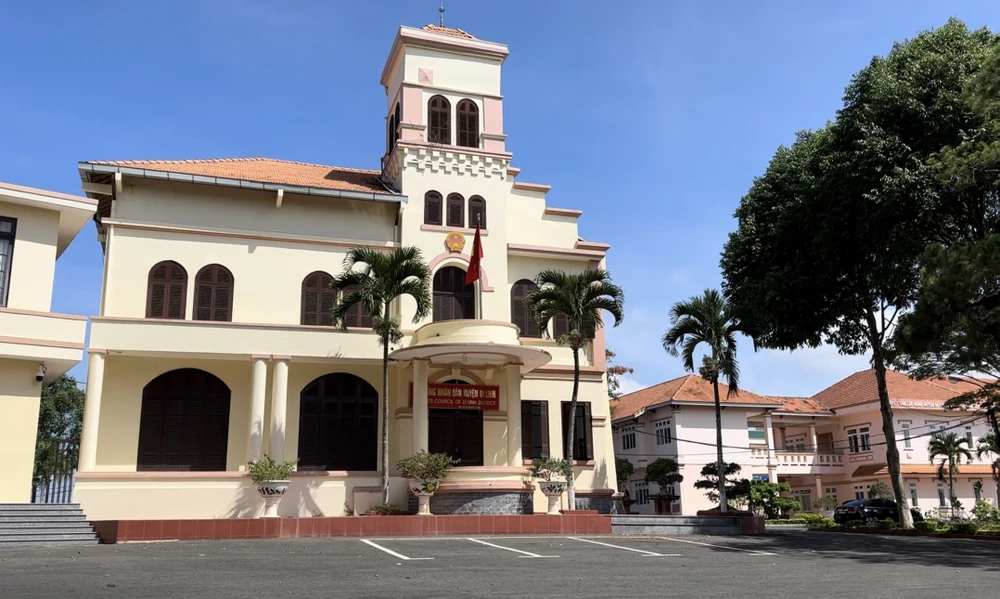
To prepare the infrastructure for the provincial capital located in Djiring (the center of Di Linh town, Di Linh district today), the Dong Nai Thuong Provincial Hall was built as early as 1900 by order of the Governor-General of Indochina, Paul Doumer. According to records, the French architect and surveyor, Mr. Cunhac, was responsible for designing the Hall. To complete this project, the French mobilized a large workforce from the indigenous K'Ho people. Heavy materials such as iron, steel, bricks, and tiles were transported by human power from Binh Thuan, traversing treacherous mountain and forest roads. Each person forced into labor at that time had to go down to Binh Thuan, carrying materials such as iron, steel, bricks, and tiles on their backs, traversing more than 90km of forest roads, including the Gia Bac pass, which is over 1,200m high.
“With a design of 8 rooms, 2 floors high, and a usable area of approximately 200m² , the Dong Nai Thuong Provincial Town Hall stands atop a tower resembling a rectangular clock face, reflecting classical European architecture. After 3 years of construction, the building was officially completed in 1903. This architectural work is closely associated with the formation and development of Di Linh district. In terms of age, the Dong Nai Thuong Provincial Town Hall is one of the oldest in the Central Highlands, predating even the Dak Lak Provincial Governor's Residence (built in 1907) and the Da Lat Provincial Governor's Residence (built in 1916),” shared Mr. Vu Duc Nhuan, Vice Chairman of the People's Committee of Di Linh district.
The imprint of the Djiring region
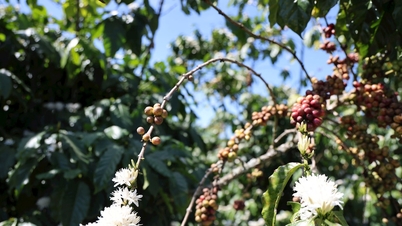
On January 6, 1916, the then Governor-General of Indochina, Ernest Roume, signed a decree establishing Lang Biang province, encompassing the entire mountainous region of present-day Ninh Thuan, Binh Thuan, Dong Nai, and Binh Phuoc provinces. In 1957, Upper Dong Nai province was renamed Lam Dong province, and its capital was moved to Bao Loc. The name Djiring was also changed to Di Linh, as it is known today, marking the end of its role as a provincial-level administrative unit and town hall in the Southern Central Highlands. However, despite numerous changes including its abolition, re-establishment, relocation of the provincial capital, and even war, the Upper Dong Nai Provincial Town Hall has been preserved in Di Linh to this day. Surrounded by vast coffee plantations and numerous other attractions such as Brah Yang Mountain (1,874m), Yang Doan Mountain (1,812m), Kala Lake, Bobla Waterfall, etc., this site is truly an attractive destination, beckoning tourists to come and explore.
Currently, the Upper Dong Nai Provincial Town Hall is being used as the office building for the Di Linh District People's Council. Despite being over 100 years old, the building has retained its original exterior appearance. The wooden floors of the corridors, staircases, window frames, and doors between rooms have been well-maintained, preserving their inherent value over time. When Di Linh District needed additional workspace within the administrative area, another building was constructed adjacent to it, respecting the ancient architectural style. Therefore, although a new building, it shares many similarities with the beauty of the Upper Dong Nai Provincial Town Hall.
Mr. Nguyen Thanh Hai, who has been associated with the building for over 30 years due to his work, said: “The building is hundreds of years old, so the preservation work has always been a special concern of the District People's Committee. Every year, only painting and maintenance are done here, while the original design remains intact. From the floor and tiles to the window bars, all the traces of time are still preserved.”
In addition to regular maintenance, the People's Committee of Di Linh District has also implemented many measures to preserve and promote the architectural value of the building. With its unique architecture, the Dong Nai Thuong Provincial Town Hall building not only has historical value but is also an attractive tourist destination, promising to become a highlight of Di Linh District's tourism in the future, contributing to preserving historical and cultural landmarks that connect the past with the present.
Mr. Vu Duc Nhuan added: “With the motto of making tourism a highlight of the district and making Di Linh a destination of Lam Dong province, we have requested the Department of Culture, Sports and Tourism of Lam Dong province to support and guide the district in carrying out the necessary steps to preserve and promote the value of this building. Specifically, Di Linh district is completing the relevant documents and records to request the People's Committee of Lam Dong province to recognize the Dong Nai Thuong Provincial Town Hall as a provincial-level historical and cultural relic, or national-level if it meets the necessary conditions. This will be an important legal basis for the district to carry out the steps of preserving, restoring and promoting the value of this building.”
DOAN KIEN
Source: https://www.sggp.org.vn/dau-xua-thu-phu-dong-nai-thuong-post750303.html





































































Comment (0)