

 |
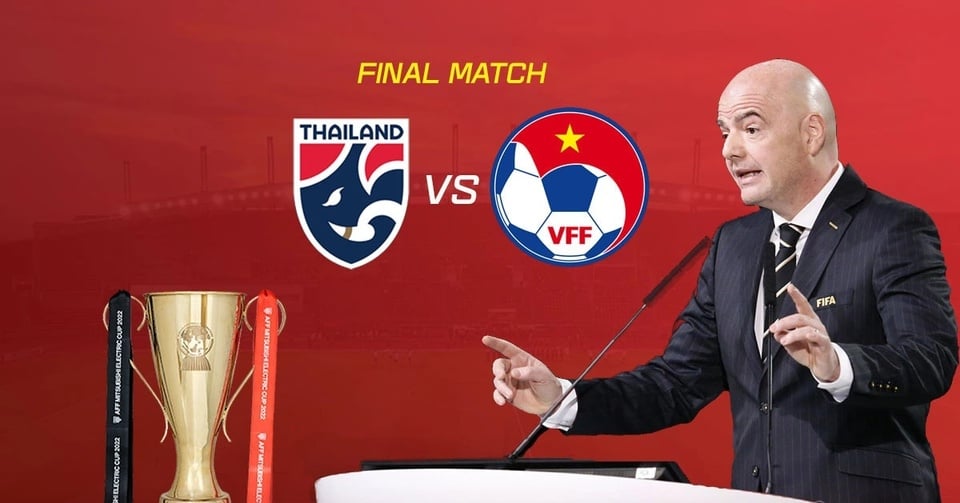
FIFA President is very interested in ASEAN football. |
On the night of December 5, FIFA will conduct the group stage draw for the 2026 World Cup, the first World Cup in history to have 48 teams participating in the final round. This is not simply a competition branching ceremony, but also reflects FIFA's new thinking. There, football is a global festival, the more teams participating, the better.
As FIFA follows that expansion path, even considering increasing to 64 teams for the 2030 World Cup, it is time to seriously ask why not give Southeast Asia direct World Cup tickets?
When the World Cup must be a truly global stage
The principle of allocating World Cup tickets has long depended on continental confederations such as UEFA (Europe), AFC (Asia), CAF (Africa) or CONMEBOL (South America). But FIFA has increasingly realized that the power of these confederations is growing and sometimes directly contradicts FIFA's expansion strategy.
UEFA and CONCACAF have publicly opposed plans to expand the World Cup, arguing that it would dilute the quality. Therefore, one way for FIFA to rein in continental confederations is to recognize the legitimacy of smaller regional confederations, called "sub-confederations", such as ASEAN (AFF), South Asia (SAFF) or East Africa (CECAFA).
If the World Cup expands to 64 teams, FIFA can completely give tickets directly to regional federations like AFF. This is not only a political gift but also a wise move in the long term. Giving a place to Southeast Asia will create a more balanced voice in the global football power structure, helping FIFA counter the policy dominance of UEFA or AFC.
At that time, the “big guys” cannot decide everything in their own favor. FIFA will become the powerful grandfather in the family thanks to the support of his grandchildren instead of just a father with his unruly children, the continental football federations.
But more importantly, the impact of football geography. When only distributing tickets by continent, there are regions that have almost no chance of participating in the World Cup, typically Southeast Asia and South Asia. Meanwhile, teams from the Caribbean or Central Africa have participated many times without leaving a significant mark in terms of expertise, reputation or economy .
FIFA knows very well that untapped markets are the “gold mines”. If a World Cup with India, Vietnam, Thailand or Indonesia would be present, the commercial value, television rights and social impact would far exceed the matches between Haiti and Cape Verde. In other words, global viewers do not need more teams that exist only on the map, but rather vibrant, populous and potential football markets.
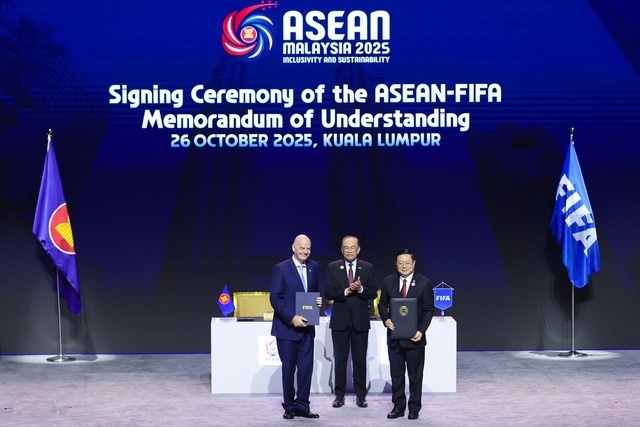 |
FIFA shows signs of playing separately from AFF, without going through AFC. |
AFF, FIFA's untapped gold mine
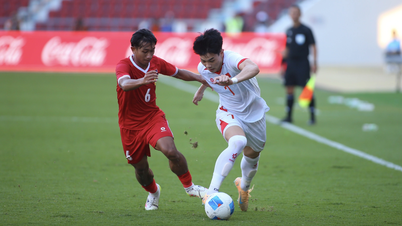
Therefore, AFF deserves to be the first region to be considered. Over the past decade, FIFA has shown clear favoritism towards Southeast Asia. Most recently, the recognition of the AFF Cup as an official competition system, an unprecedented step whose ultimate purpose is to open the door to commerce in a region of more than 700 million people, football fanatics, extremely high social media interaction and relatively low organization costs.
If the AFF has a direct ticket to the World Cup, the regional tournament will change completely. The AFF Cup will become an “internal” qualifying round with high practicality, no longer a friendly tournament with arbitrary investment each year. FIFA can coordinate the organization of the AFF Cup, apply international scoring standards, referees, VAR, television copyright and profit from that new structure. With 32 tickets left, FIFA will find it difficult to do this. But with 48 tickets, and possibly 64 in the future, the “gap” is large enough for them to give away without causing much controversy.
A direct entry into the AFF also creates a strong incentive for Southeast Asian federations to upgrade youth training, improve pitches, standardize management and long-term strategic planning. Teams in the region do not have to hope for luck in the Asian qualifiers, where they compete with Japan, South Korea, Iran or Saudi Arabia, but have a more feasible path.
Instead of a distant dream, the World Cup has become a concrete goal with the AFF Cup championship, and the journey to the biggest football festival on the planet. Imagining a World Cup with Vietnam, Thailand or Indonesia is not only a source of regional pride, but also an economic boost with ticket sales, increased television revenue, booming sports tourism, and an expanding sponsorship market.
Southeast Asia has long been a land rich in football emotions. With a population of over 700 million and extremely football-crazy, this is a gold mine that FIFA is eager to exploit. With a World Cup ticket, the region will no longer be a "lowland" of Asian football, but will become an official part of the global stage. If FIFA truly considers the World Cup as a common festival of humanity, then awarding such a ticket is not only reasonable, but the right thing to do, as soon as possible.
Source: https://znews.vn/den-luc-phai-trao-1-ve-world-cup-cho-dong-nam-a-post1608650.html
![[Photo] Cat Ba - Green island paradise](/_next/image?url=https%3A%2F%2Fvphoto.vietnam.vn%2Fthumb%2F1200x675%2Fvietnam%2Fresource%2FIMAGE%2F2025%2F12%2F04%2F1764821844074_ndo_br_1-dcbthienduongxanh638-jpg.webp&w=3840&q=75)
![[Photo] 60th Anniversary of the Founding of the Vietnam Association of Photographic Artists](/_next/image?url=https%3A%2F%2Fvphoto.vietnam.vn%2Fthumb%2F1200x675%2Fvietnam%2Fresource%2FIMAGE%2F2025%2F12%2F05%2F1764935864512_a1-bnd-0841-9740-jpg.webp&w=3840&q=75)




































































Comment (0)