

On the morning of November 4th, Mr. Hoang Viet Trung, Director of the Hue Ancient Citadel Relics Conservation Center, stated that a section of the Hue Imperial Citadel wall, over 200 years old, had collapsed due to its inability to withstand the pressure of the water from the Perfume River that had been submerged for a long time during the recent historic floods.
Accordingly, at approximately 6:45 PM on November 2nd, when the third wave of flooding in Hue City rose, a section of the Imperial Citadel wall on Dang Thai Than Street, about 15 meters long, collapsed, approximately 50 meters from Hoa Binh Gate.
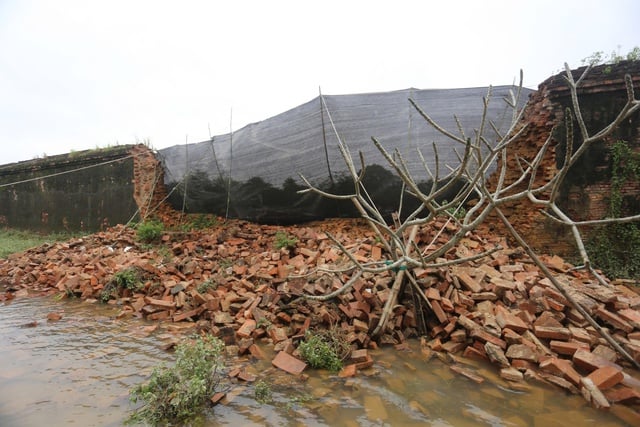
A section of the Hue Imperial Citadel wall has collapsed.
PHOTO: LE HOAI NHAN
"Immediately after the incident occurred, the center erected barriers, covered the area, and installed warning signs to ensure the safety of residents, tourists, and staff and workers of the Center," said Mr. Hoang Viet Trung.
According to Mr. Trung, on the morning of November 3rd, the Hue Ancient Citadel Relics Conservation Center invited representatives from the Department of Construction to conduct a preliminary survey, inspection, and assessment of the incident.
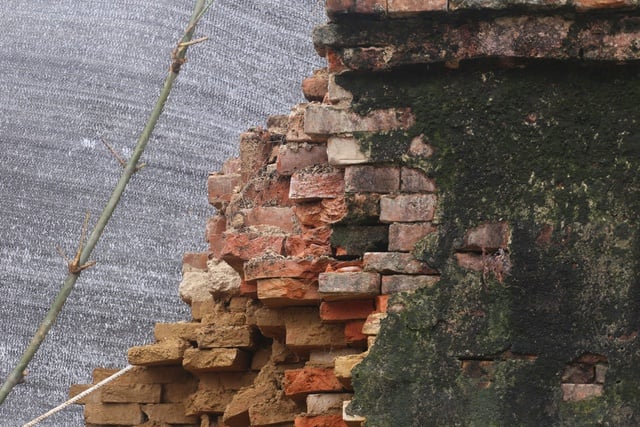
The collapsed section of wall revealed large bricks underneath.
PHOTO: LE HOAI NHAN
According to observations, the collapsed section of the wall consists of many loose bricks, lacking structural integrity. Visually, it appears the wall was constructed in three layers: the inner and outer layers were made of brick, while the middle layer was filled with clay.
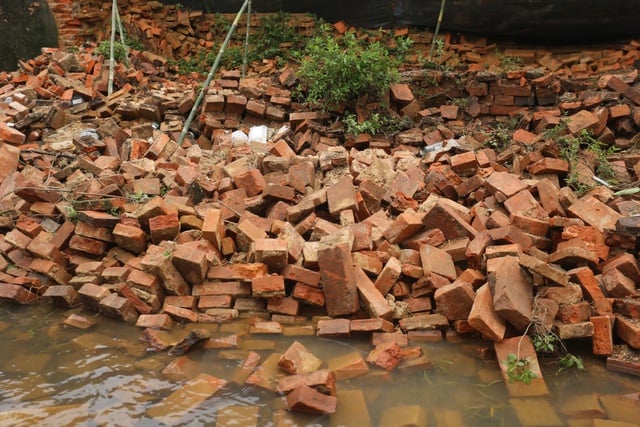
Bricks from the section of the city wall that collapsed due to the flood are scattered everywhere.
PHOTO: LE HOAI NHAN
In addition, some sections of the adjacent wall tend to tilt inward. Some sections show signs of cracking and structural weakness, and are likely to continue shifting if subjected to heavy rain or prolonged flooding.
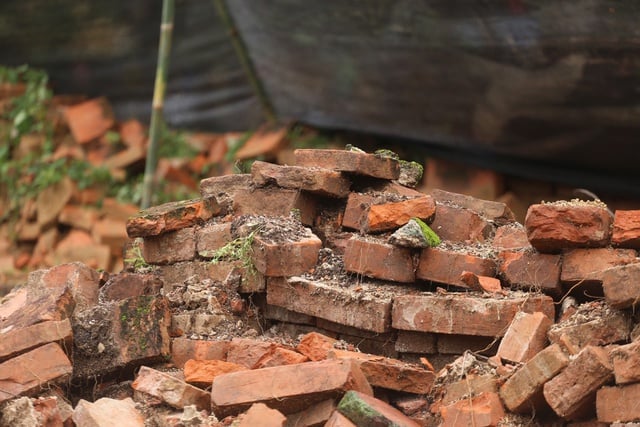
Authorities have now erected barriers around the section of the city wall that collapsed due to flooding.
PHOTO: LE HOAI NHAN
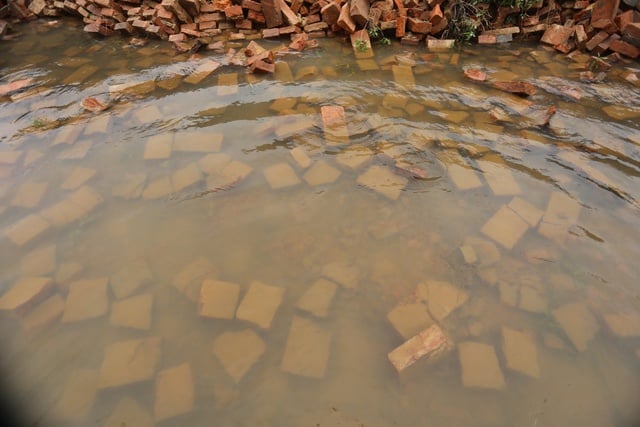
Heavy floodwaters caused a section of the city wall to collapse.
PHOTO: LE HOAI NHAN
Following cleanup and restoration efforts after the floods, the Hue Ancient Citadel Conservation Center also noted some initial damage, such as: a 10-meter section of the lake embankment at Tu Duc Mausoleum collapsed; and the wooden columns in the Great Palace Gate corridor were submerged in water, posing a risk to the structure's lifespan.
Request for an assessment of the wall collapse incident at Hue Imperial Citadel.
Following the incident, the Hue Ancient Citadel Conservation Center submitted a report and requested the Hue City People's Committee to direct the Department of Construction to take the lead, in coordination with specialized agencies, in conducting a comprehensive assessment; proposing a solution, and reporting to the competent authorities.
The center also suggested that, after the natural disaster ends, the Department of Culture and Sports of Hue City should take the lead and coordinate with relevant units to conduct a comprehensive survey and assessment of the current state of the Hue Imperial Citadel wall system and the stone embankment of Ngoai Kim Thuy Lake.
Based on that, the relevant units will develop investment projects for the preservation, restoration, and rehabilitation of the monument to ensure its sustainability and safeguard its historical value, with a total estimated cost of 300-500 billion VND.
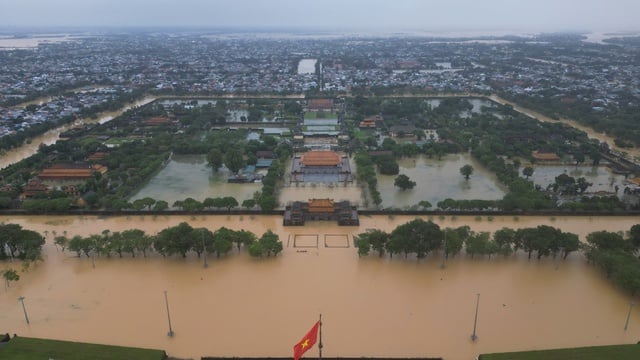
The Imperial Citadel of Hue was surrounded by floodwaters for many days.
PHOTO: BUI NGOC LONG
Not only did the wall of the Hue Imperial Citadel collapse, but other historical sites within the Hue heritage area also suffered significant damage during the three consecutive floods recently.
Specifically, the Imperial Citadel area was flooded with about 0.3 m of water, with some palaces partially submerged up to the verandas; Minh Mang Mausoleum's courtyard was flooded with about 1.4 m of water, and the veranda of The Chuan Palace with 0.7 m; Gia Long Mausoleum's walkway along the lake was flooded with 1.5 m; Thieu Tri Mausoleum's courtyard was flooded with about 1.5 m; Thai Hoa Nam Palace had about 3 steps left before the water reached the palace foundation; Tu Duc Mausoleum was flooded with about 1 m; Dong Khanh Mausoleum was flooded with about 1 m; An Dinh Palace's courtyard was flooded with about 2 m of water, and the interior of Khai Tuong Pavilion was flooded with 10 cm; other historical sites experienced localized flooding.
Source: https://thanhnien.vn/doan-tuong-hoang-thanh-hue-do-sap-sau-3-dot-lu-lut-185251104112342481.htm
























![[Video] Sunset at Lap An Lagoon – Where the sun sets over the fishing nets](https://vphoto.vietnam.vn/thumb/340x192/vietnam/resource/IMAGE/2026/05/31/1780192137701_beach-landscape-sea-water-nature-grass-745871-pxhere-com.jpeg)








![[Image] A brilliant symphony and explosive power in the skies of Da Nang.](https://vphoto.vietnam.vn/thumb/1200x675/vietnam/resource/IMAGE/2026/05/31/1780196945787_anh-man-hinh-2026-05-31-luc-10-08-51.png)
































































Comment (0)