

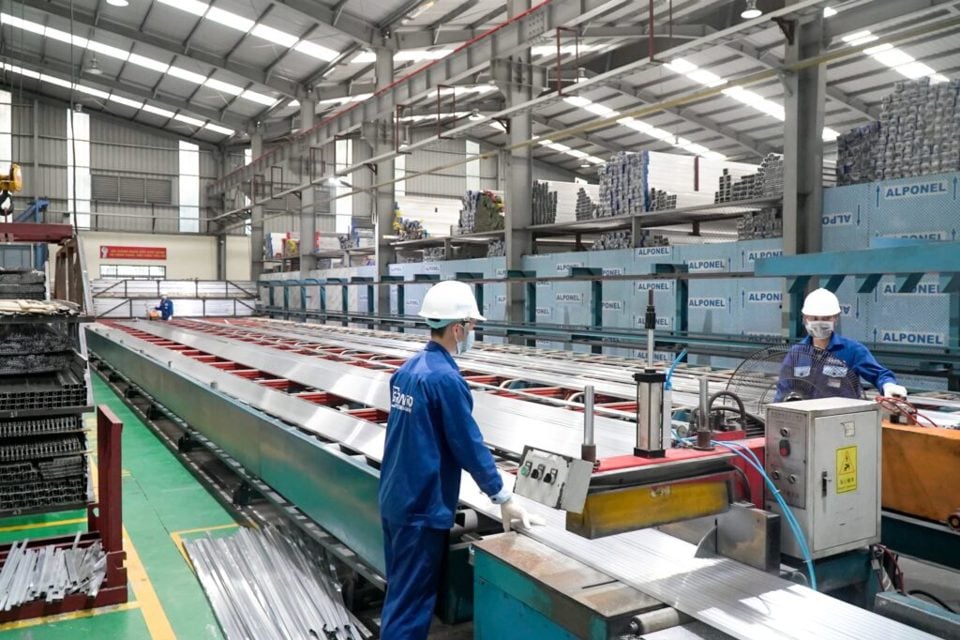
The competitive advantage is still not exhausted.
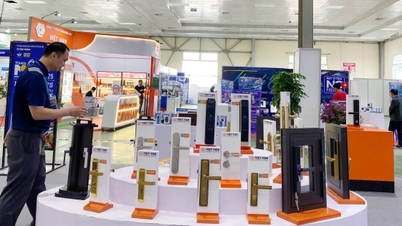
According to industry experts, the total designed capacity of Vietnam's aluminum industry is approximately 2 million tons per year, of which the capacity of aluminum profiles is 800,000 tons per year. However, in reality, the typical output of factories only reaches 45% of their designed capacity.
Regarding raw materials for aluminum production, to date, the primary source is bauxite ore. All alumina produced is exported, and the company currently lacks the capacity to produce aluminum domestically, thus requiring 100% imports. Aluminum businesses remain dependent on imported aluminum ingots and billets for the production of aluminum products.
Furthermore, the imposition of trade sanctions on Russia and China, the world's two largest aluminum suppliers, has affected raw material sources, even disrupting supply chains and directly impacting raw material prices, thus affecting the production and business operations of domestic aluminum companies.
Adding to the difficulties, on February 10, 2025 (or the morning of February 11, 2025 – Vietnam time), US President Donald Trump signed an order increasing import tariffs on steel and aluminum to a fixed rate of 25% "without exception or exemption" in a move aimed at supporting struggling industries, effective from March 12, 2025. Previously, in 2018, the US imposed a 10% import tariff on aluminum; this rate has now been increased to 25%.
According to the Vietnam Aluminum Profile Association, the group of businesses directly affected by this policy are foreign-invested (FDI) manufacturers. These are the main exporting companies, so they will be impacted more than Vietnamese private companies.
However, the subsequent consequence is that excess capacity at these factories will put pressure back on the domestic market, which is already oversupplied after a long period of recession, indirectly affecting all Vietnamese aluminum producers.
However, the impact of this policy on export markets is similar, except that Chinese goods are subject to an additional 10% tariff, which will reduce their competitiveness compared to other markets. Therefore, Vietnamese businesses still maintain their competitive advantage over international markets, and have a better competitive advantage than Chinese goods.
Proactively develop strategies to overcome difficulties.
From the very beginning of US President Donald Trump's term, the Vietnamese aluminum industry recognized that it would face numerous risks, including tariffs and increased input costs for raw materials, goods, and transportation, leading to a downward trend in profit margins for Vietnamese aluminum businesses.
On the other hand, aluminum industry businesses are also stepping up research and development of new products to support traditional markets and customers, increasing the value-added ratio in aluminum production.
For the time being, Vietnamese aluminum manufacturers and exporters need to focus on monitoring and updating information from their partners regarding signed orders for export to the US market. At the same time, they should discuss appropriate solutions for subsequent orders to maintain trade with traditional partners.
Regarding the Trade Remedies Department ( Ministry of Industry and Trade ), it is recommended that exporting businesses focus on diversifying export markets and products. They should increase the use of domestically produced raw materials or those sourced from suppliers not subject to trade defense measures by importing countries; and increase the proportion of added value in products created within the enterprise.
Do not abet acts of circumventing trade protection measures or fraudulent origin declarations to avoid facing trade protection cases; promptly detect acts of tax evasion related to trade protection measures and notify the Trade Protection Department so that appropriate countermeasures can be taken.
Actively diversify raw material sources, avoiding dependence on raw materials from a single country; regularly monitor and restrict imports of raw materials from suppliers on the list of businesses identified as violating US regulations on combating forced labor.
Implement a clear and transparent raw material traceability and management system; maintain accounting records according to international standards, and keep complete invoices and documents; allocate resources and cooperate fully with US investigating authorities when under investigation, and contact the Trade Remedies Department - Ministry of Industry and Trade for timely support.
Source: https://kinhtedothi.vn/doanh-nghiep-nhom-can-da-dang-hoa-thi-truong-va-hang-xuat-khau-de-vuot-kho.html




















































































Comment (0)