

On the afternoon of March 18, the Standing Committee of the National Assembly held a questioning session with Foreign Minister Bui Thanh Son on a group of issues related to diplomacy.
During the questioning session, delegate Pham Van Hoa ( Dong Thap ) raised the issue of a significant number of students and lecturers from domestic universities being sent abroad for further training but not returning to the country, negatively impacting other individuals who are also studying abroad.
Mr. Hoa asked what measures the Embassy and Consulate General would take to intervene and deport these individuals back to their home countries in order to restore order and discipline within the country.
In response, Foreign Minister Bui Thanh Son stated that after the Covid-19 pandemic, exchanges between Vietnam and the international community have been strongly promoted. In 2022, we only had about 3.8 million citizens traveling abroad, but this number increased to over 10 million in 2023.
At the same time, the number of Vietnamese workers and students returning to other countries to study has also increased very rapidly.
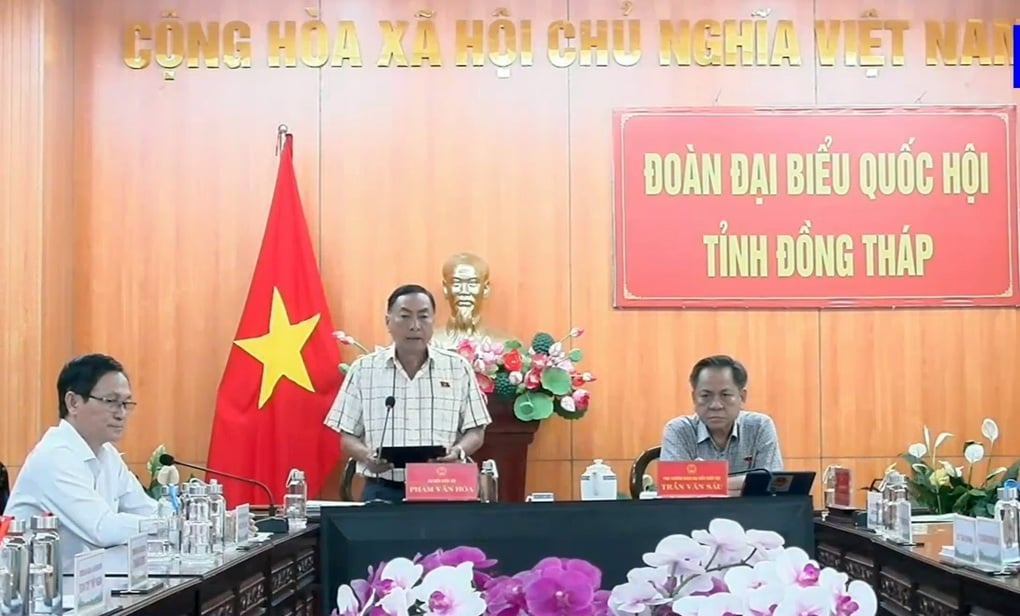
From the Đồng Tháp bridge point, delegate Phạm Văn Hòa posed a question to Foreign Minister Bùi Thanh Sơn (Photo: Phạm Thắng).
Mr. Son acknowledged that, in that context, there were instances of Vietnamese workers and students violating the law in other countries, affecting Vietnam's cooperation with its partners.
Recently, the Prime Minister instructed relevant ministries and agencies to develop procedures and regulations for training Vietnamese workers to work abroad. This aims to ensure compliance with the rules and regulations of the host country while contributing to the socio-economic development of the host country and bilateral relations.
"Many of our students go abroad for their studies. Through meetings with key Vietnamese leaders, those who remain abroad all express a desire to return to the country to contribute and serve, but they are also concerned about the opportunities provided by host countries for them to stay and work after graduation," Mr. Son said.
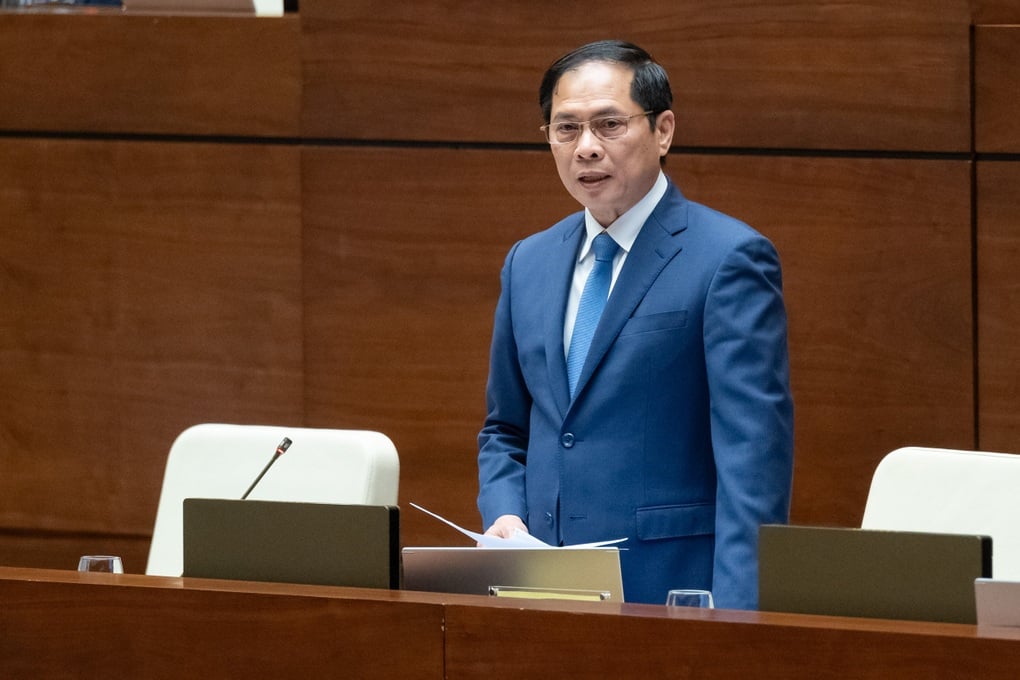
Foreign Minister Bui Thanh Son (Photo: Pham Thang).
According to the Minister of Foreign Affairs, senior Vietnamese leaders, when responding to overseas Vietnamese, also made it clear that if students feel they can utilize their skills in their work after graduation, they should stay, but only in accordance with the laws of the host country.
This contributes to the socio-economic development of these countries, and more importantly, it serves as a bridge of friendship, both now and in the future, between Vietnam and those partners.
"The more knowledge you acquire, the better you will be able to contribute to the country later. In some cases where people have stayed illegally, we will coordinate with relevant ministries and work with partners to help them understand the current context," Mr. Son said.
Negotiations are underway with 80 countries to grant visa-free entry for diplomatic and official purposes.
During the questioning session, delegate Ta Thi Yen (Dien Bien) pointed out that currently only a few countries grant visa-free entry to Vietnamese citizens, while obtaining visas for Vietnamese citizens remains difficult.
The delegates requested that the Minister explain the role of the Ministry of Foreign Affairs in this matter and the solutions to improve the situation, facilitating travel for Vietnamese citizens abroad and vice versa.
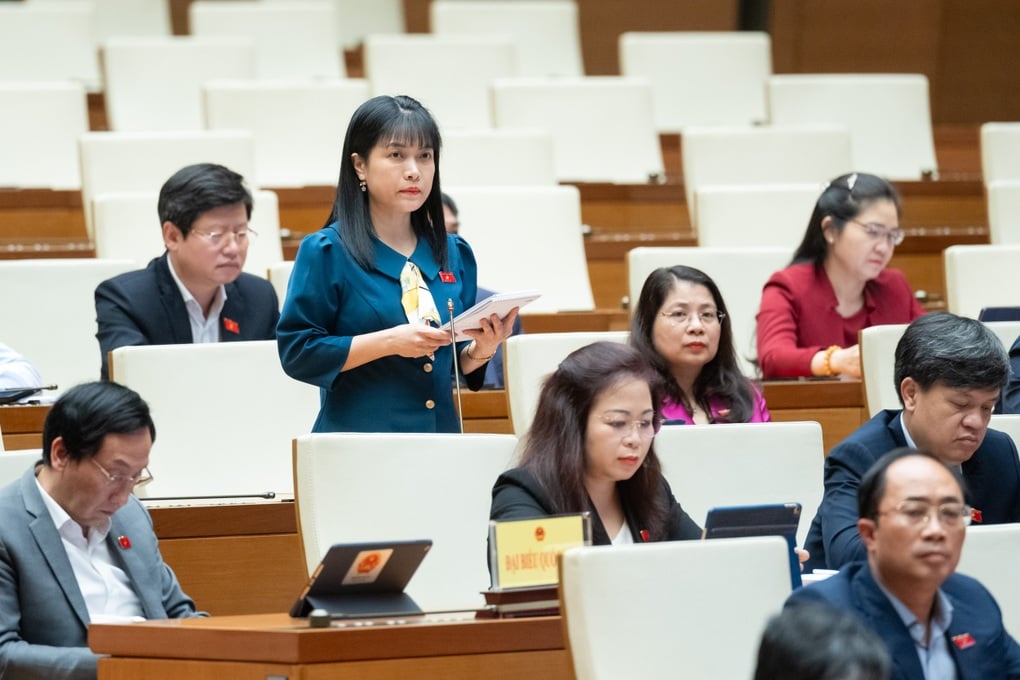
Representative Ta Thi Yen (Dien Bien) raises a question during the interpellation session in the Dien Hong hall (Photo: Pham Thang).
In response, Foreign Minister Bui Thanh Son emphasized that in the current trend of openness and integration, not only do other countries come to Vietnam, but Vietnamese citizens also have a great need to go abroad, both for business and for tourism and sightseeing.
With that spirit in mind, the Ministry of Foreign Affairs has coordinated with other ministries and agencies to simplify immigration procedures for foreign citizens, as well as Vietnamese people living abroad returning to the country.
Mr. Son cited the most recent example: the National Assembly approved regulations on entry and exit for both Vietnamese and foreign citizens, creating conditions for extending the length of stay in Vietnam and increasing the issuance of tourist visas.
In addition, while ordinary passports are not yet available, the Ministry of Foreign Affairs is negotiating with 80 countries for bilateral visa exemptions for diplomatic and official passports. This aims to facilitate convenient travel abroad for leaders, ministries, and local authorities.
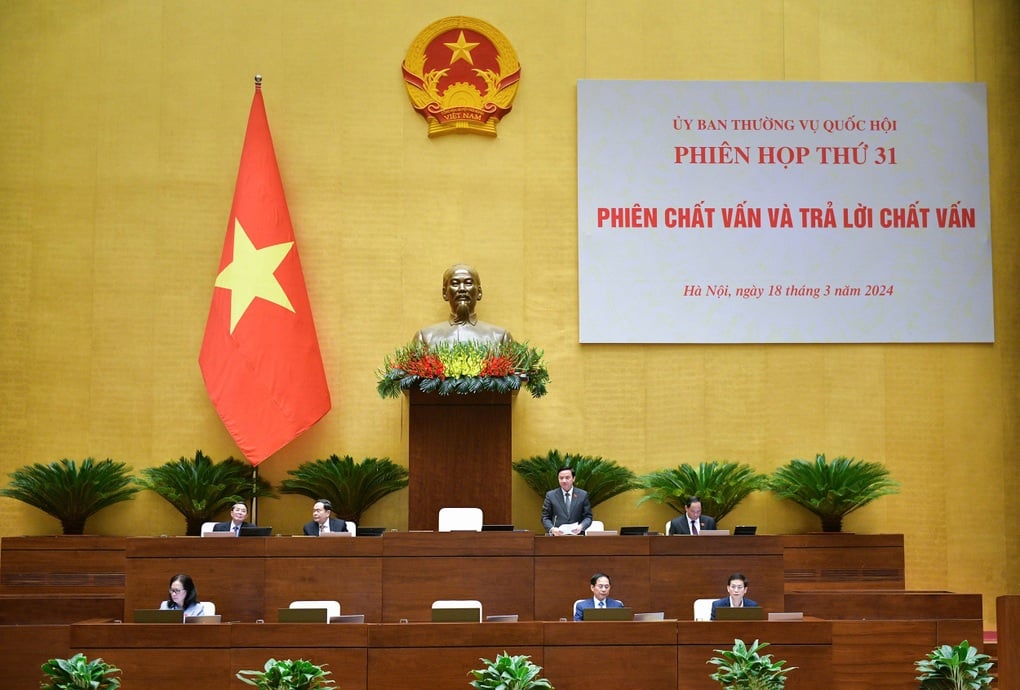
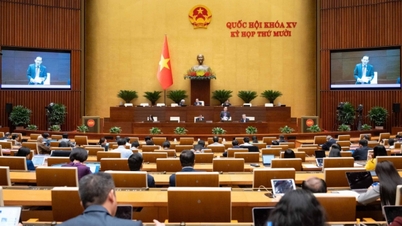
Deputy Speaker of the National Assembly Nguyen Khac Dinh presides over the session (Photo: Pham Thang).
Responding to further questions about negotiation solutions and overcoming difficulties in exporting goods to large markets like the EU, Minister Bui Thanh Son emphasized that Vietnam remains one of the countries with the highest degree of economic openness.
Over the past period, Vietnam has negotiated 17 free trade agreements with 60 partners worldwide to boost exports and imports. Even during the difficult pandemic, our exports to these partners continued to increase.
In 2023 alone, the volume of exports to some EU countries decreased. Mr. Son explained that this happened because those countries themselves were facing economic difficulties, leading to a decrease in import demand. In addition, these countries implemented additional regulations and policies regarding certain products.
Mr. Son affirmed that the Ministry of Foreign Affairs has informed businesses about these new regulations to further facilitate the import and export market in the coming period.
Source
![[Photo] Prime Minister Pham Minh Chinh attends the Conference summarizing and implementing tasks of the judicial sector.](/_next/image?url=https%3A%2F%2Fvphoto.vietnam.vn%2Fthumb%2F1200x675%2Fvietnam%2Fresource%2FIMAGE%2F2025%2F12%2F13%2F1765616082148_dsc-5565-jpg.webp&w=3840&q=75)
































































Comment (0)