

The government has just approved the restructuring plan for the Vietnam Coal and Mineral Corporation (TKV) until 2025.
The project aims to transform TKV into a strong state-owned economic group with modern technology, gradually meeting international standards, improving labor productivity and product quality, and contributing to energy security. By 2025, TKV's revenue is targeted at VND 853,500 billion, with tax contributions exceeding VND 108,100 billion.
According to the approved plan, TKV will continue to operate under a parent-subsidiary model. The parent company TKV (with 100% state ownership) will simultaneously perform two main functions: production and business; and investment in subsidiary companies. The subsidiary companies will operate in sectors and projects that the parent company does not directly undertake.
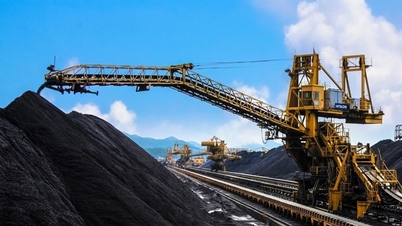
The group's four main business sectors include: coal, minerals and metallurgy; electricity; and industrial explosives. In addition, there are several related industries such as mechanical engineering; chemicals and building materials; port management, transportation, and warehousing; and construction.
Depending on the time and business situation, TKV may add other business lines after obtaining the Prime Minister's approval.
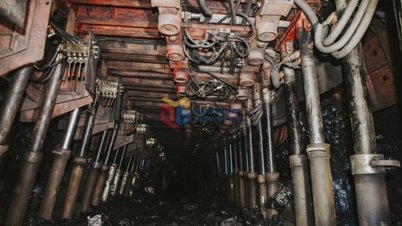
The plan also emphasizes activities to improve the efficiency of resource management, investment, and costs. For example, in resource management, TKV will focus on obtaining exploration and mining licenses; in investment management, the group will mobilize resources to implement key projects, equipment investment projects to increase production, enhance tunneling capacity, and invest in processing centers.
Regarding cost management, the plan focuses heavily on recruitment and salary/bonus payment mechanisms. The guiding principle for TKV is: fewer people but higher income; an increase in average employee wages while reducing enterprise labor costs; continued absolute reduction in the number of employees; an increase in the proportion of direct labor and a decrease in the proportion of indirect labor based on the complete socialization of all service work within the enterprise; and recruitment of untrained individuals only for professions where the market cannot meet demand.
In terms of production, the corporation must focus on improving efficiency and continue to apply computerization, mechanization, and automation to production. Regarding electricity production, TKV will develop a strategy to participate in the competitive retail electricity market by 2025, with a vision for 2030.
Requirements for divestment in enterprises where TKV holds shares have also been set. TKV will hold 100% of the charter capital in one company; 65% or more of the capital in 10 companies; and 50-65% of the capital in 9 companies. In the remaining 15 companies, the group will hold less than 50% of the capital or 0%.
The Group continues to consolidate pairs of subsidiaries (in which it holds more than 65% of the capital), including Coc Sau Coal Joint Stock Company and Deo Nai Coal Joint Stock Company; Nui Beo Coal Joint Stock Company and Ha Lam Coal Joint Stock Company. Co Dinh - Thanh Hoa Chromite Joint Stock Company is divesting its capital according to a separate plan; Lam Dong Aluminum One-Member Limited Liability Company and Environment One-Member Limited Liability Company are restructuring according to separate plans as approved by the competent authority.
The capital raised from divestment will be used to develop new projects. In addition, TKV will also expand its long-term fundraising channels such as issuing shares, corporate bonds, and banking financial products, alongside traditional fundraising methods.
Duc Minh
Source link























![[Image] Close-up of the newly discovered "sacred road" at My Son Sanctuary](/_next/image?url=https%3A%2F%2Fvphoto.vietnam.vn%2Fthumb%2F1200x675%2Fvietnam%2Fresource%2FIMAGE%2F2025%2F12%2F13%2F1765587881240_ndo_br_ms5-jpg.webp&w=3840&q=75)














































Comment (0)